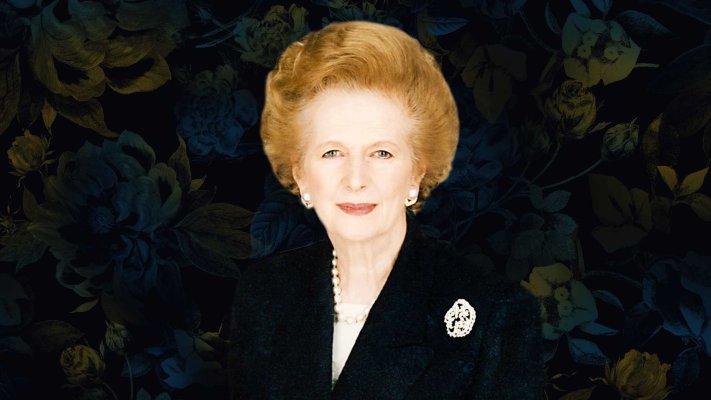
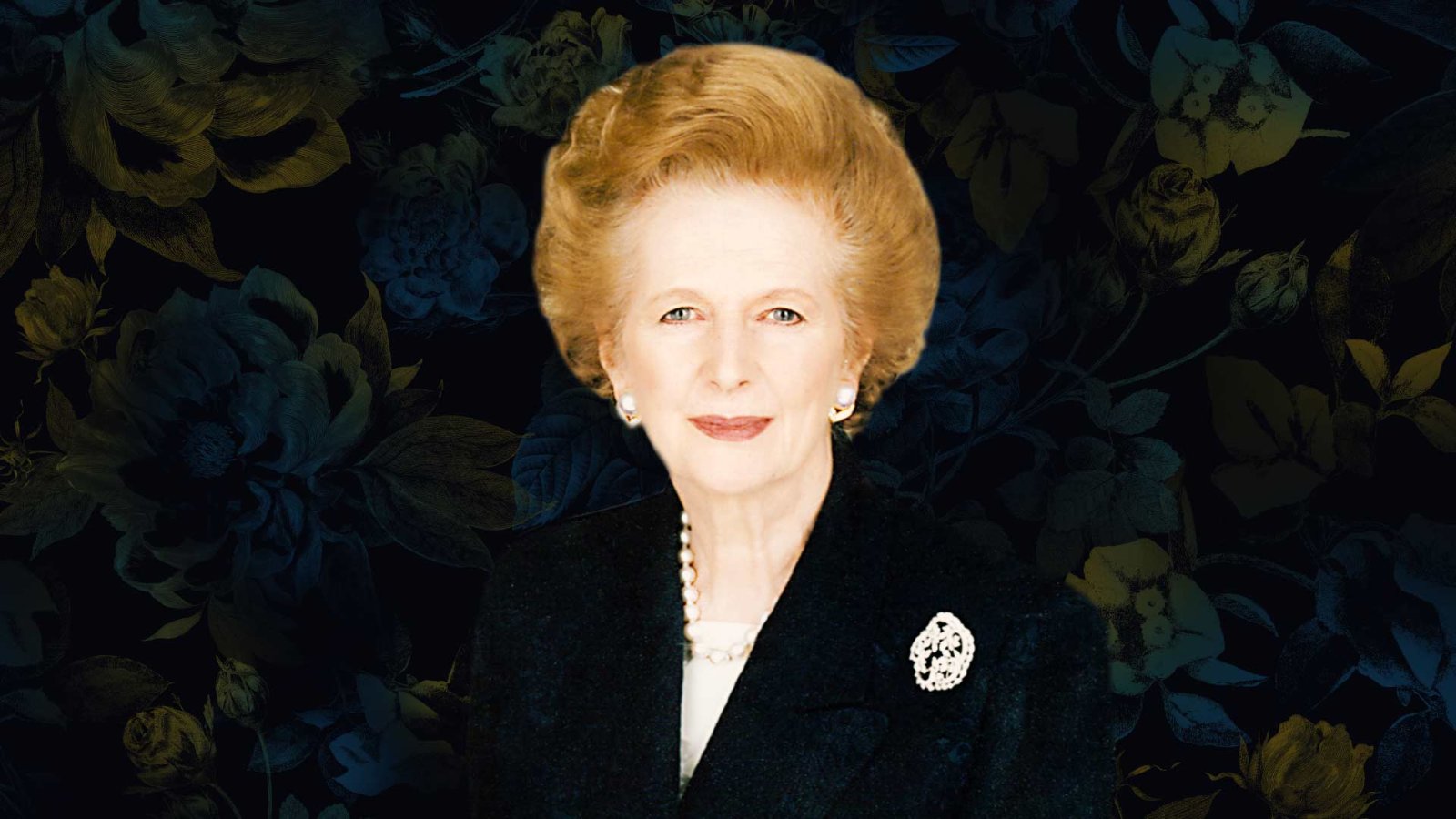
It is worth trying to clarify what Margaret Thatcher had to do, wanted to do and, in large part, succeeded in doing.
Celebrations of the hundredth anniversary of the birth of Margaret Thatcher have been taking place in many countries. People who knew her and worked with her have shared their reminiscences. Policy analysts have commented upon what aspects of her legacy have lasted and what aspects have not. This discussion has taken place on both the Right and the Left of politics. The Left, of course, hoped that after she was removed from power in 1990 nothing more would be heard of her, except reheated outrage at the alleged unfairness and destructiveness of her years in power. They have been disappointed.
On the Right, the discussion, albeit polite and respectful, is also often critical. The New Right – an umbrella term which covers different parties and movements which do not always agree with each other – distrusts the Reagan-Thatcher free market economics. It regrets the deindustrialisation which (it is said) is the result of her refusal to pursue an interventionist economic strategy. It sees the loss of social cohesiveness of the 1980s as too high a price to pay for economic advance. It connects Thatcher and Reagan with the disastrous wars fought in the Middle East to establish a liberal order where no such order is possible. It regards the transfer of power to global authorities as the counterpart of Reagan’s and Thatcher’s promotion of international open trade. These debates also, in their way, and paradoxically, confirm just how central Margaret Thatcher’s role at home and abroad was.
It is worth trying to clarify what Margaret Thatcher had to do, wanted to do and, in large part, succeeded in doing. Mrs Thatcher had a philosophy and a strategy. She was a believer in what Hayek calls the spontaneous order of a free society. The outcome could not be imposed, but it could be enabled. The work of government was to create a framework of sound money, stable prices, limited borrowing, low taxes, and light regulation. It was to help those who genuinely could not help themselves, without encouraging the scourge of dependence. It was to keep the country and all British territory safe from external threats, and to prevent and repress crime
The criticism which can be made of all this – which you could call classical liberalism in a conservative form – is that it was too liberal and not conservative enough. Looking back, from today’s social collapse in the West, we can admit that both Thatcher and Reagan were overconfident that values and culture would look after themselves. But that is where the criticism should end. Mrs Thatcher and Ronald Reagan never for a millisecond thought faith, family and tradition were unimportant. Ronald Reagan never fought wars around the world to impose liberal values in the name of a “New World Order”. Reagan carried the biggest of sticks, but he hardly ever used it.
Turning again to Thatcher, the only war that she fought was one that she never wished for or expected. It was a war to reverse aggression by Argentina. British victory in the Falklands was the result of her resolve and the prowess of the British armed forces, especially the navy. The aftermath brought many benefits for Britain’s standing in the world. None of them, however, was the result Margaret Thatcher’s bellicosity. Perhaps the single greatest destabilising force that now afflicts Western countries is mass immigration from outside the West. Immigration was already an issue in the 1970s in Britain, though the levels then look trivial beside what is happening today. Margaret Thatcher was harshly criticised while Leader of the Opposition for claiming that people felt “rather afraid that this country might be rather swamped by people with a different culture”. In Government, she imposed tight controls. Only about 50,000 immigrants a year entered and net immigration during her time was zero.
Margaret Thatcher was what her country needed and what the West and indeed what the world needed.
Most of Mrs. Thatcher’s time in government was spent on the economy. It had to be, because of the dreadful condition the British economy was in. But she did not believe that economics was everything. She passionately believed in British greatness. She knew that there was no other way to “make Britain great again” – to coin a phrase – than to sort out the finances and achieve economic growth.
What can be called “declinism” was the dominant mood among the political elite. Britain was derisively called “the sick man of Europe”. The so-called “British disease” undermined the country’s sense of self-worth and threatened confidence in the Western model of free enterprise and democracy. That model, too, we should recall, was under attack in the 1970s. Britain’s decline thus seemed to mirror that of the West. Margaret Thatcher’s approach consisted of the wholesale reversal of socialism in all its forms. While the timing of measures had to be flexible, the overall direction was always fixed. The scale of the obstacles was huge. It was thought that no one could run the country without trade union agreement. It was said that no one would want to buy state owned industries. It was asserted that inflation and pay could not be kept down without controls – what was called an incomes policy. The underlying, pervasive and highly dangerous attitude was that nothing could be done. Mrs. Thatcher was temperamentally incapable of settling for that. She despised what she saw as a culture of excuses.
The first Thatcher term of government concentrated on squeezing out inflation and restoring the public finances, while removing controls on pay, prices, dividends and, most dramatically, exchange controls. The second and third terms saw fundamental tax reform – including much lower marginal rates at the top end, which led to more, not less, tax paid by the wealthy. That period also saw a programme of privatisation – more than forty businesses sold, and a reduction of the state share of industry of 60 percent. The trade unions were brought within the rule of law and industrial relations were reshaped. Unemployment, which at one point trebled, fell sharply. The share of GDP taken by government also fell as growth resumed. Public debt was repaid. Although, over the whole period, tax rose, because of the need to cut inherited borrowing, marginal income tax rates fell at crucial points in the income distribution. The overall marginal tax rate of the average worker dropped by two points, and that of the top earner by 35 points. The effect of these changes was to reward work and success. This concentration on incentives generated profit and attracted investment, which was then used productively – because labour practices had been reformed.
The obvious measure of a country’s economic performance is the growth of its GDP. Here Mrs Thatcher’s achievement is not in doubt. Comparing economic cycle with economic cycle, between 1973 and 1979 – before she took office – Britain’s (non-oil) GDP grew by less than one percent a year, but in the 1980s it grew by 2.25 per cent a year. This was contrary to the international trend. The OECD countries – that is the most developed countries – experienced no improvement in growth during that period. The contrast would become still more marked after Mrs Thatcher left office, when the structural changes she had made largely remained in place. At the root of that improvement was the growth of productivity. During the Thatcher years British productivity saw both absolute and relative improvement. Using the measure of total factor productivity (that is the productivity of all inputs in producing the business sector’s added value) Britain’s performance was transformed. Between the periods 1960-1973 and 1979 and 1994 Britain leaped from twelfth to fifth place in the league of OECD nations.
The reversal of economic decline and the restoration of Britain’s prosperity contributed to a transformation in Britain’s international standing. A sound economy not only allowed the Falklands War to be fought and won with no tax increases or interest rate hikes. It paid for the updating of the nuclear deterrent and for the level of military commitment which was required to win the Cold War. Much of this legacy has now been lost. The last Conservative Government abandoned control of immigration, massively increased spending and borrowing, and raised the level of taxation to the highest level for seventy years. Any proof that the Thatcher approach is quite good at winning elections – and she never lost one – is surely superfluous, now that a Conservative Government, pursuing the opposite approach, has suffered the worst election defeat in the Party’s history and perhaps terminally destroyed the Party’s reputation.
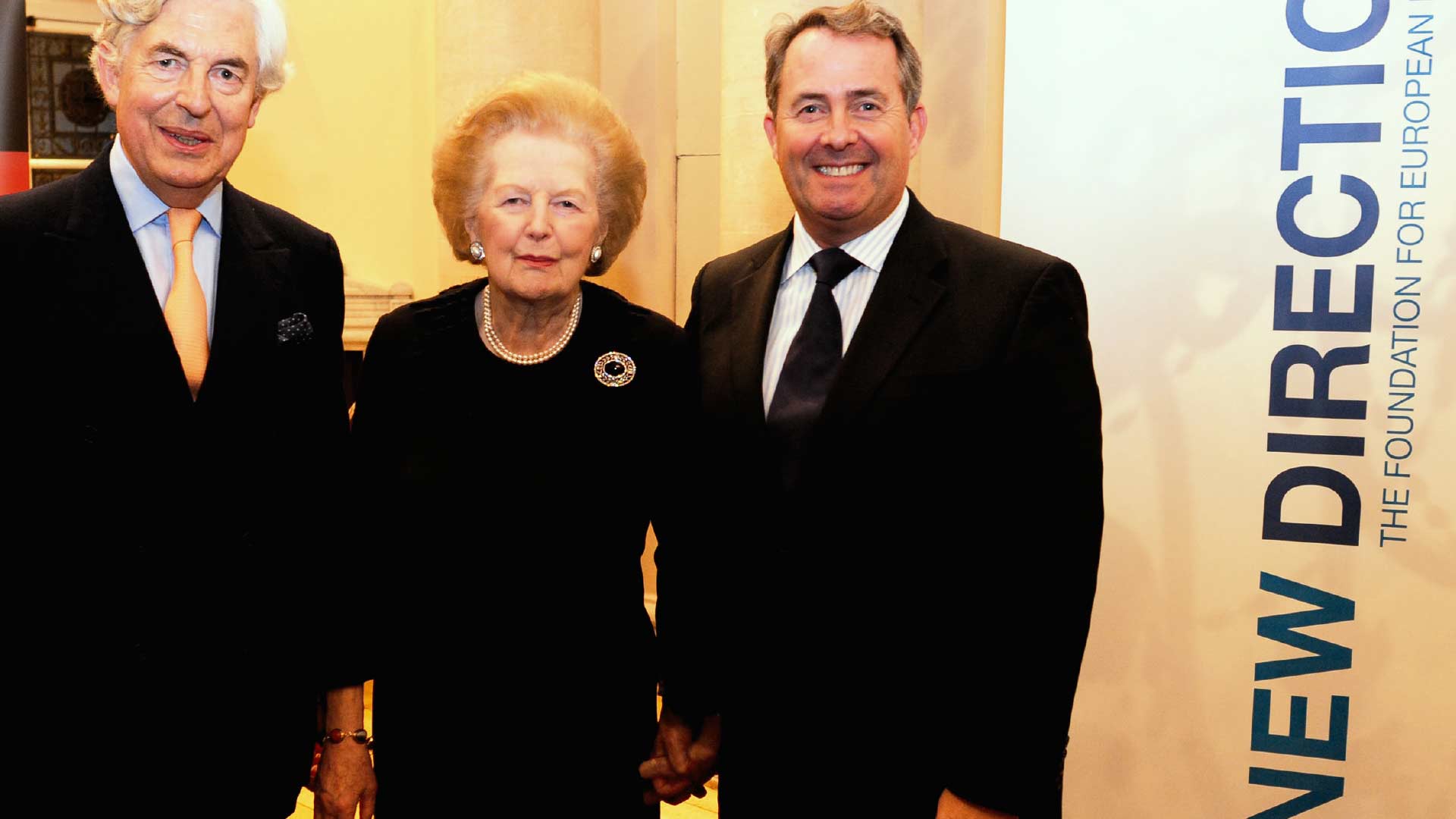
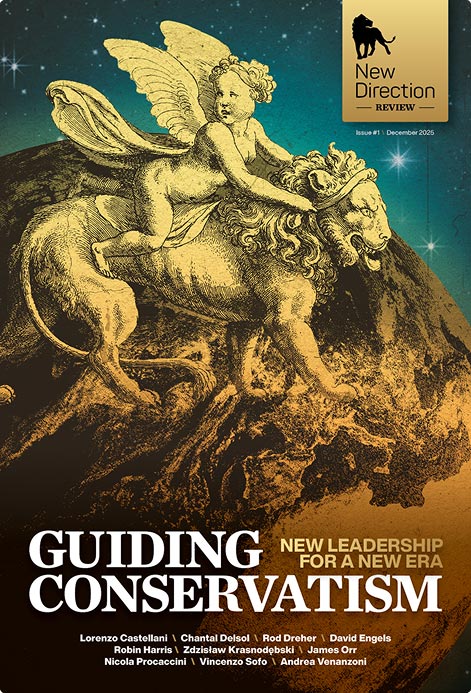
This analysis of the principles and policies that Margaret Thatcher pursued in her three terms as Prime Minister would be lacking an essential factor if one failed to discuss her character. The writer of this article got to know her well over many years of intense work and enjoyable though never frivolous companionship, in and out of office, during the good and later the bad years of frailty towards the end of her life. (She effectively withdrew from public affairs in 2002, though she emerged from time to time, as she did to launch New Direction in 2009 as the intellectual hub of European conservatism).
Mrs. Thatcher’s character was at one level simple, at another – and when you looked deeper – complicated. She was very clever though not an intellectual and she did not pretend to be. But she liked the company of thinkers. She had an extraordinary head for figures, which she used to instill fear in Ministers who tried to argue with her about matters like public expenditure or welfare.
She could be very charming, and she was much more widely loved than anyone reading the accounts would imagine. She was personally kind, particularly to people of no social importance. She was financially generous too. But she could be – and sometimes was, quite deliberately I think – “difficult”. It kept people on their toes. Her anger, when it came, was like an electric storm, and her temper, when it broke, was volcanic. This reflected a kind of exaggeration in her personality which may be inseparable from those who dominate by force of character, as she did. Though physically petite, she was a life-force, and even in old age, as the saying goes, “she filled a room”. The truth is that many were afraid of her. She probably underrated the resentment – even hatred – which her fierceness, sometimes attended by a touch of cruelty, generated among male colleagues. Some men cannot work for a woman at all, and quite a few more can only do so if the woman behaves like a man, which Mrs. Thatcher did not.
Mrs Thatcher was always taken with the idea of Virtue – she always talked about virtues, not values – including the “Victorian Virtues”. One of the best analyses of her as a politician is Shirley Letwin’s Anatomy of Thatcherism. In this book Letwin ascribes to Mrs Thatcher what she calls the “vigorous virtues” and which she lists as “uprightness, self-sufficiency, energy, independent mindedness, adventurousness, loyalty and robustness”. These were exemplified in Margaret Thatcher’s own life. After leaving office, I fancy by reading pieces by the American theologian Michael Novak, she came across the four so-called Cardinal – that is “hinge” – virtues, according to which the ancients judged behaviour – namely, prudence, temperance, justice and fortitude (courage). They provide a useful checklist against which to assess her outlook and approach.
Prudence, which sounds dull and a bit prim, is best understood as practical wisdom or common sense. This Mrs Thatcher had aplenty. Her common sense was reflected in the way in which she could separate big issues from lesser ones. It also showed in her instinct for timing. For example, she knew just when to fight and when to reach a compromise with the European Common Market in the early 1980s in getting back what she called “our money” (going into the European budget). She, of course, did not and could not determine the timing of most of the events in the thirteen-week military campaign in 1982 to recapture the Falklands. But when it came to the phases of diplomacy and the time for the use of force, she judged matters to perfection. She proved a shrewd war leader.
Of hardly less importance was getting the timing right in the struggle with the over-mighty trade unions. The Thatcher Government’s “step by step” policy of trade union reform was to some extent a matter of smoke and mirrors, reflecting Government divisions not analysis. But in the crucial year-long struggle against the militant miners, who had destroyed one Conservative Government and were determined to destroy another - and free enterprise capitalism with it – strategy and tactics, patience and boldness, above all timing, were vital. And Mrs Thatcher got it right. The defeat of that year long strike secured the Thatcher reforms and so permitted the industrial revival and prosperity of Britain.
The second Cardinal Virtue, temperance, might provoke a smirk a two because Mrs Thatcher was later thought to drink excessively. This as Prime Minister she certainly never did. After retirement she enjoyed an extra glass or two with Denis, and who can blame her? In any case, given her hero Churchill’s consumption, and his achievements, the prudes have a poor case. Where Mrs Thatcher was temperate, in the proper sense of exercising iron self-discipline, was in her work. She discarded any pleasure, so that she could do her duty. She probably worked too hard. But without most of it she would have failed, because the system was often against her.
She effectively withdrew from public affairs in 2002, though she emerged from time to time, as she did to launch New Direction in 2009 as the intellectual hub of European conservatism.
Thirdly, there is the virtue known as Justice. Here one must distinguish the personal from the public. She was just, in the sense of being honest and straightforward. She did not adopt airs and graces, and she had none of what is called “side”. Contrary to what is alleged, she was modest, even humble. Otherwise, she could not have learned so much and so quickly and from such unlikely sources, as to make up for her early deficiencies. She used to say to advisers – “Don’t worry – I have no toes”, i.e. don’t hold back for fearing you will offend me. People thought that her frequent refusal to listen to political colleagues who disagreed was a sign of arrogance. But it was not. It was simply that she considered, often rightly and even in Cabinet, that she was in a small minority and she would never get the floor back if she yielded it.
She was also just, in that she believed strongly in fairness. This is quite unusual on the Right of politics. Conservative politicians usually believe in efficiency and order but are inclined to switch off when questions of fairness are raised. The Left who cannot or will not distinguish – no matter how often the difference is explained to them – between justice and equality would not have thought Mrs. Thatcher was at all interested in fairness either, but she was. She thought that people had a right to keep what they earned without the State taking it. She thought socialism was unjust. She believed that people should be enabled to fulfil their talents – a system which blocked that was inherently illegitimate.
The fourth and final Cardinal virtue is fortitude, or courage. This was certainly Mrs. Thatcher’s pre-eminent moral quality. She was extraordinarily brave. She was occasionally depressed and downhearted, but the mood did not last. Here we must distinguish moral from physical courage. Politicians always need the former, not so much the latter. If I were to list the decisions and events in Mrs. Thatcher’s political life that required exemplary moral courage, I would suggest the following:
First, running for the leadership of the Conservative Party against Ted Heath in 1975 against all the odds, and against her own husband’s advice, and winning. Second, insisting in 1981 on a deflationary budget at the depth of a recession to get the public finances under control, defending the decision, and sacking a large section of her Cabinet to drive it through. In the autumn of 1980, she famously told the Party Conference “the Lady is not for Turning” – now she proved it. Third, from start to finish, the Falklands War. Anyone who thinks that victory was inevitable knows nothing of logistics. Had a carrier been hit or a major troop ship been lost, her Cabinet would have overthrown her faster than they did Anthony Eden in 1956. It is doubtful whether any post-War British leader, except perhaps Churchill, would have sent the taskforce, let alone used it.
Mrs. Thatcher had not just moral, but physical courage. We should remember how keen the IRA (Irish Republican Army) terrorists were to kill Mrs. Thatcher and, of course, how many others they did kill. They came nearest with the bomb that wrecked the Grand Hotel, Brighton, in the early hours of Friday 12 October 1984. Had she been in the bathroom of her suite, she would have been dead. Instead, she was working on her speech. She stayed completely calm. Her private secretary was appalled to see her, to the sound of falling masonry, walk back without hesitation into the darkened bedroom to check on her husband Denis. Her first thought was for others, and her second – by carrying on with the Conference – was to show that the terrorist would not win. Two of Mrs. Thatcher’s famous predecessors expressed thoughts about each other, which may appositely be applied to her. Lord Salisbury said of Benjamin Disraeli that “zeal for the greatness of England was the passion of his life”. Disraeli, reflecting on the qualities of Salisbury, observed that, “courage is the rarest of all qualities to be found in public men”. Mrs. Thatcher had both patriotic zeal and extraordinary courage.
Margaret Thatcher was what her country needed and what the West and indeed what the world needed. Whether, by providence, by luck, or by the even more impenetrable functioning of democracy, Britain obtained in her a leader with the right qualities to confront multiple crises.
She was a leader who changed the world and still, by her example, offers a model to all who would drive their countries forward along the path of greatness.