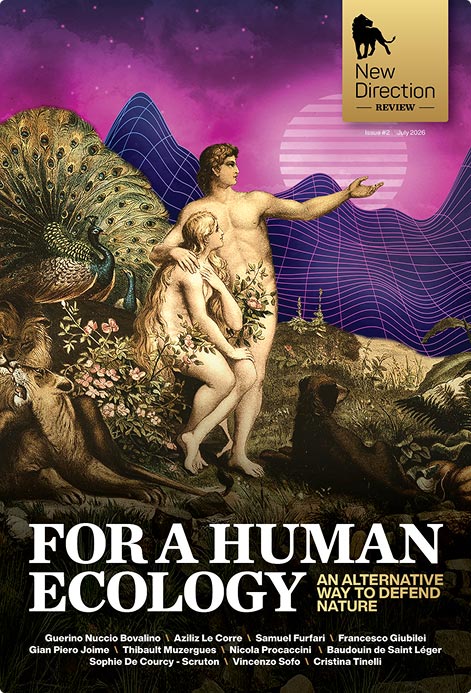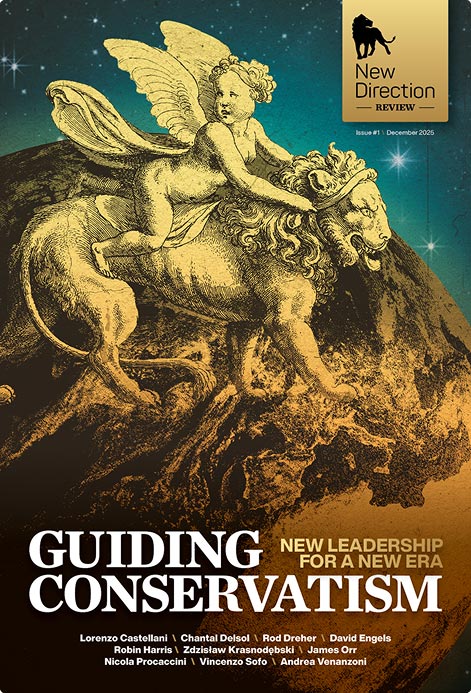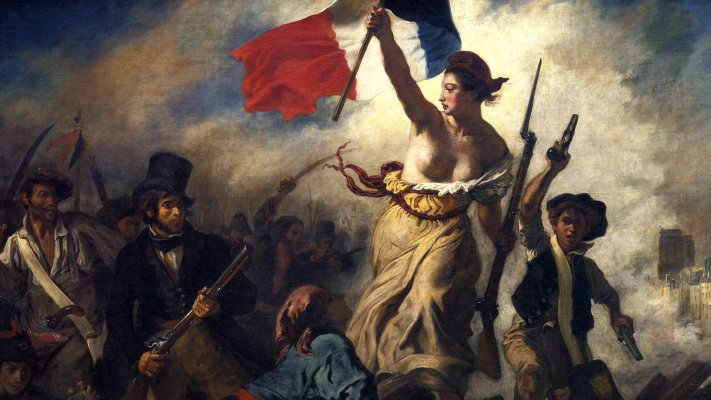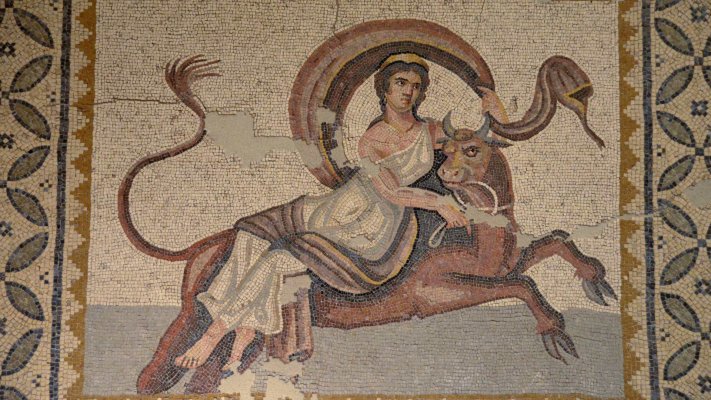
For a genuinely human ecology does not set man against nature; it integrates them into a single ecosystem, from plant to human being, without placing them on an equal footing.
In 1951, in his essay Building Dwelling Thinking, Martin Heidegger drew a fundamental philosophical distinction between housing and dwelling. Housing is the roof over our heads; it offers comfort and security. Dwelling is the place where we put down roots, where being fulfils itself. The former is functional; the latter is existential. In the aftermath of the Second World War, when nearly half of Berlin’s buildings lay in ruins and the shortage of housing was acute, Heidegger refused to reduce the question of dwelling to a matter of real-estate accounting. He diagnosed something far graver: an anthropological rupture in the way we inhabit the world. Late modernity had severed the bond between man and the natural world, he argued, citing industrial agriculture as an example, which seeks to exploit nature rather than to sustain man’s connection with the earth. Driven by technological growth, human beings had ceased to feel at home in the world.
This crisis of dwelling, we are living today in a form Heidegger could not have anticipated. Among OECD countries, fertility rates now average 1.46, well below the level required to ensure demographic renewal. France, unlike its European neighbours, long resisted the process of demographic decline spreading across the Western world. But for fifteen years, the fall in births has been unrelenting. The year 2025 passed a critical threshold, recording more deaths than births. Only 645,000 babies were born on French soil last year, a total fertility rate of 1.56 children per woman.
Despite this vertiginous decline, antinatalist discourse has flooded public debate over the past decade. The No Kids movement advocates the voluntary restriction of births, elevated to an environmental virtue; certain feminist currents, carried by the childfree movement, equate motherhood with the subjugation of women. Both currents obey the same logic: that of a political ecology which instrumentalises legitimate environmental concerns in order to turn them against civilisation itself. In its most radical forms, it proceeds from an anthropopessimist assumption: man is the problem. His growth, his fertility, his productive activity are destructive. The solution? Reduce the human population. All converge on the same conclusion: we must stop having children. In short, humanity could disappear, and we would be better off for it. This new ideology demands that we cease to dwell altogether, that we cease to engender, that we close time in on the present, that we treat future humanity as a threat rather than a promise.
This logic is not new. It extends the theses Thomas Malthus formulated as early as 1798 in his Essay on the Principle of Population: demographic growth, necessarily faster than that of resources, leads inexorably to misery and famine. Births must therefore be regulated. The historical applications of this ideology have, however, been among the darkest of the twentieth century. In the 1970s, Indira Gandhi’s India conducted forced sterilisation campaigns that affected millions of men and women among the poorest. The one-child policy, imposed in China from 1980 to 2015, led to forced abortions, female infanticide, and a demographic catastrophe from which the country still struggles to recover. Repainted green two centuries later, this old Malthusian spectre presents itself today under the guise of environmental virtue.
Yet reducing demography to save the planet amounts to treating the human population as a homogeneous mass, ignoring the colossal differences in ways of life. An American emits an average of eighteen tonnes of CO₂ per year; a Nigerian, 0.65 tonnes. What determines the state of the planet is not the number of human beings, but the economic and political mechanisms that organise their existence. Imagine we were half as numerous: would we pollute half as much? By no means. The supply of fuels, freed from demographic pressure, would be more abundant and fossil energies cheaper, making us more, not less, inclined to consume. Would wealthy states, already struggling to meet their climate commitments, submit to more coercive environmental policies? Populations tend to consume as much as available resources allow. Framing the question in terms of population makes it possible to defer the necessary questioning of our consumerist culture.
What we must rethink is our relationship with the world under a different paradigm. Against political ecology, the ecology of civilisations takes seriously the fragility of the natural environment without sacrificing the continuity of the human species. For a genuinely human ecology does not set man against nature; it integrates them into a single ecosystem, from plant to human being, without placing them on an equal footing. Man remains at the top of the scale of values, which does not grant him the right to become the master and destroyer of nature, but obliges him to be its guardian.
The ecology of civilisations is rooted in a vision of time that allows for transmission. It thinks in terms of generations, heritages, debts to ancestors and obligations to descendants. It understands that concern for the environment is inseparable from concern for culture: the preservation of a protected species or an ancient forest is not opposed to the preservation of a language, an architecture, a way of life. The goal is not to freeze them, but to keep them alive. For rootedness in a history, a homeland, a culture is the foundation without which no responsibility is possible.
Faced with the temptation of non-being and withdrawal that political ecology carries, we shall affirm here that natality is the fundamental condition of our existence and the survival of the civilisation that has borne us. For if we no longer bring children into the world, we have no future. And if there is no tomorrow, there is no longer a today or a yesterday, for there will be no one left to receive what we have inherited from our forebears.
To defend this thesis, we shall begin with the most intimate and foundational experience of dwelling: motherhood, which reveals to woman and to the world what it means to inscribe oneself in time and to transmit life. From there, we shall move towards the political, showing how love of home, what Roger Scruton calls “oikophilia” constitutes the affective structure of every enduring civilisation, from the household to the homeland. We shall see finally that philosophy itself, through Hannah Arendt and Hans Jonas, furnishes us with the means to think natality not as an ecological problem but as the condition of all responsibility towards the living and towards generations to come.
Motherhood as the Foundational Experience of Dwelling
If since Simone de Beauvoir certain feminist discourses have equated motherhood with the subjugation of women, I wish first to reaffirm its privilege. For freely chosen motherhood is not an alienation; it is a total experience, physical and temporal, which reveals to a woman a dimension of herself that no other experience can give her. It is in becoming a mother that a woman discovers not only her body in all its creative power, but also her own history, her own genealogy, her own femininity. It is in sheltering life that she comes to understand what she has received from those who came before her, and what she can give to those who will follow. This experience makes it possible to understand what constitutes the dwelling-place, from the mother’s womb to the family home.
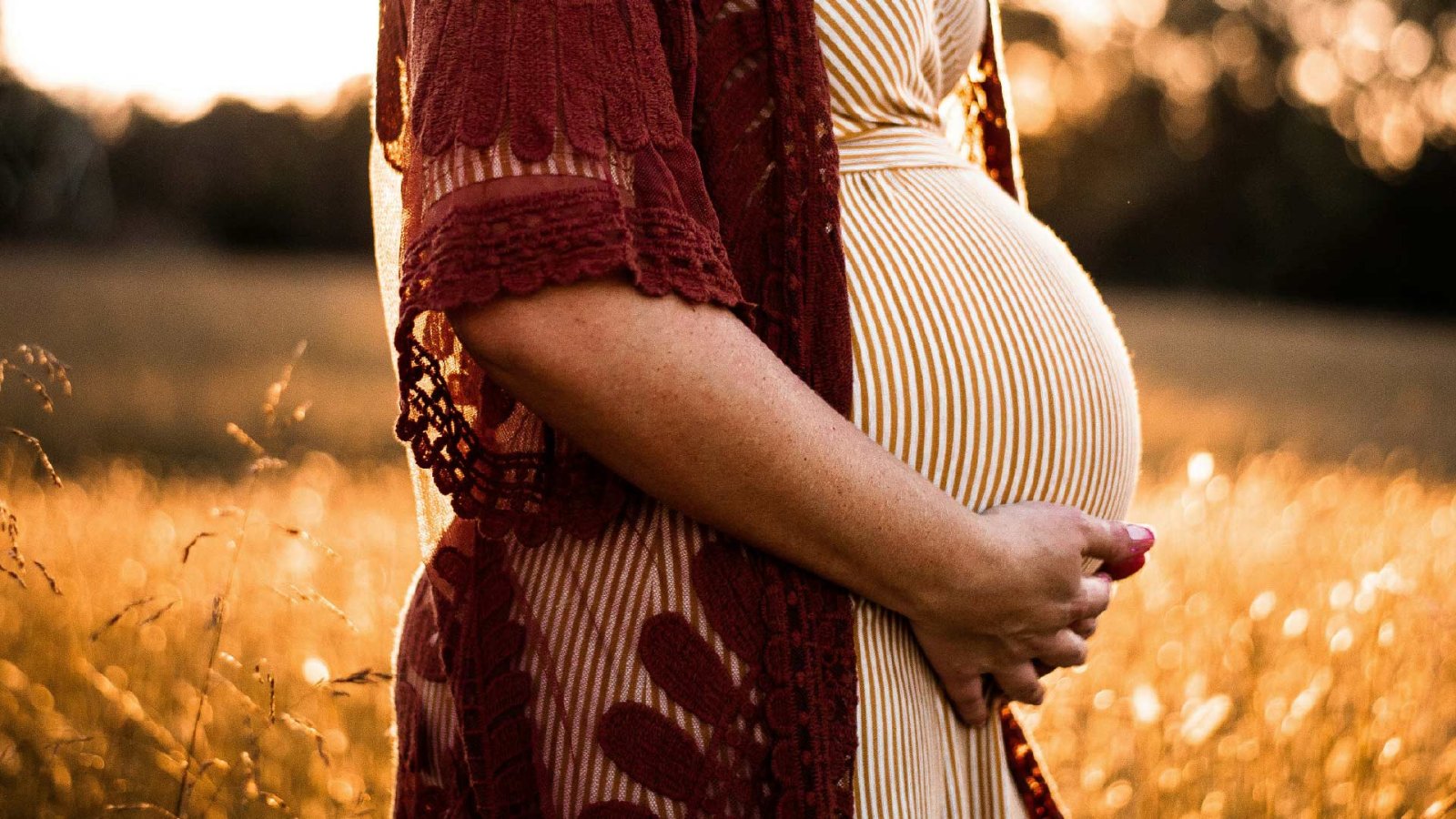
The experience of pregnancy is, first of all, a total experience of the body. But it is not merely biological; it is also phenomenological. It radically transforms the way a woman perceives the world, inhabits her own body, and situates herself in space and in time. The senses are transformed. Taste, smell, touch, hearing, sight: all were reconfigured. Food cravings change, formerly pleasant smells become unbearable, the taut skin of the belly calls for a different kind of touch, listening becomes more attentive to gentleness. But what is perhaps most remarkable is the transformation of the gaze: in looking inward, the pregnant woman paradoxically opens her eyes wider to others. Pregnancy is a state that alters our way of being in the world, more spontaneous, drawn towards beauty and the desire to do good. As if the new life inhabiting the woman takes precedence over her ordinary self.
Birth cannot be delegated; the patience of pregnancy cannot be optimised; the parent-child bond cannot be virtualised.
Space itself is modified. The pregnant woman instinctively protects her child, firmly supporting her belly with her arms, as if to anticipate the potential aggressions of the outside world. The home is adapted to become the nest that will welcome the newborn; in doing so, it ceases to be a functional dwelling and becomes a hearth, a place where life takes root. Pregnancy is further a renewed experience of time: it compels us to be patient. In a world of immediacy where everything is organised to satisfy the consumer wherever and whenever they wish, pregnancy introduces a radically different temporality: that of waiting, slowness, and maturation.
The Greek philosophers, like the Christian tradition, associated patience with the idea of suffering. Aristotle distinguished temperance, which pertains to pleasures, from patience, which relates to pain. To be patient is to know how to bear and endure hardship with resignation and firmness. But this patience is not passive resignation: it is lucidity in the face of trial, constancy, tenacity, perseverance. In biblical Hebrew, being patient is expressed as “having a long breath”, as opposed to the impatient, who have a short breath. It is striking to observe that pregnancy contains this opposition almost literally: as the months pass, as the belly grows, the physical breath grows shorter. But more deeply, conception ruptures the routine of daily life by introducing a new breath of life: the long breath of waiting that anchors us in what is essential. When impatience prevents us from savouring the moment by making us regret that the future has not yet arrived, pregnancy compels us to wait. This breath renders us fully present to the present.
The example of Job in the biblical tradition illuminates this dimension. This man of great virtue loses everything: his goods, his children, his health. God tests his servant to show that he remains faithful even in suffering. Job does not remain silent: the Book of Job exposes his despair, cries out his physical pain, his bitterness, his anguish. Patience is not stoic silence: it is faithfulness in trial, the lucidity that refuses resignation as much as blind revolt. And God ultimately rewards Job by restoring his goods twofold, by giving him seven more sons and three daughters, and by allowing him to live another hundred and forty years, seeing his family reach a fourth generation. The reward of patience lies in transmission, in the possibility of seeing one’s descendants unfold across the generations.
Thus, conception inscribes us in our own genealogy: we learn that before us, our own parents were surprised by this life that is ours. One must wait until becoming a parent to remember what it was to be a child. And it is in becoming a parent that one truly takes one’s place in the lineage: in becoming a mother, one becomes a daughter. One becomes aware, in one’s ingratitude, of what one has received from one’s parents. One comes to understand that one’s parents did the best they could with what they had to give, working with their own history and their own intimate failings.
“Oikophilia” as a Civilisational Foundation
This gratitude towards our ancestors makes it possible to think of ourselves as inhabitants of the world; it has a name: it is what the British thinker Roger Scruton called “oikophilia”. This term, composed of the Greek oikos (hearth, home, household) and philos (love), literally means love of home. It stands in contrast to its antonym: oikophobia, which denotes self-hatred, repulsion towards one’s own culture, tradition, and past, a phenomenon the philosopher considered characteristic of the contemporary Western intelligentsia.
The Greek word oikos appears in two terms familiar to us: economy and ecology. This kinship is not fortuitous. Economy is the management of the home (oikos + nomos, rule, law). Ecology is the study of the home (oikos + logos, science, reason). Both disciplines share the same anchorage in the notion of the home, that is, dwelling, inhabited space, the place where life is organised. These notions are of a functional, aesthetic, spiritual, and moral order.
Among the representations of home, tool, friend, hearth, music, painting, art, there are also included the noble, the majestic, the sacred; legality, courtesy, justice. Economy, cleanliness, the elementary rules of courtesy constitute the foundations of oikophilia. They attend to what is subjective, the way things seem to be and how they must harmonise, in favour of the good life. They make it possible to create a relationship between men and the objects of the world. These foundations of common life nourish our virtues and shape us as guardians of our common home.
It is no coincidence that the great ecological thought of the twentieth century, before it was confiscated by political ideology, was profoundly domestic; it thought of nature as a common home, not as a militant abstraction. Such is indeed the founding narrative of European civilisation: Homer’s Odyssey. Ulysses confronts every danger: the raging elements, the vengeful gods, death itself, to find his way home. The home is that externalised self, that place of shared destiny. The entire journey of Ulysses is animated by oikophilia: love of Ithaca, of Penelope, of Telemachus, of the land he has left and to which he longs to return. It is this love that gives him the strength to resist the Sirens, the enchantments of Circe, the promise of immortality offered by Calypso. Our civilisation is built upon the narrative of the quest for home understood as a return to one’s origins.
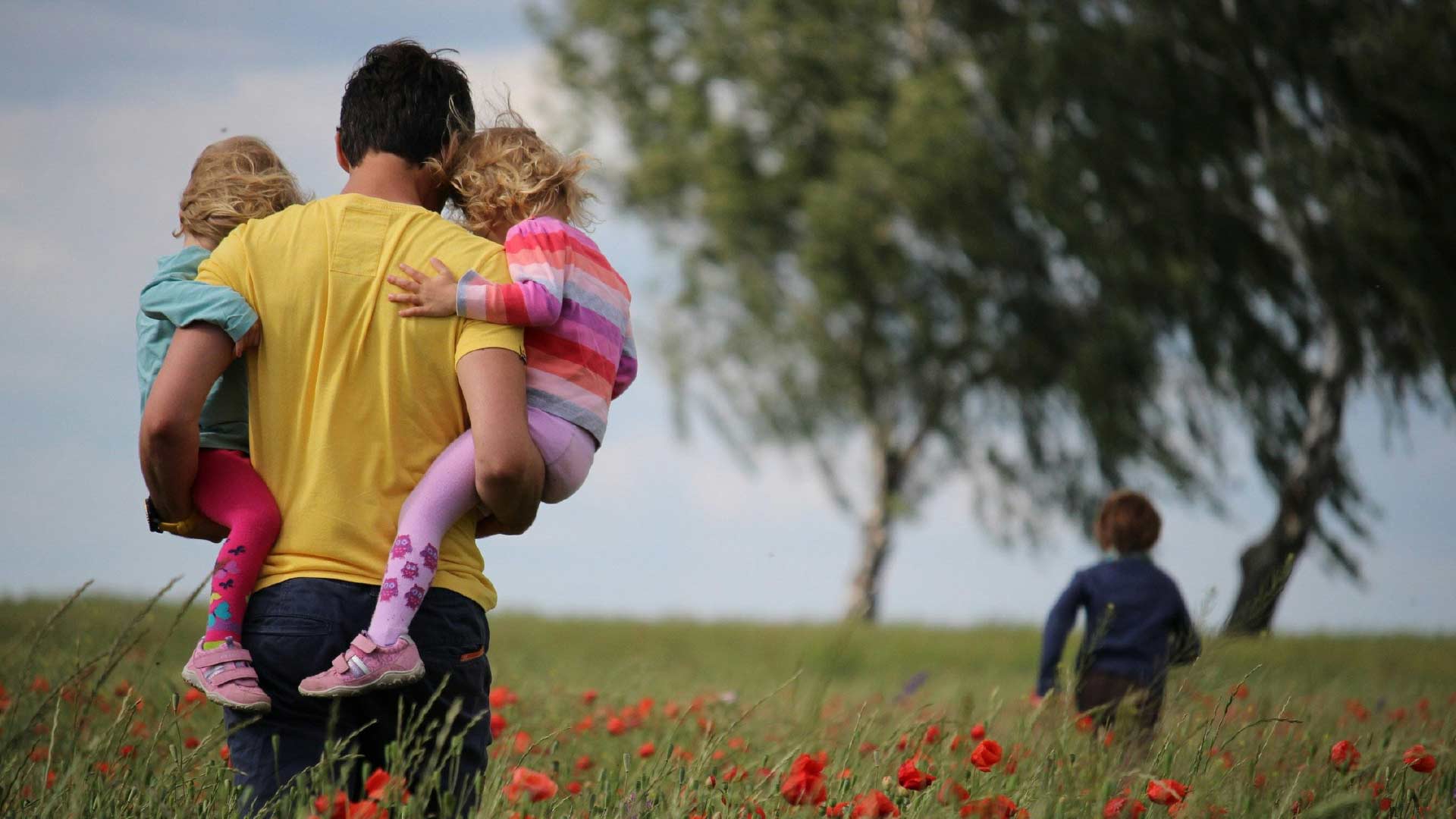
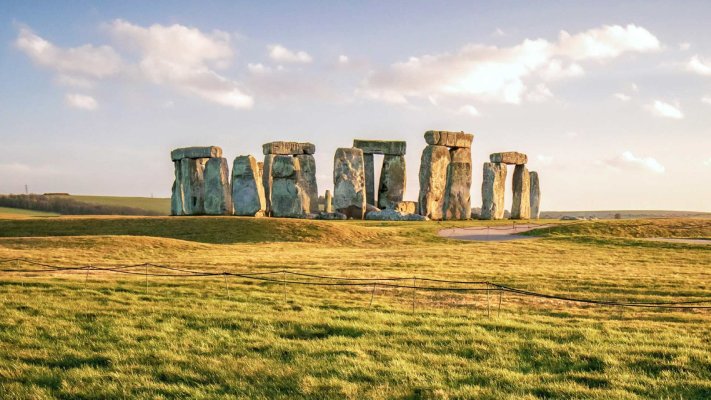
Photo by Juliane Liebermann on Unsplash
But oikophilia is not passéist nostalgia or a timid retreat into an idealised past. This term refers precisely to a universal sentiment that manifests our attachment to our native land as to our childhood home. It expresses the feeling of being at home in the world, of belonging to a place, a history, a community. This is why, when we leave our home, we feel homesick. Oikophilia orients itself naturally towards history and the conservation of the past, not out of nostalgia, but out of a desire to live durably and consciously among things that endure. The spirit of conservation defends not the past as a commercialised heritage, but as a living heritage, something that endures because it lives in me. To exist fully in time is to understand, as Roger Scruton puts it admirably in Green Philosophy, that “the present moment is also the past, but the past of someone who has not yet existed. And time, lived in this way, connects us to the worlds before and after us. The time we aspire to and toward which we gravitate extends beyond this moment, this person, and this life.”
We must understand the home as the place where the earth and the dead are united with generations yet to come. It is not merely a geographical space but a temporal node, where past and future converge in the present. Those who have trodden this earth before us, and those who will tread it after us, between them we form the invisible yet essential link in the chain. Oikophilia is the awareness of this fragile bond.
The Homeland as a Community of Destiny
What the pregnant woman experiences in her body, and the family within the home, Scruton describes at the scale of civilisation. Oikophilia, then, is not merely a private sentiment: it is also the affective foundation of all political life. Scruton describes it as a pre-political sentiment that allows one to feel that one inhabits the country in which one is born and lives. Loyalty to the home, to laws, to settlement and rootedness fosters this attachment to the homeland. This sentiment ultimately creates our intimate relationship with the nation we are building.
The homeland is not an ideological abstraction; it is a community of destiny that works for the future of its children, for the transmission of life and for the protection of those who carry it. It is the institutional and symbolic framework within which oikophilia can be exercised on a large scale: that of a people, a history, a civilisation. This is why the demographic question is inseparably a political question. When, in January 2024, Emmanuel Macron called for a “demographic rearmament,” certain feminists cried foul, while the President of the Republic proposed new arrangements for parental leave and announced a major plan against infertility. But is it not the role of a statesman to preserve and nurture the vital forces of the people who have brought him to power?
The statesman’s mission is to take charge of the life of the collective as a whole, for human life, like the destiny of nations, is perishable. His role is to protect this fragility. He must defend the heritage of his homeland, as well as the institutions of his country, so that the national home is preserved. Demography is not a secondary variable of politics: it is its fundamental horizon, for without a people there is neither nation nor politics possible.
Charles de Gaulle was well aware of this. He knew that the greatness of France and its continuity across the centuries depended above all on a strong birth rate: “Whatever way we organise our national work, our social relations, our political regime, our security itself, if it is established that the French people definitively fail to multiply, then France can be nothing but a fading light. But in this domain too, nothing is lost, provided we know how to will it,” he proclaimed on 2 March 1945 before the Consultative Assembly.
In the aftermath of the Liberation, family policies reached their height. In 1945, the Provisional Government brought together all family associations within the Union nationale des associations familiales (Unaf). It created an Inter-ministerial Committee for Population and a High Council for Population and Family, whose opening sessions were presided over by the President of the Republic himself. In October of the same year, it established the Sécurité sociale and integrated the family allowance funds within it, while also creating the Institut national d’études démographiques (Ined). A comprehensive system supplemented by further measures, including maternal and infant protection services. In ten years, nine million children were born in France. The baby boom was not merely spontaneous; it was willed and sustained by a clear political determination, even if it proved only a post-war parenthesis in the history of modernity.
The example of Israel is, in this domain, particularly instructive. Its fertility rate stood at three children per woman in 2021, and the Jewish state stands as an exception among OECD members: in 2020, Israel led with 2.90 children per woman, followed by Mexico (2.08) and France (1.79). And although women’s education and integration into society continue to advance, the birth rate shows no sign of declining: 71% of secular Jewish women declare a desire for three children or more.
How can such figures be explained? One must return to the founding of the State of Israel. Its founder, David Ben Gurion, quickly realised that Jewish immigration alone would not be enough to win the demographic contest. As early as 1943, he admonished the Jews of Palestine for their low fertility and urged Jewish women to bring at least four children into the world. Six years later, he created the Ben Gurion Prize, which rewarded each “heroic mother” upon the birth of her tenth child. In 1962, a committee on population issues was established, and the Israeli government introduced a new pro-natalist policy to remove the socio-economic obstacles to the fulfilment of families’ aspirations. These family policies favoured large families from the fifth child onwards. Alongside this, a major plan to combat infertility was launched.
But more than anything, the fertility of Israelis is a state of mind shaped by the history and culture of their country. Israel is fighting for its survival: the traumatic legacy of the Shoah and the geopolitical position of the Jewish state foster the vital imperative of securing its descendants. The Israeli lesson is political, but it is also philosophical. It shows that natality is not a matter of biology or economics; it is a matter of meaning. Israelis have children because they feel they are fighting for something, because they belong to a community of destiny that precedes and exceeds them. This is oikophilia at the scale of a nation. This is why we too must understand that we are fighting for our survival.
Two records broken in 2024 confirm this for France: 663,000 babies were born, the lowest figure since 1945, while 336,700 initial residence permits were issued, the highest figure since 1945. Birth rates are falling and immigration is rising. This twofold statistical reality is not merely demographic; it is civilisational. A homeland is a living body that works for the future of its children, for the transmission of life and for the protection of those who carry it. When this community ceases to reproduce, it is its identity and its collective project that are threatened.
To give young people the desire to continue the adventure of the generations, we must, collectively, defend deep rootedness, which takes root in the home and comes to fruition in the City. Oikophilia is the only resource we have for maintaining the local order in the face of the global decline driven by globalisation.
Natality as the Central Category of Political Thought
As we have seen, the decline in birth rates is not merely an economic phenomenon. It reveals above all a moral and cultural reversal. Material support for families is indispensable, but we must also restore meaning to commitment, give value to the bearing of children, and recall the beauty of transmission.
Thus, to respond to the civilisational challenge confronting the Western world, we must now interrogate birth as the keystone of all political thought. The German-born Jewish philosopher Hannah Arendt, refugee in the United States after fleeing Nazism, was the first to undertake this approach.
For all Western philosophy before her, from Plato to Heidegger through Spinoza and Hegel, death constitutes the fundamental horizon of the human condition. For the consciousness of death opens man to transcendence, to temporality, to authentic existence. Arendt effects a radical reversal. Whereas the confrontation of human beings with the prospect of their own death had until then constituted the central horizon of all philosophical reflection, she makes natality the central category of political thought. Birth, she says, is a promise of renewal and the primary condition of freedom.
She becomes aware of this in a remarkable way during a journey through Europe in 1952, when she stays in Munich. She attends a performance of Handel’s oratorio, The Messiah. She writes shortly afterwards: “The miracle that saves the world, the realm of human affairs, from its normal, ‘natural’ ruin is ultimately the fact of natality, in which the faculty of action is ontologically rooted. It is, in other words, the birth of new men and the new beginning, the action they are capable of by virtue of being born.” Birth is not the mere cyclical repetition of life, by which one member of the species replaces another. The child is welcomed as a newcomer, endowed with a proper name, promised a singular history. Birth is the event that makes all events possible: it renders all adventures possible. The child looks at things with fresh eyes; he can reinvent them and act accordingly. He is the one who marvels at a dead leaf fallen from a tree, who fixes his gaze on the daisy that has sprung up among the weeds, who invents new signifiers by making language his own.
Each generation doubtless feels called upon to reform the world. Mine knows that it will not reform it, but its task is perhaps even greater. It consists in preventing the world from destroying itself.
This thought of natality is a powerful philosophical antidote to contemporary antinatalist ideology. Where the proponents of political ecology see in each birth an additional burden weighing on the planet’s resources, Arendt sees in each birth a miracle. Where No Kids activists advocate closure upon the present, Arendt affirms that it is natality which opens history to the unpredictable, to hope, to transformation. Birth is the condition of all renewal.
Arendtian thought here joins the Christian tradition, which she cites explicitly in a famous passage from The Human Condition: “It is this hope and faith in the world that found perhaps its most glorious and most succinct expression in the few words with which the Gospels announced their ‘glad tidings’: A child has been born unto us.” Natality as a political category is not a mere biologistic affirmation: it is the recognition that the future remains always open, that history is never closed, that each birth is a new chance for the world.
How starkly Arendt’s thought contradicts the ideology of political ecology! The latter presupposes that the future is closed, that resources are finite, that each additional human being inexorably worsens the situation. Arendt, on the contrary, affirms that it is precisely in the novelty of each birth that the possibility of a creative solution to seemingly insoluble problems resides. Today’s children will perhaps invent the answers to tomorrow’s ecological challenges, provided they are given the chance to be born and to act.
This vision calls for conceiving the child as a genuine actor of the future. For the child is one who looks at the world with fresh eyes, who asks questions that adults have ceased to ask, who invents solutions that his parents could never have imagined. He is not wearied by existence; he marvels at the mystery of the world. He inhabits the earth and makes it his terrain of exploration. This renewed gaze upon the world transforms that of the parents, who are compelled to let go of their received ideas. And sometimes, it even restores their sight.
One must not be mistaken, however. This renewal does not make a clean sweep of the past. On the contrary, it is in transmitting what one has received that one preserves and allows to emerge what is new and revolutionary in each child. For nothing is built on ruins. The child is the link between what we were, what we are, and what we shall be.
Transmission is not repetition, but creativity within fidelity, the capacity to be both heir and inventor. It is indeed remarkable to observe that the great civilisations have always placed natality at the heart of their collective project. Hebrew civilisation, of which we have spoken, sees in fertility a divine blessing and in transmission a sacred obligation. Chinese civilisation, despite the vicissitudes we have evoked, has always placed filial piety and the care of ancestors as cardinal values. Christian civilisation has made the mystery of the Nativity the heart of its liturgical calendar, and the welcoming of the child one of its fundamental commandments.
The contemporary Western world, victim of oikophobia, is in the process of losing this capacity. Political ecology is, in this context, less an environmental theory than a cultural symptom: the symptom of a civilisation that has lost the desire to perpetuate itself because it no longer knows who it is. Worse still, it no longer knows where it dwells.
Acting for Future Generations
If Arendt furnishes us with a philosophy of natality, her friend Hans Jonas furnishes us with an ethics of responsibility towards future generations. The German philosopher is the author of The Imperative of Responsibility, published in 1979, one of the founding texts of environmental ethics.
Faced with the threat that modern technology poses to life on Earth, Jonas formulates a new imperative: “Act so that the effects of your action are compatible with the permanence of genuine human life on Earth.” This imperative is remarkable on several counts. First, it introduces a temporal dimension that traditional ethics ignored: responsibility towards future generations, towards beings not yet born who, by definition, cannot participate in present deliberations. Second, it specifies that what must be preserved is not simply biological life, but a genuinely human life, a life that is dignified, free, fulfilled, inscribed in a history and a culture, in which man can develop in all his dimensions.
This is where Jonas distinguishes himself radically from political ecology, by which he was often exploited and distorted. It is because human life has an incommensurable value that it deserves to be transmitted, protected, and perpetuated. And it is precisely because it might cease to be that we must act to preserve it. If this formulation might seem tautological, it comes in reality to reaffirm the very value of life, which resides in its vulnerability, and therefore in the necessity of protecting it.
To oppose the renewal of generations is therefore to render void the very possibility of caring for one’s environment and for all human life. No Kids activists who claim to save the planet by not having children commit a fundamental paralogism: they destroy the agent of responsibility in the name of responsibility itself. Without future generations, there is no one left to care for the planet. The disappearance of humanity is not an ecological solution; it is the suppression of the ecological question itself.
Jonasian ethics is therefore, in its very principle, profoundly natalist, even if Jonas himself did not draw all the consequences of this principle in his reflection on demography. It affirms that responsibility towards the future passes through transmission, and that transmission is impossible without natality. Authentic ecology does not oppose demography; it requires it, making its own the words of Genesis: “Be fruitful, and multiply.”
Faced with the challenges that seem today insurmountable: climate disruption, extinction of biodiversity, exhaustion of resources, geopolitical conflicts, it may be tempting to abdicate: to choose the defeatist path of No Kids, or the inconsequence of the childfree, the better to praise chimerical degrowth or wallow in the pleasures of consumption.
But is it still possible to believe that consciences can rise to prevent this destructive headlong rush? The answer is yes, provided we understand that responsibility is not primarily an abstract obligation, but a concrete experience rooted in our relationship with others. The word “responsible” derives from the Latin respondere, “to answer,” itself from spondere, “to promise,” whose meaning is twofold: one is responsible who carries out the actions to which one has committed and for which one is able to answer. We must therefore both attend to the effects of our action and perpetuate the cycle of life by awakening children to the responsibility they carry within them. For children are human beings in potentia. Each must become aware of his power, and of its effects, in order to renounce his omnipotence. The fear aroused by the climate crisis must provoke in us a resolve to act to prevent catastrophe. It is by educating our children in small gestures, in attentiveness, in delicacy, that we educate ourselves.
In perpetuating life, in extending it, and in watching over it, each person can embrace the full extent of his responsibility and dignity. Human dignity does not consist in reducing one’s footprint on the world, but in assuming one’s place fully in time, between the generations that have preceded and those that will come.
At a time when artificial intelligence is reshaping our ways of knowing, communicating, and learning, the temptation is great to believe that transmission can be entrusted to machines. They accumulate, classify, and restore, sometimes with a precision that surpasses that of human beings. But something escapes them irremediably: presence. For to transmit is not merely to transfer information or knowledge. It is to pass on, from one being to another, a sensibility, a way of looking at the world, a manner of inhabiting time. This requires a body, a voice, a gaze, a Face. It requires an adult to stand before a child and say: here is what I received, here is what I made of it, here is what I give to you. No algorithm can perform that gesture.
The growing digitalisation of our existences makes this challenge more difficult, but also more necessary than ever. By ushering humanity into an era of relationship with machines, it risks substituting for the living bond between generations a cold dependency on interfaces. Yet rootedness and oikophilia rest precisely upon the irreducibility of human experience. Birth cannot be delegated; the patience of pregnancy cannot be optimised; the parent-child bond cannot be virtualised. It is more necessary than ever to remain transmitters, to hold ourselves in the long time of the generations.
Defending this conviction requires resisting the sirens of ideology: all the discourses that promise to save the planet by destroying humanity, that claim to liberate women by depriving them of motherhood, that wish to reduce the human footprint instead of elevating the human conscience. It also requires trusting women in their desire for children, by offering them the best conditions in which to welcome them, and trusting men by protecting the role of father and by favouring political support for families.
But it is a profound cultural revolution that is required. The ecology of civilisations that we are defending is an ecology of beauty: it understands that the love of nature, to be lasting, must pass through contemplation, wonder, and aesthetic feeling. A child who has never walked in a forest, watched the stars, or listened to birdsong will not become an adult who cares for the environment. Education in the beautiful is the condition of education in the good. It is also an ecology of freedom: it refuses to reduce man to a variable in an environmental calculation and affirms that the freedom to bring children into the world, to raise them, to transmit a culture, cannot be sacrificed in the name of any ideology, whatever virtuous garments it wears. It is in assuming one’s condition as heir and transmitter that man exercises his freedom to the full.
The stakes are not merely the biological survival of the species: they are the survival of a way of being in the world that recognises in each birth a miracle and in each act of transmission an act of freedom. The ecology of civilisations does not contemplate the past with nostalgia; it believes in the necessity of making it a gift to the future.
Albert Camus’s words have never seemed so timely: “Each generation doubtless feels called upon to reform the world. Mine knows that it will not reform it, but its task is perhaps even greater. It consists in preventing the world from destroying itself.”
The future is watching us.