A landscape must be inhabited and taken care of by people who value their surroundings... it will happen as soon as people cease to remake the countryside through the process of their own reproduction.
The farmed landscape tells a history of how people have lived and worked in the countryside for generations. In England the countryside is very varied with places that are in close proximity looking entirely different. For instance, in Wiltshire, from where I write, the landscape varies so much that the maxim, ‘As different as chalk and cheese’ came into general use. The chalk referring to the downland landscape of the Marlborough and Salisbury Plains and the cheese referring to the heavy clay soil around Malmesbury that provides ample grazing pastures for diary cows and thus a cheese-making industry. These two different landscapes are only 10 miles apart. The appearance of this land is not entirely a product of the geology and nature, but mostly the result of the work of farmers who bend nature to their agricultural needs. Thus one way to study a landscape is to get-to-know the people who are settled on the land.
I have now lived at Sundey Hill Farm in North Wiltshire near the historic medieval town of Malmesbury for 30 years. Another local maxim is that ‘you are not a local until you have been here 30 years’, so this year is quite a milestone. I moved here on marrying Roger Scruton in 1996. He had recently acquired Sundey Hill Farm and was beginning an exciting new chapter in his life. A chapter, which makes up the main part of his short autobiographical book, On Hunting published in 1998. In this he wrote: “My life divides into three parts, in the first I was wretched; in the second ill at ease; in the third hunting.” It is the third part that I shared with him and it is through the experience of hunting that we got to know our neighbors and learnt to farm the land. It was from horseback that Roger could make close observations of land use and his analysis was, as so often, ahead of his time. On Hunting begins with the story of him taking his friend, Jessica Douglas-Home’s pony, for a ride from her house in the Cotswolds and in describing the landscape, he sets out his view that a landscape must be inhabited and taken care of by people who value their surroundings. He fears a countryside that is deserted which, he says, “will happen as soon as people cease to remake the countryside through the process of their own reproduction. If you love the hedgerows and pastures, the patchwork of fields, the copses and coverts which lie scattered among them, and the footpaths, bridleways and hunt jumps which allow passage through, then it is because you see in these things the imprint of human life. Ancestral patterns of ownership and labour speak to us from our landscape – patterns which have been wiped from the industrialised prairies of East Anglia, as they have been wiped away from the collective farms of Russia, Hungary and Bohemia.” The passage continues to describe regretfully wastelands surrounding North American cities and then moves to observations about farming under the old Europe-wide Common Agricultural Policy (CAP) that was the main influence on farming from the mid-1960s onwards. “Such thoughts often troubled me on my rural rides. And it was while meditating on the Potemkin economy that is rotting our countryside that I discovered hunting. We were clopping down a narrow lane between grass verges, on one side a vast stretch of ugly ‘set-aside’, on the other a vaster field of winter barley. It was a raw November day, and the bleak brown furrows glimmered beneath scratchy aluminum clouds, the hedgeless ditches like the trenches of some recent battle-front. Even in the Cotswolds you encounter these Brussels-blighted regions, where boundaries, coverts and spinneys have been razed and pastures ploughed for the sake of subsidies. And while Dumbo plodded on, expecting his stable to loom into view with food and warmth and safety, I pondered the wasted land and felt my hopes of home again receding. Perhaps I should have kept to my old routines – encountering England only in literature and taking my rural rides with William Cobbett.”
It was from horseback that Roger could make close observations of land use...
In recent years many more writers have written convincingly about the habitat loss and the ecological crisis of intensive or mono-culture farming and this knowledge is now widely shared. In Britain, following Brexit, a new subsidy system known as ELMS (Environmental Land Management) was introduced by the Conservative minister for Farming, Michael Gove, and is one of his highest achievements as a government minister. This system provides subsidies to farmers whose methods protect the environment. When his policies were being formed around 2019, I started to bring together farmers in our area in the hope that they would not loose out when policy changed. I was concerned that future subsidies would all go to farms that were converting from a monoculture to a more nature-friendly system, and that there would be nothing for those who had preserved the balance between nature and production all along.
My own integration into this farming community was secured after working as the master of the local hunt, where my job was to visit farmers on a weekly basis to prepare for a day when the hounds and followers might cross their land. This was perhaps one of the most privileged experiences of my life – being welcomed into people’s homes to talk about their families and farms. Through this, I made many friends and gained a detailed knowledge of how they farm. I also started to see each farm as part of a wider whole, each linked to the next by distinctive landscape features. It is, as I mentioned, land that is primarily used for grazing cattle and so over the years the farmers have protected features that are part of this farming system. Above all this means maintaining the hedgerows that divide the land into small grazing fields, which if you can look across the land from a viewpoint, makes it appear like a patchwork quilt. Within these hedgerows are often mature trees of oak, ash, maple and hazel. Many show the signs of human use down the ages, such as where they have been pollarded for wooden tool handles or wood fuel. The mature trees date back to the sixteenth century when the area was a royal hunting forest known as the Braydon Forest.
Once you know the modern landscape well enough, you can see a distinctive character to the area made up of pasture, hedgerows, trees, woodland and small ponds, all the things that with the right management create a landscape of open wood pasture that is renowned for supporting nature. The former Braydon Forest is now recognized as a special habitat where rare species of flowers, birds and butterflies can be found. This is thanks to the way in which the land has been farmed over generations. Therefore, at the moment when the subsidy system was being implemented, I was keen to make a record of the sensitive way in which farmers had managed this land over the years and already played their part in conserving biodiversity. Thanks to the intimate knowledge I had gained from visiting all the farmers, I was able to write round to them with a survey to chronicle how they perceived their farm and how they wanted it to develop. The response was enthusiastic and showed that many of them farmed from the basis of deep knowledge about the natural environment and some scepticism about the former EU subsidy system that they had been working to over the last few decades. This survey findings then formed the basis of meetings I hosted at our farm to discuss areas of common interest and to share knowledge between neighbors. There was a competitiveness as well, not in terms of economic success, but in terms of the prevalence of natural features and ecology between individual farms. We formed a group called the Braydon Forest Farmers and received recognition from the Government’s policy to support farm cluster groups through the Natural England Facilitation Fund. The group really flourished because it had been formed from the bottom up by mutual consent between neighbors.
The survey and meetings to establish the Braydon Forest Farmers group provides a useful record of the relationship between people and place.
When it became clear that the features that survive here are valued by wider society, farmers felt encouraged. The local conservation charity, the Wiltshire Wildlife Trust, was able to begin to work with the farmers to see their land as a wider conservation project and to try to spread the plants that support rare species such as the marsh fritillary butterfly and the lapwing. Farmers volunteered to join survey work for birds and bats and to manage their hedgerows and grassland to provide a source of food.
In addition, the new post-Brexit subsidy system has been developed sympathetically to farmers. The Sustainable Farming Initiative (SFI) whereby grazing and hay-cropping is done in a way that still leaves room for nature and protects hedgerow corridors, works alongside traditional practices that have always been followed here. Some farms have gone a stage further and entered 10-year schemes under the Higher Level Stewardship to convert land from intensive grazing to a system of open wood pasture that will connect important areas of woodland.
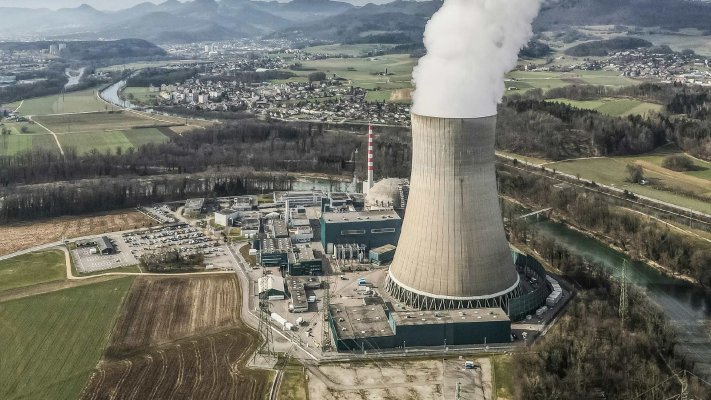
Another catalyst for local action to protect the countryside has been in response to a proposal for a 3000 acre solar panel installation, known as Lime Down, that would cover the land of a number of farms on the south and west of Malmesbury. Thousands of people have joined the campaign to ‘Stop Lime Down’ as they are appalled by the prospect of losing so much countryside to semi-industrial use. One family farm, that could be surrounded by the monumental solar panels (each 4 mtrs high) is a leading force in the Stop Lime Down campaign. This family farm is a modern dairy farm where all members of the family work in the business and look after their land for the purpose of producing milk. This purpose also creates ‘the countryside’ for all those people who live in the adjacent village.
The solar proposal is an unacceptable threat to people’s sense of place and love of home. The campaign to ‘Stop Lime Down’ has made explicit the cohesion between family farms and others. It helps to justify a subsidy system which encourages farmers to protect the countryside, which has a place in the heart of many people and where landscape character and biodiversity are a public good. Although the dairy farmers in the middle of the solar application would have been approached to agree to let their land be included, they could not readily forgo their sense of duty to their farm and their way of life, which they want their children and grandchildren to be able to continue. The Lime Down debate also highlights how state-promoted ‘green’ energy initiatives, justified on the basis of improving the environment, come at a cost of destroying farmland and nature.
In Britain, farming television series are popular viewing and Clarkson’s Farm has boosted the morale of farmers. Clarkson is loved by farmers as he has fully involved himself in his own farm and the people who work with him. Although he has come in from the outside, he has also been willing to join in and take up the responsibility of farming the land and face the same decisions and risks as his neighbors. The young farmer, Caleb, who works for Clarkson is typical of the young men that work on farms across the country. They are resourceful and sure of how to do things. Clarkson’s Farm series conveys the camaraderie between farmers when they are all devoted to a big job such as fixing a tractor or bringing in the harvest. The series portrays the current tension between farming for maximum production or for environmental protection and Clarkson himself has shown the predicament that farmers face. However, his intense interest in all that happens on his farm, has brought out his instinct to conserve the natural assets and to influence farmers around him. He began by setting out to farm economically but, with time, he has taken on the responsibility of stewardship and enjoys its rewards.
Ancestral patterns of ownership and labour speak to us from our landscape.
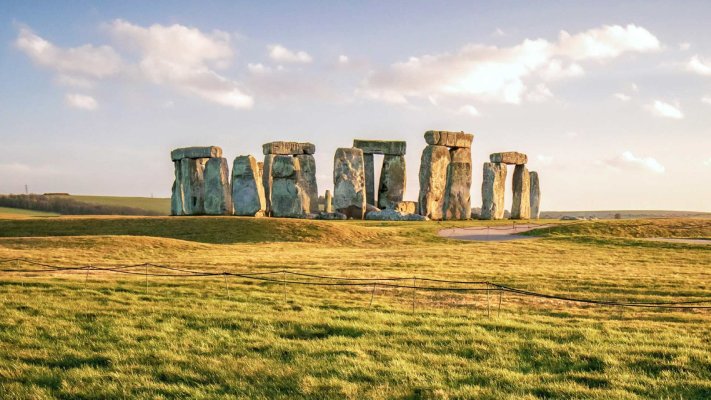
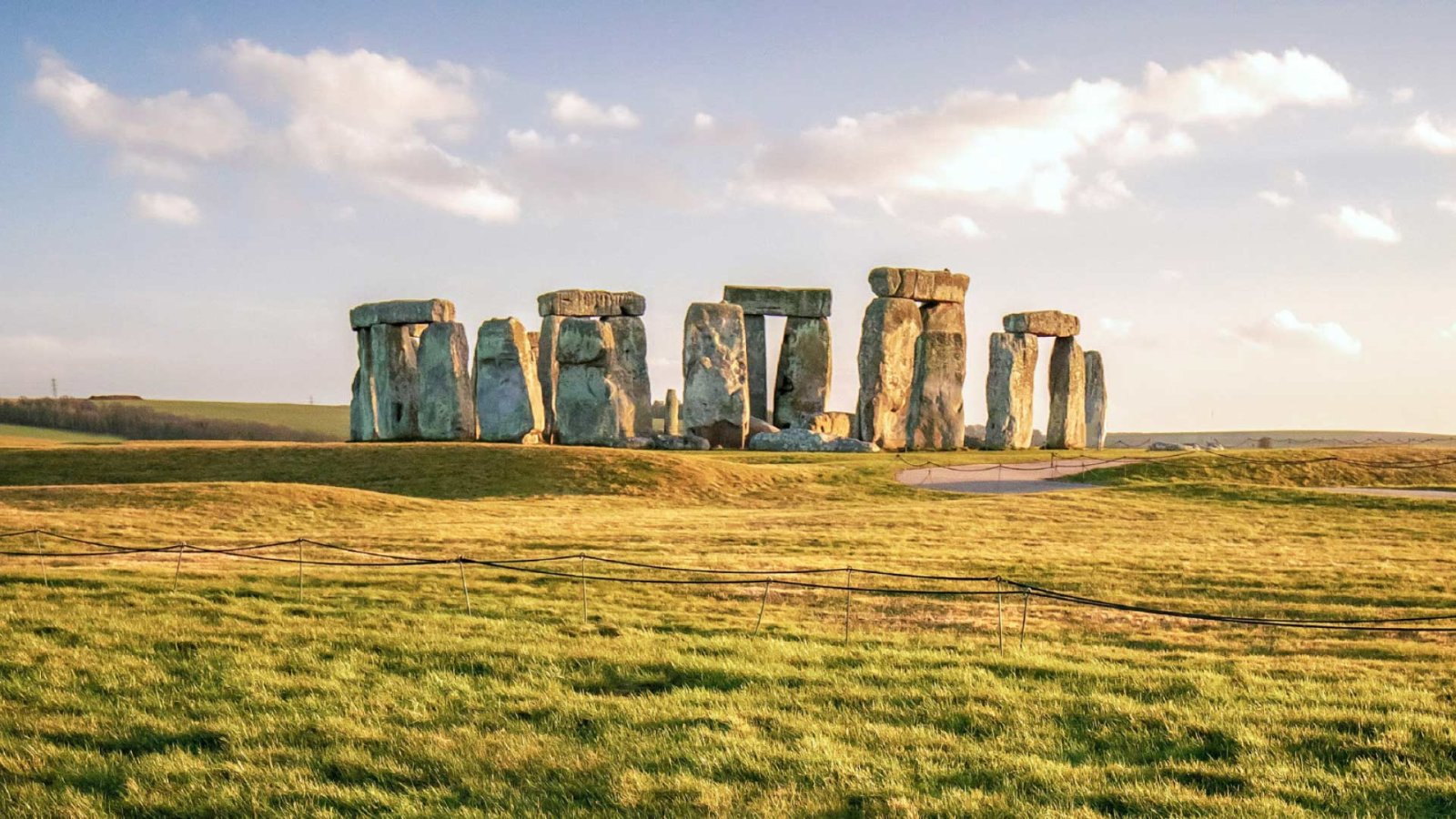
For me, the inspiration to conserve the landscape, comes not just from observation and community engagement, but also to continue the interest shown by writers and artists who have recorded and responded to it. This year marks the 400th anniversary of the birth of John Aubrey, a 17th Century diarist and biographer, most famous for his work of short biographies called Brief Lives. These biographies give an intimate view of his subjects, appearance, character, qualities and flaws. The Wiltshire Museum of Chippenham is due to open an exhibition recording his childhood here outside Malmesbury and to put on show his manuscripts which form his unpublished Natural History of Wiltshire. Aubrey committed to paper a biographical account of the landscape and was one of the first to record the ancient Wiltshire stone circle monuments of Avebury and Stonehenge. Writers and artists put themselves in direct relation with their surroundings and convey to us both more detail than we might ourselves notice and provide context as to what we might find valuable. Both Turner and Constable painted Wiltshire scenes, and both captured the agricultural nature of the county elevated by its great churches. The early twentieth-century arts and crafts artists of the Cotswolds started to add detail of local plants and animals to their work and show an interest in rural crafts and skills that are the basis of countryside management. Literature, poetry, art and even music offers another human lense through which to relate to a landscape and appreciate every detail.
One of the greatest gifts of the past 30 years living at Sundey Hill Farm is to have books written by Roger that chronicle the human ecology of this area and develop a conservative philosophy for environmental protection. While I and my neighbors may have good instincts about what is important, and a practical way of achieving it, Roger was able to capture in words what we value and why.
In the earlier extract from On Hunting, the image of a desolate landscape of agri-business is presented and Roger yearns for ‘the imprint of human life’, which he thinks might now only be available through literature. Yet in the move to Sundey Hill Farm, he discovers the imprint he is looking for and manages to capture it in words. His book about settling at Sundey Hill Farm is called News from Somewhere (2004) and creates a lovely account of our area and our neighbors: “North of the village of Brinkworth, bounded to the west by the ancient borough of Malmesbury, to the north by the Malmesbury-Cricklade road, and to the east by Webb’s Wood and Somerford Common… two surviving fragments of the Forest of Braydon – lies a string of small hills, where the old economy of the claylands endures, altered by the demands of modern life, but rooted, for all that, in customs that are part of the landscape. Narrow roads wind between farms that bear names familiar since records began: Braydonside, Washpool, Stoppers Hill, Moor Lane, Pink Lane, Rouselands, Sundey Hill. They are places of deep settlement, where families draw their nourishment as trees draw nourishment from the soil. And the farmers bear their increasing burdens as trees bear the weather, knowing that to be uprooted is to die.”
The experience of settling here and becoming immersed in taking care of the land and being taken care of by our neighbors led to the idea that the impulse to protect the environment begins with the love of home, or ‘oikophilia’ — a term Roger coins in his book Green Philosophy – How to think seriously about the planet (2013). He says: “I argue that environmental problems must be addressed by all of us in our everyday circumstances, and should not be confiscated by the state. Their solution is possible only if people are motivated to confront them, and the task of government is to create the conditions in which the right kind of motive can emerge and solidify. I describe this motive (or rather, family of motives) as oikophilia, the love and feeling for home, and I set out the conditions in which oikophilia arises and the task of the state in making room for it. I defend local initiatives against global schemes, civil association against political activism, and small-scale institutions of friendship against large-scale and purpose-driven campaigns.”
Life at Sundey Hill Farm, or ‘Scrutopia’, as it is affectionately nicknamed, is based on a personal connection to the surroundings and to those people past and present who have looked after the land. It can offer we who live here and visitors alike a sense of place and fulfilment where the land bares the imprint of human life and makes one feel at home.