Parallel to the spread of consumerism, attitudes and behaviours developed that radically challenged it, and with consumerism they challenged all traditional civilisation and culture.
Is it still possible to educate in today’s world? The question is simple and the answer is clear: yes. In any situation – even the most negative, as documented, for example, by Janus Korkzak’s extreme experience in Treblinka – education is always possible.
Of course, in order for my answer not to be a mere statement of principle, and for educational intervention to be effective, it is necessary for the educator to take into account all the factors of the situation in which it takes place and to offer their proposal in appropriate terms. For this reason, I will divide my speech into two parts.
The first: what are the fundamental characteristics of the society in which education takes place today? The second: what are – consequently – the characteristics of an educational action that wants to be effective today?
One of the most acute descriptions of the situation of the younger generations in the Western world is found in the book by Michel Serres, a French academic, Petite Poucette. ‘Without us realising it, in the short interval that separates us from the 1970s, a new type of human being has been born. He or she no longer has the same body, the same life expectancy, no longer communicates in the same way, no longer perceives the same world, no longer inhabits the same space. [...] No longer having the same mind as their parents, he or she knows in a different way. He or she writes in a different way. [...] They no longer speak the same language’1. Should anyone think this is an exaggeration, they can do two things. The first would be to read Serres’ book, which documents point by point what he summarises here. The second is to actually spend time with young people. If they do, they will realise that everything Serres writes is true.
One last observation I take from Serres: ‘Better still, they have all become individuals [...] The individual no longer knows how to live as a couple, he divorces; he no longer knows how to behave in class, he fidgets and chats; he no longer prays in church. Everyone says that ideologies are dead: it is the affiliations they recruited that are disappearing. [...] Like an atom without valence, Pollicina is completely naked’2. In other words, one could say that a key characteristic of our young people is loneliness, ‘one of the most insidious evils of our time’3.
While there is undoubtably an epidemic of loneliness, its origins are remote, as Mattia Ferraresi observes. ‘Loneliness is a product of modernity, which emerged with the affirmation of the individual, a process that has its roots in the sensibility of the Italian Renaissance literati’4. “In the fulfilment of that exciting process of liberation from constraints, dogmas, traditions, authorities and structures that goes by the name of modernity, the individual finally found himself alone. And with some surprise, he found this condition, achieved with so much effort and sacrifice, rather bleak”5.
For centuries, the individualism that emerged during the Renaissance remained largely confined to the upper classes of society, while the vast majority of the population continued to live according to Christian values, both Catholic and Protestant. The values and forms of the Christian tradition gave individuals a place in the cosmos and in the community, and ensured a role for authority and education.
However, even though the Christian tradition remained dominant in terms of public visibility, it was slowly undergoing a transformation from within. As Don Luigi Giussani, an Italian priest who sparked a great movement of education in the faith in the second half of the 20th century, observed: ‘Dieu seul est grand, mes frères’: God alone is great, my brothers. Thus the famous orator Jean-Baptiste Massillon began his funeral oration for the Sun King in Notre Dame Cathedral. The death of Louis XIV of France is a sign of the era in which reason claimed to occupy all the space of God’s intervention in man, in every sense. Therefore, the Church [...] took up a defensive position at the pastoral level to defend the morality of the people, taking for granted the evidence [...] of dogmatic content. This led to a lack of defence and nourishment of the faith of God’s people, since it is through cultural activity that the life of a people deepens and becomes historically generative [...]. Now, it is as if we were overwhelmed by the extreme consequences of the rationalist rebellion against the living God who revealed himself to man6.
This is exactly what happened: corroded at its foundations, the Christian tradition in Western Europe collapsed almost suddenly in the aftermath of the Second World War, driven first by the rapid rise of the consumer society and then by the protest movements of 1968. “Until the middle of the twentieth century,” writes Olivier Roy in Is Europe Still Christian?, “it was taken for granted that the dominant mentality was a secularised Christianity. [...] Basically, the morality of the French with a secular tradition did not differ from the morality defended by the Church [...].
However, everything changed in the 1960s, starting with two simultaneous movements: the ‘aggiornamento’ brought about by the Second Vatican Council to Catholicism, and the sexual revolution that erupted in that decade. It was the latter that produced the real de-Christianisation, which consisted not so much in the collapse of religious practice as in the emergence of a new anthropology centred on human freedom’7. It is the same dynamic that Pier Paolo Pasolini notes with regard to Italy: ‘The previous ideology desired and imposed by those in power was, as we know, religion, and Catholicism was, in fact, formally the only cultural phenomenon that ‘standardised’ Italians. Now it has become a competitor of that new ‘homogenising’ cultural phenomenon that is mass hedonism: and, as a competitor, the new power has already begun to liquidate it for some years now. In fact, there is nothing religious about the model of the Young Man and Young Woman proposed and imposed by television. They are two people who validate life only through its consumer goods (and, of course, they still go to mass on Sundays: by car).”8 .
Parallel to the spread of consumerism, attitudes and behaviours developed that radically challenged it, and with consumerism they challenged all traditional civilisation and culture: ‘The antagonistic force of the youthful archetype is disruptive: it ridicules the authority of parents, the intransigence of teachers, the repression of the police, the power of ministers’9 until it explodes in the riots of 1968, in the illusions they aroused, in the trail of blood they left in their wake – especially in Italy, but not only there – and finally in the disappointment of so many who realised they had ‘seen within reach / a marvellous victory that did not exist’10. ‘We thought we were changing the world, but instead the world changed us,’ comments sadly one of the protagonists of the film We All Loved Each Other So Much11.
In reality, the youth culture of the 1960s and the protests of 1968 did change something – and in this, consumerism and its opponents were allies: they destroyed the value of authority.
We must recognise that this criticism of authority also had good reasons. Here too, the roots of the problem go back a long way. As Mauro Magatti and Monica Martinelli explain in La porta dell’autorità (The Door of Authority), in the modern era, “authority tends to coincide with the exercise of power, with the consequence of reducing, to the point of eliminating, the space for creation for those who follow”12. With the disappearance of the reference – real, though often not formal – to the supreme authority of God, too often in the nineteenth and first half of the twentieth centuries, fathers began to see themselves as absolute authorities, masters of their children’s lives13.
Thus, the attack on authority in the 1960s became a good opportunity to rediscover its true nature. The notion of auctoritas, authority – Magatti and Martinelli explain – originated in the Roman world and is distinct from that of potestas, power. Potestas refers to the right to command, to impose rules, and depends exclusively on the position that the person holds. The notion of auctoritas, on the other hand, is more complex. On the one hand, ‘the auctor and auctoritas are originally located within the sphere of the sacred’14: the root of authority lies in fidelity to one’s origins and in the authenticity with which the person embodies that fidelity in their own life. On the other hand, ‘authority does not limit the freedom of others: it becomes ‘binding’ only and precisely because others perceive that it addresses their freedom as such. [...] The auctor is in fact both the one who ‘increases’, ‘augments’, ‘expands’ - meanings associated with the verb augere - and the one who dares, giving birth to something new while, at the same time, continually embarking on the adventure of living. […] A process that is accomplished by recognising that the truth of the self, like that of the other – and of life – is something over which our power has no hold’15. ‘The auctor is, therefore, the one who is capable of initiating and directing, […] who does not limit himself, therefore, to increasing, much less identifying himself with giving orders’16.
The ancient Romans already understood this! Authority is exactly this: a person committed to their own life, to the tradition they have received, to their own destiny, who offers this lived tradition to the freedom of young people and accompanies them in rediscovering it, without claiming to possess them, ready to rejoice when the freedom of others generates “something that surprises the author himself”17.
In summary, we could say that the young people of the 1960s were right to rebel against an authority reduced to power; at the same time, they were calling, perhaps unconsciously, for an authority that was truly authoritative, that pointed to a ‘beyond’ and that would relaunch their freedom. Only very rarely did they find it.
These observations on authority introduce us to the second part of our journey, the challenges of education today. And here I will state it right away: the crisis in education today is not a crisis of young people, it is a crisis of adults. This is something that many recognise. ‘If this generation is anxious, it is our fault as adults,’ observes Pier Cesare Rivoltella, professor of pedagogy at the University of Bologna. ‘Young people suffer from a “loss of the future” because ours is a society of uncertainty, but we are the ones who built it that way. If they are anxious, it is because they cannot find meaningful role models among adults who are able to listen to them’18. The responsibility, echoes Matteo Lancini, psychologist, lies with ‘this chaotic and individualistic society, characterised by the loss of significance of adults, who are themselves fragile and focused only on themselves’19.
The difficulties of today’s young people are a sign of the failure of a generation of adults who have either given up on the task of educating them or are trying to do so in the wrong way.
To explain this point, I often refer to the parable of the prodigal son (Luke 15:11-32). The story is one of the best known in the Gospels: a son asks his father for his share of the inheritance, leaves and squanders everything, until he is reduced to poverty; then he returns, mortified, asking to be taken back as a servant; but the father welcomes him with open arms and throws a big party, ‘for this son of mine was dead and is alive again; he was lost and is found’ (Lk 15:24). It is such a well-known story that the behaviour of the father – who, in Jesus’ words, is obviously God the Father – seems natural to us. However, if we think about our own experience, it is not natural at all. Let us try to put ourselves in the shoes of the thousands of real fathers who at some point hear their son say (who hasn’t been there?) ‘I hate living at home, I’m leaving’. What are the most common reactions? I see three.
The first is that of those who simply give up on educating their children and quietly let them ‘learn from experience’. I see two main factors behind this resignation. The first is the mistaken sense of freedom that prevails today, whereby freedom is simply doing whatever one feels like, whatever one’s instincts dictate at the moment. The second is the abandonment, even by parents, of all criteria of value, the equivalence of all behaviour. The result is a father and mother who let their child do whatever they want, because anyway, ‘if that’s how they feel’, it’s fine.
Then there are the reactions of those who do not give up trying to educate, but do so in inappropriate ways.
Social media is scientifically designed to retain those who visit it and induce them to stay as long as possible, to ‘scroll’ through one image after another
The first inadequate reaction: ‘No way, I’m locking the door, you’re staying here’. This is the reaction of parents we might call ‘conservative’: inherited truths are not to be questioned, you must live as you always have. It is the temptation to exercise authority as power (as we have seen), to restrict children’s freedom in order to ensure their happiness. A very human temptation, but a wrong one, as I learned many years ago from Don Luigi Giussani: “The temptation of power over souls is a temptation that we all have. Power over souls: to possess them for their own good; to take away their freedom to ensure their happiness. Christ died to leave freedom in us! Now, the more powerfully we desire the freedom of our pupils, that is, that they reach their destiny – and freedom reaches its destiny the more powerfully we desire this – the more painfully and miraculously our respect for their decision deepens. There can be no happiness for them that they have not chosen, no destiny that they have not recognised and accepted”20.
The second inappropriate reaction, which at first glance appears to be the opposite but is actually symmetrical, is that of parents we might call ‘progressive’: ‘Fine, I’ll come with you’. On the surface, this second temptation accepts the child’s freedom. In reality, this is not true: this father thinks that his child cannot face the world alone, thinks that he always needs a father – or a mother, it’s the same thing – to watch over him. And what is the consequence when the child experiences the disastrous result of his choices first-hand? That his father is there with him, and therefore he has no home to return to!
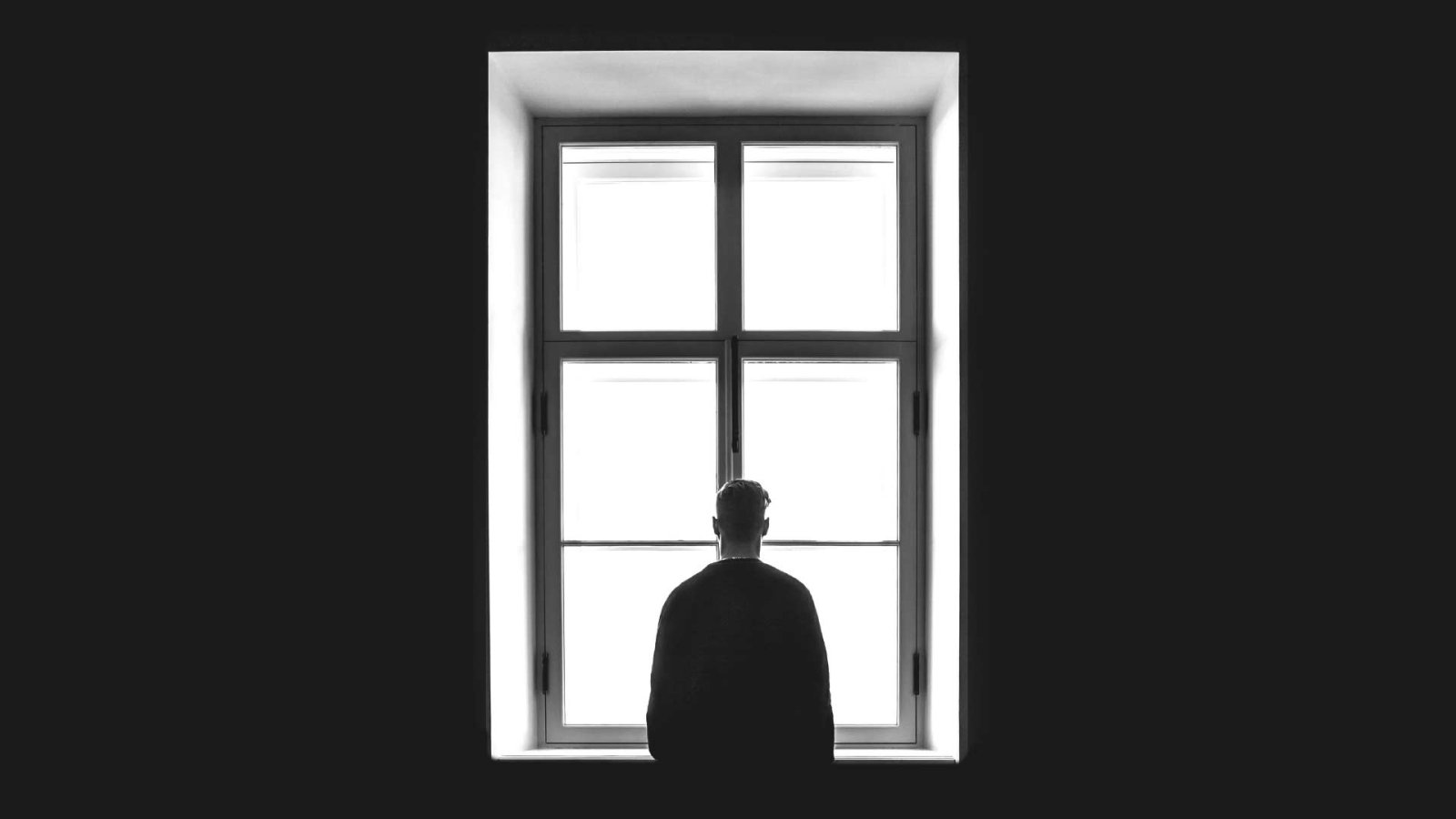
What does the father in the parable do instead – who is the eternal Father, and therefore the model of all authentic fatherhood and parenthood? He simply stays: he continues to live what gives meaning to his life, in the certainty that sooner or later his son will understand – through experience, not words – his mistake and return. Mind you, he does not simply let his son go, like a parent who gives up: he lets him go because he respects his freedom to the fullest; but every evening he stands at the window waiting, certain that his son will return.
This is the guideline, this is the model for an adult who truly wants to educate today. In the thousands of meetings I have with teachers and parents, I often illustrate this with two very simple examples.
The first is the example of trees. What do trees do? They perform chlorophyll photosynthesis: they absorb carbon dioxide and release oxygen. Why is it so pleasant to walk in a forest? Because the air is pure, it is oxygenated. Do trees care about those who pass through the woods? No: they do their job, they purify the air. This is the task of adults: to do their job, to purify the air. What does it mean, leaving the metaphor aside, to purify the air? It means absorbing all the evil in the world and giving back the good. It means living a life certain that good exists and that it wins. It means living a life so joyful that our children look up from their electronic devices and, looking at us, say: ‘Mum, Dad, teacher, I want to be as happy as you are’.
The second is the example of the sea. Today, it is as if young people were living in a basin in the middle of the desert. In the middle of the basin there is a little water, but it is dirty, swampy water. Young people see nothing else and are content with this. The adult is someone who climbs up to the edge of the basin and from there sees the sea in the distance and says to everyone: “Look, there is the sea! There is the sea, there is a bigger horizon, there is a way of living life that is bigger than the narrow horizon in which your smartphones and social media confine you”. Except that the children are happy with their little bit of water, while the adult is proposing a long and tiring march through the desert: why should they follow him? The children will only find the energy to face the journey if they see at least a reflection of the sea shining in the eyes of the person calling them.
And so we come to the topic of technology, which is crucial in all discussions about education today. There are a thousand voices blaming the crisis in education on smartphones, social media and artificial intelligence. I am of the opinion that this is not the root of the problem.
Of course, I understand perfectly well that modern media has extraordinary power, that their ability to penetrate the lives of young people – and not only young people – has a frightening force. Among other things, it seems to me that social media is the most perfect realisation of the educational ideal outlined by Rousseau in Emile. How, one might ask, can you criticise Emile, the hymn to libertarian education, the sacred text of modern pedagogy? Let us read Rousseau’s words: ‘Always let him believe that he is the master, but always be the one holding the reins. There is no subjection so perfect as that which preserves the appearance of freedom: his very will is thus in your hands. Is not the poor child, who knows nothing, can do nothing, knows nothing, entirely in your power? [...] Are you not free to influence him as you please? [...] Undoubtedly, he must do only what he wants, but he must want only what you want.”21
Social media is scientifically designed to retain those who visit it and induce them to stay as long as possible, to ‘scroll’ through one image after another, to take in everything that is offered there, without any ‘imposition’. Is this not the perfect realisation of Rousseau’s ideal? On social media, at first glance, no one imposes anything on anyone, no one forces you to stay there and look at what I propose. At the same time, there is nothing more false than this apparent ‘freedom’: everything is done so that ‘the poor child who knows nothing, can do nothing, knows nothing’ is ‘entirely in your power’: he enters a social network, convinced that he is doing what he wants, and instead he falls deeper and deeper into the trap that someone has set for him! Spontaneity always turns into totalitarianism, the ‘tyranny of emotions’22 becomes submission to those who know how to skilfully manipulate emotions.
Having said all this, I remain convinced that the spread of young people’s addiction to smartphones and social media is not a cause but a consequence of our educational failure. I refer here to a book that has recently sparked a great deal of debate, The Anxious Generation by Jonathan Haidt. In this book, Haidt documents the disastrous effects of early exposure to the internet on the cognitive and emotional development of our children, and his observations are indisputable. However, in the first part of the book, Haidt himself analyses the educational context that prepared, encouraged and accompanied the explosion of social media addiction, identifying its main characteristic as a negative attitude towards the world: ‘The most important change [...] was the growing sense that everything and everyone was a threat to children’23. ‘This is the world in which Gen Z grew up. A world in which adults, schools and other institutions worked together to teach children that the world is dangerous and prevent them from facing the risks, conflicts and emotions their brains needed [...] to overcome anxiety and set their minds to discovery mode’24. “Parents [...] have lost so much trust in their fellow citizens and their children that many now approve of the almost total elimination of freedom in childhood”25. The paradoxical result is that “we are overprotecting our children in the real world while not protecting them enough online” 26.
These are observations with which I fully agree. In the many meetings I have with parents, I see that their prevailing attitude towards the world is fear: all their educational efforts are aimed at defending their children from a world they perceive as hostile, and they prefer to see them ‘safe’ in front of a screen rather than let them run the risk of getting hurt on a playground or, when they are older, getting involved in some experience that is not under their total control.
From this point of view, I was greatly comforted by Pope Leo XIV’s recent Apostolic Letter on education. ‘To inhabit these spaces’ – here Pope Leo refers to the spaces of the digital environment – ‘we must [...] avoid any technophobia. Our attitude towards technology can never be hostile, because technological progress is part of God’s plan for creation”27. This is also because, as the Pope continues, “in any case, no algorithm can replace what makes education human: poetry, irony, love, art, imagination, the joy of discovery and even education in error as an opportunity for growth”28.
“Poetry, irony, love, art, imagination, the joy of discovery”: these are the words of education! I would add another, which not coincidentally appears in the title of the Apostolic Letter: hope. I do so with the words of Józef Tischner, a Polish priest and philosopher who in the early 1980s was a sort of chaplain to Solidarność:
Between father and son there is a relationship of trusteeship of hope. The father is the trustee of his son’s hope; he is its support and strength. We are the children of those in whose hands we have placed our hopes. So what does it mean to be a child? It means entrusting one’s hope to someone else. What does it mean to be a father? It means becoming the trustee of someone else’s hope. Hope is the source of our life. Therefore, the one who brings hope to man is man’s spiritual father. [...]
It must be said: only those who have hope educate. To this we must add: they educate by forming the hope of those being educated. Education is a work that is done around the spirit, a work done according to hope. [...] Each of us has certainly had an educator. What do we owe them? I think I am not far from the truth if I answer: an awakening. Before, we walked through life without knowing what life really was, as if in a half-sleep. The voice of the educator woke us from this slumber. The rest we had to do ourselves. Socrates compared the work of the educator to that of a midwife who helps a mother give birth. Thanks to the work of the educator, a truth is born in the soul of man. This truth becomes man’s strength.29
The hope and gifts mentioned by the Pope are not cultivated with a view to education, but are gifts that an adult lives for himself. A joke I always use when I talk about education is that ‘education is what happens when we don’t have the problem of educating’. As Pasolini once observed: ‘If someone had educated you, they could only have done so with their being, not with their words’30. Education is not made up of speeches, sermons, or warnings that we give to our children or students, ‘nor [of] lessons on how to manage emotions’31: education is the air they breathe (see the example of trees), education is the atmosphere they experience at home or in the classroom. An atmosphere that depends on how we adults feel about life, how we comment on world events, whether we ourselves have – to use Haidt’s expressions again – a ‘defence mode’ or a ‘discovery mode’, an open or closed attitude towards reality, its challenges and its unexpected events.
There are two keys to regaining educational capacity. The first is that adults should not concern themselves with young people, but with themselves. The second is that we should not be afraid of the strange, rebellious, eccentric behaviour of young people, but understand that they are like Pinocchio’s ‘donkey’s braying’ (a book that I hope everyone knows, as it is one of the most translated Italian books...). We are in chapter XXXIII. Pinocchio, after five months in the ‘Land of Toys’, has become a donkey and is now performing as a trained donkey in a circus. As he suffers this terrible humiliation, he looks up and sees the Blue Fairy, the good woman who has saved him a thousand times, among the spectators. Then Pinocchio, overcome with enthusiasm at her presence, cries out: ‘Oh, my Fairy! Oh, my Fairy!’ But instead of these words, a bray so loud and prolonged came out of his throat that it made all the spectators laugh’32. Allow me to refer here to the book I dedicated to The Adventures of Pinocchio:
An extraordinary invention, because it captures the situation of all our children in a striking image.
What are our children, if not Pinocchios in search of their humanity, in a world that does everything it can to reduce them to beasts covered in ribbons? And when they see a flash of blue light, a glimpse of sky, something beautiful, what do our children do, like Pinocchio? They cry out, they beg. Except that they are incapable of doing so. They are incapable of articulating a truly human sound. Their poorly educated desire produces an inarticulate noise, a heart-rending cry. What are all their disorderly gestures, their excessive actions, their clumsy challenges, if not this braying of a donkey? The braying of a donkey, the cry of someone who asks for a glimpse of the sky but is unable to express their need properly; and so they hurl it towards the sky as best they can, in the somewhat animalistic ways that are the only ones they are capable of using.
But the educator, the true adult, is the one who knows how to recognise the cry of the soul in the braying of the donkey. How often do young people challenge us, provoke us, throw gestures, behaviours and disguises in our faces that are truly donkey-like; but we have the task of recognising within these clumsy cries, within these donkey brays, the voice of their hearts asking for companionship, goodness, a meaning for life.33

To conclude, I would like to illustrate what I have said with three examples.
The first example is a letter written to me by a ‘difficult’ young person whom I hosted in my home for some time.
Our generation has this problem, like all generations before and all those after. Hope is the problem. I have heard too many teachers and parents say: these young people no longer desire anything, they are not passionate about anything, beauty no longer captivates them... The question these teachers should be asking themselves, dear Franco, is not why we young people today seem to desire nothing, or how we can express our identity, but what they themselves hope for. Because then young people assimilate that hope as if it were manna from heaven, like air, even if they seem not to care. And young men will base their adult identity on this hope they have breathed. But hope must be real. Their hope, if it is real, is fascinating in itself, but it must be real, truly lived.
It must be true like that of my grandfather, who, during the war, was shipwrecked at sea for two days and two nights because his ship was sunk by the British, who saw many of his companions die horribly and who then saved himself, carrying with him the anguish and trauma of those days. And without psychologists or teachers of expressiveness, he raised a family, taught them to love, and to ‘do things with the seven sacraments’, as he liked to say.
Or my grandmother, who had a hump at the age of eight, who saw death in the streets during the war, who then set up her own shop, where she worked with sacrifice until old age. My little grandmother, whom I saw lift seventy kilos onto her shoulders and who taught us as children to kill snakes in the garden. She let herself be won over by my grandfather, who used to visit her in the village with his ice cream van and courted her with it. They got married within three months and were together all their lives, through Alzheimer’s, sacrifices and problems. Do you understand, Franco? My grandfather expressed his love with the ice cream van, and my grandmother, who was as tough as marble but as intelligent as an angel, married him. Full stop. She married him in dialect, she married him with hope in her heart. Because my grand ‘s dialect had something to say, it had hope.
Marco’s grandmother did not have the ‘problem’ of educating him, but she educated him more than anyone else because she lived with hope for herself.
The second example is a story that happened recently in Rome. At the Pacinotti Technical Institute, a school in the suburbs, the majority of students are ‘difficult’. Don Massimo Granieri teaches religion there. Don Massimo is a great fan of rock music, so much so that he has a programme on Vatican Radio, and in class he often uses the songs he loves to talk to the students. Then he had a great idea: a live broadcast on Vatican Radio from the auditorium of the Pacinotti school, in which the students themselves would suggest the songs they love, explaining to everyone why they are important in their lives. When it was time to start the broadcast, Don Massimo felt a shiver of terror: ‘I’m alone (the teachers preferred to stay outside) with two hundred of the most unruly students, for whom swearing is the most common interjection. What will happen? A miracle happens: for an hour, two hundred students, without teachers to act as watchdogs, remain mesmerised by what is happening on stage, their classmates parading in front of them, each introducing a song. Of course, they are not silent: they sing along, applaud, cheer... but always in an orderly manner, and when they need to be quiet, they are quiet. Until the headmistress, intrigued by what she hears, pokes her nose in. And this is what she writes:
I could never have imagined what I saw and experienced when I walked through the door of the auditorium filled with students from the first to the fifth year. The students listened attentively to the story of one of their classmates who, wearing headphones and a microphone, answered questions naturally and with a touch of emotion. His friends were nearby, slightly to one side, as if to support him and make him feel that at that moment he was the live voice of their thoughts. And then the music started. The children crowding the auditorium sang a song in unison, and I looked at them: they were happy together. The journalists call me for an interview. Without any teacher having to ask for silence, the students listen attentively, nodding when I talk about them, about how it is not always easy to understand them completely. I see their almost surprised looks when I say that we should often try harder to understand their reasons. I am amazed by their expressions and the warmth they convey with non-verbal language. I rejoice in thinking how much meaning this crazy experience, this live radio broadcast that gives no one time to create pretence or superstructures, but which reveals itself to be true and alive, is giving to my work and my daily commitment. During the break, many students, instead of running away to the courtyard, stop to talk to me. They want attention, they ask me questions, they listen to my reflections, they ask for advice, they simply introduce themselves. ‘A lot of stuff’ they would say... Thanks to music and radio, we are on the same wavelength, the harmony between us is almost tangible.
Why was Don Massimo’s attempt successful? Firstly, because he took himself seriously, a passion that gave meaning to his life. Secondly, because he took his students seriously, he valued their abilities to the point of proposing something seemingly crazy like a live radio broadcast. The result was sensational: when an adult who is passionate about reality values his young people (whether they are students or children, it is the same thing), they respond with seriousness, loyalty and enthusiasm.
This is the exact opposite of what is documented in a recent article in the Italian newspaper Avvenire:
During a discussion about school experiences, a third-year high school student, enthusiastic about her encounter with the early philosophers, speaks up: “Those questions about the origin and destiny of everything are also mine, but when I expressed my enthusiasm, the teacher corrected me: for him, it is a scientific study that has nothing to do with me personally.” A final-year student replied: “As a member of the youth jury at a film festival, I shared with my peers our appreciation for a film that dealt with the very existential questions you mentioned, but the adults present invited us to focus our attention on other factors instead: acting, editing, photography...”. It is striking and painful how often we adults, perhaps driven by the best of intentions (precision in teaching, for example), contribute to extinguishing the fire that burns in the hearts of the young people entrusted to us, rather than rekindling it. Perhaps this is because that fire frightens us, confronting us with uncomfortable existential questions, questions that we think we have ‘resolved’ and do not want to reopen.34
The last example I would like to give concerns my personal experience. In recent years, with the Centocanti Association, the Diocese of Verona and the Rivela Association, we have organised exhibitions on Dante Alighieri’s Divine Comedy, first in Verona and then in over sixty Italian cities and towns. What’s new about that, you might say, everyone knows Dante...
I remain convinced that the spread of young people’s addiction to smartphones and social media is not a cause but a consequence of our educational failure
There are two new things. The first is that this initiative did not arise from a cultural project, but from the fact that Dante is my life’s passion. I discovered that Dante speaks to me at the age of twelve, which is why I decided to study literature and have been a teacher all my life. My former students and all those who attend my lectures now understand this: that Dante speaks to life. He speaks to the lives of his listeners because he speaks to my life, helping us to better understand the drama of each person’s life. The idea for the exhibitions came from a desire to offer everyone the positive experience that reading Dante has been for all of us.
The second novelty is the format of these exhibitions: high school students acted as guides. These students worked with me to delve into Dante’s text, to understand what it has to say to everyone’s life, and then took the risk of presenting what they had discovered in public, in front of dozens of strangers. The result was extraordinary: young people who had mediocre results at school, very shy young people who did not have the courage to open their mouths, discovered that they were worth much more than they thought, rediscovered the joy of studying, rediscovered the sense of their own greatness, the feeling of being made for great things. Because what Serres says, quoted at the beginning, may be true, that young people inhabit a world different from ours35. But it is even more true that their hearts are the same as ours. The hearts of young people are made up of a desire for goodness, beauty and truth which, deep down, is identical in all human beings, ‘a centre of gravity that even the craziest education has failed to shift’, as Kafka writes36. And when this ‘centre of gravity’ is touched, it lights up. I have received hundreds of testimonies to this effect; here I report those of two young people and a teacher.
What I found most significant for me was to act as a guide: talking, starting from the Divine Comedy, about the questions it raises for me, and doing so to complete strangers, was a real challenge, one worth facing and overcoming. Let me explain: the Divine Comedy raises big questions, especially for us young people, I think. And they are big questions because they speak directly to my life: they are questions about the meaning of my story, about the wounds of my past, about the evil I can do and about the great desire for Good that lives in me. And I had to talk about all this, about my own affairs, and my most important and profound affairs, not to my best friend, but to people I had never seen before and whom I may never see again in the future. All this, of course, with the fear of being judged for the things I said and, therefore, with the fear that my own life would be judged, in a sense. Yet this fear proved to be unfounded: talking about all this was wonderful, and I saw all the visitors leave with a joy on their faces that you don’t see everywhere, and this was also possible thanks to me. In short: it was worth facing this fear!
I remember well the eyes of those young people, one of them in particular. That look keeps me awake at night, it torments me. At first, it seemed to say, ‘My parents are making me waste this afternoon on old people’s stuff’. Suddenly, I saw it change. Suddenly, something happened. And I saw those eyes light up. I had the privilege of witnessing a miracle, and I was in the front row. ‘Assure me that it’s worth it,’ that girl seemed to be saying to me, ‘show me the stars. Don’t tell me about them, don’t explain them to me. Show them to me.’ Those eyes were thirsty for infinity and expected to find a reflection of it in mine. And I had to live up to that. I, Gabriele, a nobody, found myself in the position of having to show her infinity. Not an inch less, just Infinity. Because that was what those eyes were looking for. Not words, not explanations, but a living, real, present experience. And they were looking for it in me, in . Somehow they saw something ‘out of this world’ in me, and I, Gabriele, a nobody, cannot understand it. I had the opportunity to be an instrument of Infinity.
The world, society, and we ourselves continue to complain about this generation of slackers, indifferent, apathetic, misfits, and so on. And it’s all true, but there is a but. In fact, through these weeks spent together, with the exhibition and the work on Dante, we have experienced that if a young person meets an adult who is serious about reality and open to questions about their pain, goodness, and mystery, if they meet an adult who is concerned about this, and if this adult, when meeting the young person, treats them with equal seriousness, as a man, not as a child, knowing full well that the questions he faces are the same ones that dwell in the young person’s heart, and gives him confidence and offers him a path in which to get to know each other, to challenge each other, to be together in the face of those questions, to identify a possible path and to start walking it together to see what happens, then what happens is that the person flourishes, that life, school, Dante, an exhibition can once again be interesting even for a student who has failed multiple times at a technical institute, because now he is at the centre of that interest, thanks to a rediscovered tenderness towards himself through the eyes of another. After all, what is the point of teaching if not to help the young people entrusted to us discover their greatness?
I believe that the words of these young people and this teacher are worth more than a thousand speeches. Education is always possible, even in this age of loneliness and social media, because the questions that lie at the heart of human beings are always the same. There is only one condition: that the educator is a man or woman who is seriously committed to their own existence. A man or woman who takes seriously, to the very core of their being, the desire for goodness, beauty and truth that lies at the bottom of their heart, and who therefore takes seriously the same desire that lies in the hearts of their children, their pupils, the young people entrusted to them. When they feel looked at in this way, children flourish.
One last corollary. No one can play this game alone. The loneliness we mentioned at the beginning does not only devastate the lives of young people: it devastates the lives of adults. “If adults stop helping each other in the care of children,” Haidt notes, “parents find themselves alone. Parenting becomes more difficult, a source of greater fears”37. If we want to win today’s educational challenge, we must come together again, build relationships with adults who share our concerns. We must build new “constellations” – to use the word that recurs throughout the Apostolic Letter Drawing New Maps of Hope – that bring together parents, schools and educational institutions of all kinds, without fear of differences, but discovering that diversity is not an obstacle but a source of richness. “Constellations” that free us adults from loneliness and fear, and allow us to witness, “in the joy of [our] hearts”38, that life is good, that it has a great horizon, and that it is possible for everyone to reach it, whatever material or spiritual misery they may be living in.
1 Michel Serres, Petite Poucette, Le Pommier, Paris 2012, pp. 15–16. Translations by the author.
2 Ibid., pp. 17–18.
3 Mattia Ferraresi, Solitudine, Einaudi, Turin 2020, p. 3.
4 Ibid., pp. 96–97.
5 Ibid., pp. 92–93.
6 Luigi Giussani, Man and His Destiny, Marietti, Casale Monferrato 1999, p. 7.
7 Olivier Roy, Is Europe Still Christian?, Feltrinelli, Milan 2019, p. 43 (original edition L’Europe est-elle chrétienne?, Editions du Seuil 2019).
8 Pier Paolo Pasolini, Scritti corsari (Corsair Writings), Garzanti, Milan 1977, p. 29.
9 Claudio Widmann, C’era un ragazzo che come me. L’eternità breve dell’archetipo giovanile (There Was a Boy Like Me: The Brief Eternity of the Youthful Archetype), Edizioni Magi, Rome 2017, p. 60.
10 Pier Paolo Paolini, Poesia della tradizione, in Id., Trasumanar e organizzar, Garzanti, Milan 1971, p. 122.
11 We All Loved Each Other So Much, directed by Ettore Scola, Italy 1974.
12 Mauro Magatti – Monica Martinelli, The Door of Authority, Vita e pensiero, Milan 2021, p. 58.
13 As documented, among other things, in Gavino Ledda’s book, Padre padrone, Feltrinelli, Milan 1975, which played an important role in Italy in spreading the idea of an exclusively authoritarian father. See also Alexander de Willebois, Conversazioni eterodosse. Identità, paternità, senso del sacro, Jaca Book, Milan 1980, pp. 16-18 (original title Le sens du sacré, publisher unknown).
14 Ibid., p. 25.
15 Ibid., p. 17.
16 Ibid., p. 25.
17 Ibid., p. 17.
18 Interview with Pier Cesare Rivoltella, in La lettura, weekly supplement to Corriere della Sera, 15 December 2024.
19 Interview with Matteo Lancini, in Corriere della Sera, 5 November 2025.
20 Luigi Giussani, Reality and Youth: The Challenge, Rizzoli, Milan 2018, p. 229.
21 Id., Emilio, cit., p. 137.
22 See Paolo d’Angelo, La tirannia delle emozioni (The Tyranny of Emotions), Il Mulino, Bologna 2020.
23 Jonathan Haidt, The Anxious Generation, Rizzoli, Milan 2024, p. 106. Original edition: The Anxious Generation, Penguin Press 2024.
24 Ibid., p. 106.
25 Ibid., p. 112.
26 Ibid., p. 85.
27 Leo XVI, Apostolic Letter Drawing New Maps of Hope, 9.2.
28 Ibid., 9.3.
29 Józef Tischner, Ethics of Solidarity, CSEO, Forlì 1981, pp. 106-107.
30 Pier Paolo Pasolini, Lutheran Letters, Einaudi, Turin 1976, p. 32.
31 Jonathan Haidt, Op. cit., p. 68.
32 Carlo Collodi, The Adventures of Pinocchio, chap. XXXIII.
33 Carlo Collodi, The Adventures of Pinocchio, commentary by Franco Nembrini, San Paolo, Cinisello Balsamo 2023, pp. 348-49.
34 Matteo Severgnini, ‘Who am I?’: a question that challenges education, Avvenire, 2 November 2025.
35 ‘They no longer have the same global world, they no longer have the same human world’, Michel Serres, Op. cit., p. 11.
36 Franz Kafka, Diaries - 1910, in Id., Confessions and Diaries, Mondadori, Milan 1972, p. 126.
37 Jonathan Haidt, Op. cit., p. 108.
38 Ambrosian Liturgy, quoted in Luigi Giussani, Generare tracce nella storia del mondo, Rizzoli, Milan 2019, p. 205.