Behind this failure lies a deeper theological wound: the loss of faith in transcendence. Europe’s political institutions were born from the Christian conviction that power is legitimate only if it serves something higher than itself.
There was a time when Europe was not only a continent but an idea — the political heart of the world, the forge of truth, beauty, and power. Its cities radiated faith and knowledge, its armies set the boundaries of empires, and its thinkers defined what it meant to be human. Today, this same Europe seems to exist only as an ashamed memory of itself, a shadow cast by the monuments of its great founders often besmirched by their smug and self-satisfied descendants. It speaks often of values, but it no longer knows what they really mean beyond passing parliamentary majorities; it possesses wealth, at least for its elite, but not a meaningful purpose; it lives, but no longer believes in whatever it means to be truly alive.
The geopolitical eclipse of Europe is not a sudden event; it is the slow consequence of centuries of inner fatigue, of a spiritual entropy that has dissolved the unity between the true, the good, and the beautiful. Once the bearer of a universal mission — organising the journey of the individual towards transcendence — Europe has chosen comfort over meaning, process over purpose, and sentiment over faith. This transformation has also redefined Europe’s position in the world. Since the 16th century, Europe has started to prefer power over interiority; now, in the 21st century, once its civilisational potential exhausted and its technology copied by other civilisations, it has lost both.
Thus, for the first time since the early Middle Ages, Europe is no longer the subject of history, but its object. It moralises without armies, legislates without borders, and imposes sanctions that it ultimately has to pay itself. The bureaucratic empire seated in Brussels, with its endless directives and its sterile vocabulary of “values”, “rule of law” and “diversity,” believes it can replace the tragic realism of history with an administrative dream of universal harmony; that it can impose its own, passing whims as “human rights” unto all other civilisations. Yet, as the German jurist Carl Schmitt warned, the neutralisation of politics is itself a political act — one that leaves the field open to those who still believe in power.
The paradox of our time is thus that Europe, the cradle of geopolitics, has ceased to think geopolitically. It speaks the language of moral universalism in a world that has returned to the logic of civilisational struggle. While Russia and China proclaim their imperial traditions, while the United States asserts its strategic and cultural interests with growing clarity, while Islam is conquering ever larger parts of Europe and Africa through sheer demographics, and while India and Brazil start to carve out their own continental empires, Europe persists in believing that force can be replaced by law (but only the ones voted in Brussels), and deterrence by dialogue (but only when the outcome correspond to its own worldview). The results are visible to all: a continent unable to defend its borders, profoundly transformed by mass migration, dependent on imported energy, unable to guarantee its access to rare strategic resources, vulnerable to technological blackmail, and militarily subordinate to a NATO whose priorities are defined elsewhere.
This dependence would be less tragic if Europe’s and America’s interests still coincided. For decades, they did — during the Cold War, both shared the same enemy and the same moral framework, and Europe, after its moral discredit in the Second World War, was mostly content to leave the difficult decisions to Washington. But the Trump era has revealed to all what most had known since the 2000es: even formally, the transatlantic alliance is no longer an alliance of equals. “America First” is not an insult; it is the natural expression of a nation that still possesses a will to survive; what is scandalous is not that America defends its interests, but that Europe has forgotten it even has any.
From Washington’s perspective, the declining Europe has thus become a strategic periphery — a convenient market, a buffer zone, a moral laboratory for ideas that can be tested without risk. The United States is not hostile to Europe; it simply treats it as a junior partner, useful for rhetorical legitimacy and financial contribution. For all its idealism, the European Union functions today as a kind of vassal democracy: sovereign enough to preach, too weak to decide, not at all unlike the Greek city states once Rome took over not as an ally, but as a master.
The causes of this situation are not merely political or military; they are civilisational. The West’s crisis of sovereignty begins with a crisis of belief. A civilisation that has forgotten what it stands for and renounced any ‘absolute truth’ cannot project power without hypocrisy: Once God is replaced by sheer power, nothing remains once this power is gone except empty words. Europe’s ruling class still invokes ‘European values’, but these values have been emptied of content or even turned upside down: tolerance means de-Christianisation, human dignity means abortion and euthanasia, diversity means Islamisation, free speech means cancel culture, rule of law means sanctions against political enemies, equality between men and women means gender theory and LGBTQ cult, protection of the patrimony means the hate of our own history, democracy means billionaire rule, etc. As a result, the continent’s foreign policy oscillates between moral vanity and strategic paralysis and is increasingly ridiculed by the other powers.
The philosopher Raymond Aron once said that Europe, having renounced war, entered a dangerous, quasi post-historical illusion — as if the rest of the world had joined its pacifist utopia. The wars in Yugoslavia, Ukraine, the Caucasus, and the Middle East should have brutally ended this dream, but the message seems slow to seep into the minds of the Europeans. Instead of reminding us that power is not an anachronism, and that civilisation without force is merely decoration, Europe retreats further and further into abstraction – and into ridicule. It multiplies resolutions, funds NGOs, invests a fortune into making its military forces gender equal, and exports seminars on LGBTQ rights to countries that are busy building war drones.
Behind this failure lies a deeper theological wound: the loss of faith in transcendence. Europe’s political institutions were born from the Christian conviction that power is legitimate only if it serves something higher than itself — that the ruler is accountable to God, that justice has an objective content. Once that vertical link is broken, power becomes a mere function of interests, and society dissolves into competing appetites. Globalism is simply the last phase of this disintegration — the reduction of civilisation to a global marketplace governed by sentimentality, algorithms, and the ruthless appetite for money and power of elites for whom democratically elected positions are only transitory stages on their path towards even more money and power.
Globalism is simply the last phase of this disintegration — the reduction of civilisation to a global marketplace governed by sentimentality, algorithms, and the ruthless appetite for money and power of elites for whom democratically elected positions are only transitory stages on their path towards even more money and power.
The current European order reflects precisely this confusion. It is neither empire nor federation, neither democracy nor oligarchy, but a hybrid system whose only constant is spiritual void, material stagnation, political repression and moral infantilism. The ideal European citizen is not the patriot, the believer, or the scholar, but the compliant consumer who recycles correctly and votes responsibly – for the left, of course. And yet, beneath the polished surface, anger grows, the silent resentment of peoples who feel expropriated of their identity, taxed for their own disappearance, and instructed to be grateful for it.
Geopolitically, this anger is dangerous, for it can be captured by forces hostile to Europe’s unity. The decline of legitimacy always opens the door to the politics of resentment. What we are witnessing today is the return of a situation reminding the crisis of the late Roman Republic, tumbling inexorably towards civil war and ready to settle a lot of old accounts through violence. And yet, the eclipse of Europe may also be a prelude to an important step forward towards its ultimate destiny: Every civilisation experiences moments of exhaustion, when the antithetical forces rejecting transcendence reach their culmination point and risk to destroy the civilisation from the within. But in such times, the end is not inevitable, as the antithesis can be overcome by a new, final synthesis, where modernity is combined with a rediscovery of initial purpose and thus the inauguration of a last, final stage, similar to the Roman Empire, the Han dynasty, the Gupta, or the Ramessides. For Europe, that closing synthesis can neither come from globalist utopia nor from nationalist nostalgia: it must come from a new form of civilisational patriotism allying tradition and reason.
If Europe is to survive as a political subject, it must first remember what it means to be a civilisation; it must learn once again to think in centuries, not in electoral cycles, and to act with the awareness that culture, demography, faith and power are inseparable. But above all, it must regain the courage to define its own interests — not against America, but beside it; not against the world, but for itself. For only a Europe conscious of its destiny can still be an ally worth having. The choice that awaits us is thus not between right and left, or between reform and stagnation, but between survival and self-dissolution. And in this twilight, it is the conservatives — those who still remember the meaning of the sacred, of hierarchy, of duty — who must prepare the groundwork for the dawn.
If Globalism Wins: - Europe as a Moral Theme Park
Let us imagine, for a moment, that globalism prevails entirely across Europe. The scenario is not implausible; it is, in fact, the logical endpoint of the ideology that currently dominates our institutions, universities, and media. Globalism, in its European form, is not an external imposition, it is an internal heresy: the final, secularised phase of Christianity, stripped of transcendence but preserving its universalism and moral vocabulary. What remains is a humanitarian religion without heaven, a moral economy without metaphysics, a negative anthropology without redemption.
In this future, the European Union becomes not the federation its Christian-democrat founding father once promised it to be, but a woke bureaucracy. Its legitimacy does no longer rest on faith or consent, but on a green-leftist moral narrative: climate justice, gender equality, inclusivity, sustainability, multiculturalism — a liturgy of virtue endlessly repeated by political clergy and media catechists. Law has ceased to express reason and only illustrates emotion; legitimacy no longer comes from the people, but from experts, from NGOs, or an opaque ‘international community’; dissent is not argued with, but pathologised as ‘hate speech’. The result is a continent that speaks incessantly of freedom while living under permanent surveillance; a surveillance system still avoiding gulags or torture, but based on an implicit social credit system powered by AI, social media and bureaucracy; a system Tocqueville foresaw as the soft despotism of comfort: an empire of safety where all risk, conflict, and transcendence are suppressed in the name of well-being.
However, the moral vocabulary of this regime hides a nasty economic reality. Beneath the surface of progressive humanitarianism operates a powerful alliance between global finance, digital oligarchy, and bureaucratic governance, colluding to destroy what remains of the middle class. The moral rhetoric of ‘inclusivity’ serves as a perfect distraction from the real redistribution of power: from the citizen to the corporation, from the nation to the network. ESG directives, climate credits, and social scoring systems function as new forms of feudal obligation — the moral justification for the concentration of economic control. The postmodern peasant no longer pays tithes to his baron, but endless subscriptions to platforms and taxes to supranational agencies, ‘owning nothing without being truly happy’.
The green transition illustrates this logic perfectly. Officially, it seeks to save the planet; in practice, it destroys the industrial base of Europe, submits the citizens to the great corporations via the devaluation of property through endless regulations, transfers production to Asia, and makes the continent dependent on rare strategic goods either controlled by China or the US. The result is not sustainability but billionaire socialism — a society of limits for the people and exemptions for the powerful.
At the social level, the consequences are equally devastating. The demographic implosion of Europe continues, compensated not by birth but by immigration. Yet immigration, far from being a solution, becomes a tool of moral blackmail. It is no longer presented as a political choice but as an ethical imperative — the ‘debt of the coloniser’, the ‘duty of humanity’. The nation, once defined as a community of destiny, is redefined as a logistical space where populations circulate according to the needs of the market and the dictates of compassion; a world, in which identity itself becomes a suspect category, especially when it is autochthonous.
This ideology of globalism transforms Europe into what I once called a ‘moral theme park’ — a civilisation that survives only as spectacle. Its cathedrals become museums, its traditions festivals, its languages brands. The sacred is commodified, and the beautiful is algorithmically optimised. Tourists still marvel at the ruins, but no one builds new monuments, and the ugly truth of pauperisation, desertification and Islamisation are hidden or tabooed.
In this future, democracy itself becomes simulation. Elections are held, debates are televised, but the range of acceptable opinion shrinks every year. The real decisions are taken elsewhere — in committees, boards, expert panels that answer to no one – and depend on the support of the billionaire ‘Caesars’ of the modern West. While the patriots are discredited as fascists, the self-declared ‘democratic’ parties only differ in slogans but not in worldview, are led by variations of the same managerial class, and resemble products made by IA. The citizens, deprived of any real political influence, retreat into private life or virtual activism, while the idea of the polis — of a common destiny shared by free individuals — fades into the background noise of entertainment.
Geopolitically, this Europe has no future. Its armies will rust, its technologies will become outdated, its industries will be gradually sold. Admittedly, it may still remain relatively wealthy for a time, living on accumulated capital, but eventually, the loss of resilience and the accumulated impact of missed reforms will become visible everywhere.
And yet, the greatest danger of globalism is not domination but discredit. A civilisation that pretends to speak for humanity but cannot even secure its own continuity invites contempt, even more as it triggered so many resentments while it dominated the earth. When the rest of the world looks at Europe — decadent, self-hating, obsessed with guilt and comfort — it sees neither a master nor a teacher, but a stern warning. The West that once converted the world through its faith now preaches atheism with missionary zeal; the continent that invented the cathedral now worships the windmill – nobody can criticise migrants for not wanting to integrate into such a collective folly.
If globalism triumphs completely, Europe will thus not be conquered, but it will simply dissolve. There will be no final battle, no spectacular collapse — only the quiet absorption of a once dynamic civilisation into the algorithms of an international governance shared in reality by the new multipolar stakeholders and increasingly pauperised. Europe’s nations will still exist as administrative zones; its peoples as demographic data; but the reality will be one of utter fragmentation, where the consumption potential of the Europeans will feed the bank accounts of Chinese or American companies, not dissimilar to the exploitation of the Sumerian city-states or the Nile-valley under countless generations of foreign invaders.
And yet, as so often in history, it is precisely in such moments of exhaustion that the possibility of reversal appears. For when a civilisation reaches the limit of its abstraction, when it has denied all that made it human, the hunger for reality returns. Out of the ruins of globalism may still arise the will to rediscover the concrete: faith, community, beauty, and family. But for that to happen, Europe must first experience the full sterility of its own utopia — it must understand that salvation cannot be found in universalism without God.
If the Sovereigntists Win: - the Balkanisation of Europe
Let us now imagine the opposite future — one that many on the right, weary of Brussels and disillusioned with globalism, still call ‘hope’. Suppose the so-called ‘populists’ triumph, the sovereigntists take power, and the European Union, crippled by its contradictions, begins to unravel. Borders are restored, national parliaments recover authority, each people reclaims its independence, the bureaucrats of Brussels pack their offices, the flags of the Union are lowered, and the continent proclaims itself ‘free’ again. At first, the atmosphere may be euphoric: Europe seems to awaken from its technocratic nightmare. But soon, the jubilation will fade. For what follows will not be renewal, but confusion and conflict. For in the 21st century, national sovereignty, without a civilisational frame, will only lead to vassallisation.
The populist revolution that many dream of would not restore the order of Europe, but expose its fragmentation. Each state, suddenly liberated from the European framework, would pursue its own course — some turning to Washington for protection, others to Moscow for gas, others to Beijing for privileged tariffs, others to Turkey for geopolitical support, and still others to the Gulf monarchies for capital. The result would not be de Gaulle’s ‘Europe of Nations’ patriots so often speak about, but an archipelago of feudal dependencies and petty rivalries. A continent that once was united by faith, culture, and a common destiny would dissolve into a chessboard of external allegiances. In the 19th century, when Europe was still on top of the game, dominating the world through technology, demographics, education, military, and colonies, while national rivalries led to ever greater expansion; today, however, the world fights back and would be all too happy to make the European nations suffer the same kind of dependence it has never forgiven them.
We have seen something similar before: the Greek city states, once united by Alexander and his successors, preferred to call in outer forces from east and west in order to get rid of the Macedonian domination – and at the end, their newly won autonomy only hid the reality of Roman provincial administration. Their civilisation survived, admired by their conquerors and patrons, but their sovereignty was to remain a mere formal hull for the centuries to come. The same is the case with the rivalling Chinese states of the ‘Warring Kingdoms’, finally subjected by the semi-barbarian Qin.
To be clear: the revolt against globalism is legitimate, even necessary, and the nation state is, at least for now, still the cornerstone of European democracy and identity. No civilisation can survive when its elites despise its people and its roots, and when their legitimate forms of civic solidarity are ignored. But revolt is not enough, and destruction does not guarantee creation: The return of sovereignty cannot, by itself, restore meaning, because sovereignty is not a metaphysical absolute — it is a function of power, purpose, and unity. When each European state defines itself only by its difference from its neighbour, Europe ceases to be a civilisation and becomes a collection of petty rivalries ultimately leading to vassallisation.
The national conservatives who imagine that the dissolution of the European Union will automatically produce freedom mistake structure for essence, because they forget that Europe’s crisis is not merely bureaucratic, but spiritual. This means that the bureaucrats of Brussels are not the cause, but the symptom of a deeper disease: the loss of the European soul. Replacing them with national bureaucrats will not cure the illness, it may even make it worse, for the centrifugal passions unleashed by disintegration will soon require external guarantees — and external guarantees always come with foreign chains. Russia offers energy and orthodoxy, hoping to reconstitute a Eurasian sphere; China offers investment and infrastructure, buying influence through debt; the United States offers protection, but at the price of vassalage; Turkey offers a pathway to the Middle East and the management of migration; the Gulf states offer liquidity and ideology in equal measure. Each of these powers sees in Europe’s disunity not a tragedy, but an opportunity; and indeed, why should they not? History’s great law is simple: when the center no longer holds, the periphery intervenes.
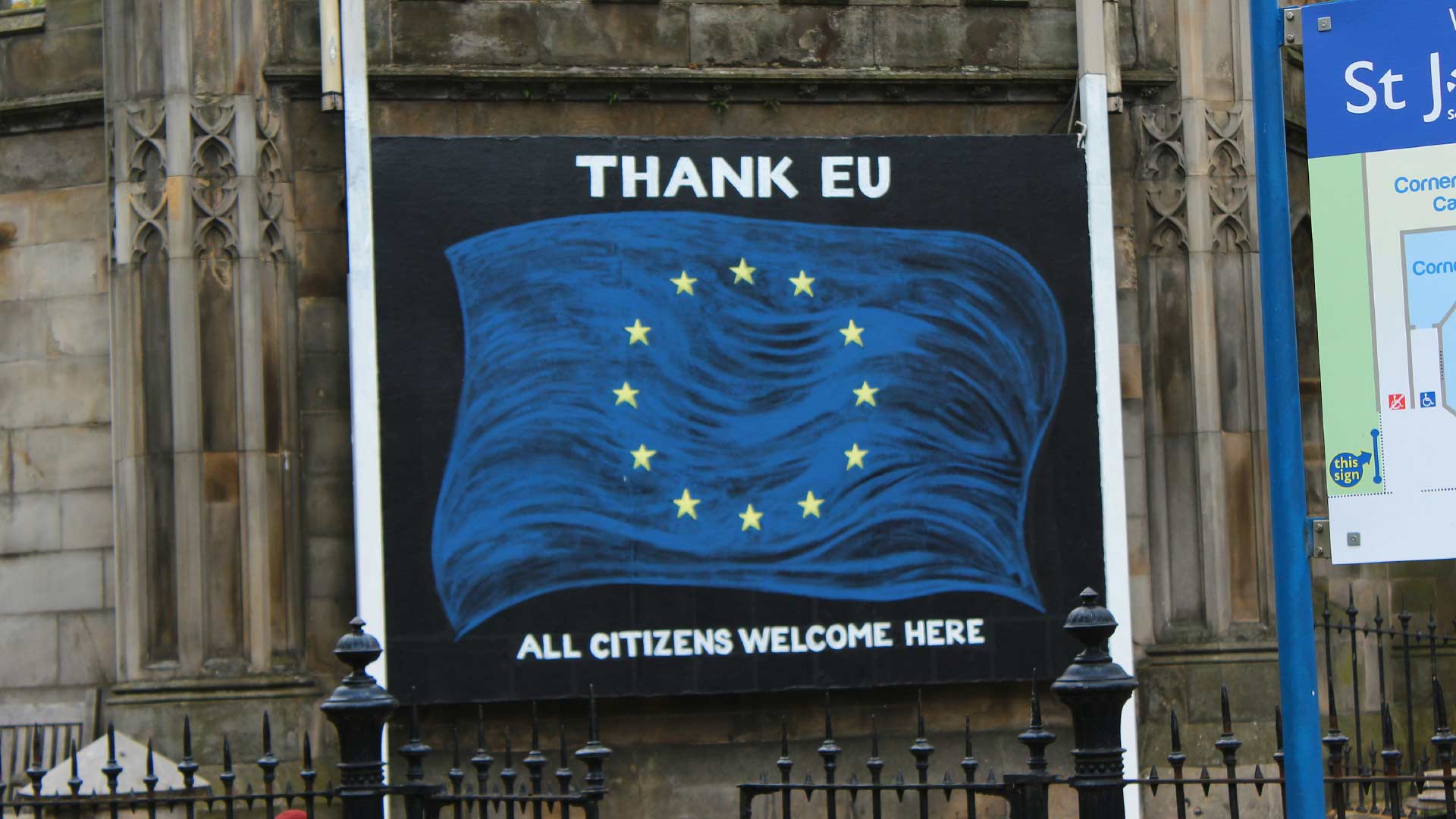
The irony is cruel: the sovereigntist victory could well produce the very dependency it sought to escape. By dismantling the fragile unity of the continent, the nationalists would deliver it, piece by piece, to stronger empires. The dream of independence would culminate in a new colonialism — not territorial, but financial, cultural, military and digital. The global giants would play off one capital against another, exploiting their rivalries, dictating policy through markets, data, and migration flows. Europe would survive, but as a collection of protectorates, each boasting of its sovereignty while obeying invisible masters.
This is not mere speculation. Already today, we see how individual European states, in their quest for autonomy, align themselves with external patrons. Hungary and Slovakia seek energy from Russia; France courts the Gulf; Italy and Greece depend on Chinese investments; Poland binds itself to Washington; Germany, after the Nord Stream sabotage, finds itself both economically weakened and militarily subordinated. Even within the European Union, solidarity has become a fiction — North against South, East against West, center against periphery. The moment the integrative pressure of Brussels disappears, these tensions will explode.
And yet, one must be fair: the sovereigntists are not wrong in diagnosing the illness. Their rebellion stems from a genuine instinct of preservation — the will to defend culture, identity, and dignity against the homogenising arrogance of globalism. But like all rebellions that lack a positive principle, it risks destroying what little still unites us. The tragedy of the sovereigntists is that they mistake centripetal energy for unity. They believe that to restore the nation is to restore Europe. But Europe has never been a mere collection of nations; it has always been a civilisation seeking again and again to restore the unity it lost when its initial core, the Holy Roman Empire, was destroyed by religious, political and ideological divisions. Of course, the nations have played an important role since the beginning of the European civilisation, but many of them are rather the result than the precondition of the nation state. Indeed, until the 19th century, instead of a handful of clearly delimited ‘nations’, Europe was characterised by countless diverging regional and dialectal groups sometimes interrelated by linguistic familiarity or historical experience, but ultimately very different from each other; only the nation building imposed by the ‘Enlightened’ ideology exported by the French revolution led to the great unification and simplification whose results we witness today. Defending the ‘nation’ as the ultimate defining characteristic of Europe is thus not only anachronistic, it is also dangerous in the current situation, as nationalism risks to destroy not only Europe, but ultimately the nation state itself.
The lesson of history is clear: fragmentation is not freedom, as the decline of empire rarely brings renaissance, but rather confusion, dependency, and decay. To avoid this fate, Europe must find a way to reconcile national sovereignty with civilisational solidarity; if globalism is the pathology of the universal, nationalism is the pathology of the particular. The first dissolves identity in abstraction; the second fossilises it in isolation. Both are symptoms of the same disease: the loss of a transcendent center.
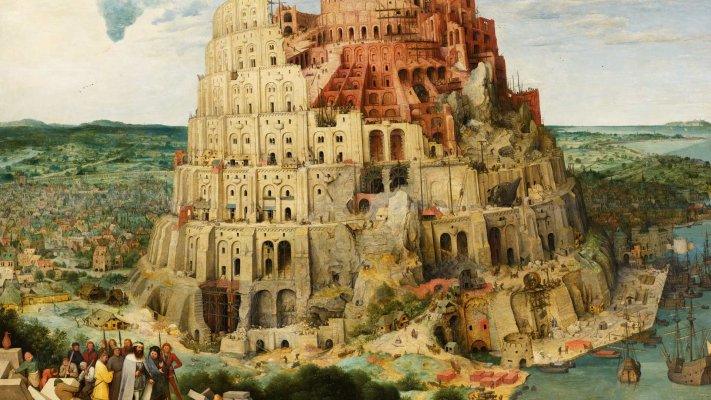
What, then, remains for Europe? Between the globalist tower and the nationalist labyrinth, there must exist another path — one that reconciles unity and difference, hierarchy and freedom. That path, as we shall see, is Hesperialism: the reawakening of Europe as a civilisation, not a market; as an organic order, not a rationalist system; as a destiny, not an administration.
The Hesperialist Alternative: Europe as a Civilisational Power
If globalism dissolves and nationalism fragments, what remains for Europe? Between the dream of the borderless market and the nightmare of balkanised sovereignty, a third path appears — the Hesperialist path. The name comes from the Hesperides, the mythical lands of the setting sun: not a geographical region, but rather a typically symbol of Europe’s eternal longing for all that is ‘beyond’. Hesperialism thus means the conscious re-awakening of Europe as a civilisation rather than as a Kantian system of administration or a mere economic association of states. It is both political realism and spiritual revival — a synthesis of order and transcendence.
Europe’s transition to its final synthesis must thus begin with a redefinition of what it is. Europe is not a collection of markets, nor an aggregate of legal codes, nor even a federation of nations; it is a cultural organism with its typical characteristic identity and destiny, animated by our unique Faustian longing and rooted in the four converging sources of the Greek love of truth, the Roman sense of order, the Christian revelation of personhood and the barbarians’ sense of liberty. Hesperialism seeks to restore their harmony: philosophy that again serves the search for truth, politics that again serves justice, law that respects the realities of nature, faith that again serves transcendence, and a liberty that again dares to reassert its dignity.
This vision is not nostalgic; it does not mean a naïve return to medieval Christendom or to imperial nostalgia that are forever gone, but rather the translation of Europe’s ancient soul into the language of modern power. The Hesperialist wants a Europe conscious of its sacred genealogy and therefore able to project power without shame. In this sense, Hesperialism is neither reactionary nor utopian; it is organic traditionalism — the renewal of life through memory.
Politically, Hesperialism rejects both supranational bureaucracy and sterile nationalism. It conceives Europe as a commonwealth of sovereign peoples bound by civilisation, not by globalist ideology. Each nation would retain its own constitution, language, and culture, but would acknowledge a higher order of belonging — a shared responsibility for the destiny of the continent. Such an order would rest not on uniformity but on hierarchy and subsidiarity: what can be done locally must not be centralised, but what requires unity — defence, foreign policy, borders, continental communication, strategic resources, future technologies — must be carried out collectively.
This vision echoes the medieval principle of the ‘Sacrum Imperium’ as it has shaped our continent for more than thousand years, allying subsidiarity strength and faith with elective government. Hesperialism thus understands federalism not as dilution, but as a force through coordination. The European army it envisions would not be a duplicate of NATO, but an autonomous force rooted in European interests; its diplomacy would not mimic Washington, but seek balance between East and West. It is a Europe capable of saying ‘yes’ to alliances but ‘no’ to subordination.
Indeed, geopolitically, Hesperialism starts from a simple axiom: a civilisation that cannot defend itself does not deserve to survive. Europe must recover its strategic sovereignty at all prize: control over borders, energy, technology, defence and information, implying also the ability to choose alliances freely and to endure crises without blackmail. With the United States, Hesperialism would thus envision partnership, not dependency: two civilisations of the West cooperating as equals. With Russia, Europe would target coexistence through strength, complementarity and respect for limits; with China, economic engagement tempered by cultural vigilance; with Africa and the Middle East, a policy of reciprocity, not guilt. The goal is not confrontation but balance, the restoration of a concert of civilisations in which Europe again becomes a pole rather than a province.
In practice, this would of course require re-industrialisation, demographic recovery, and the rebuilding of the European periphery — the Mediterranean, the Balkans, the Caucasus — as zones of stability rather than as migration corridors. It means replacing moral rhetoric with geopolitical strategy, NGOs with statesmen, emotions with endurance, multipolarity with civilisational patriotism, secularism with proud reference to the Christian tradition. Europe must once again dare to think imperially — not in terms of conquest, but of responsibility for a large supranational order.
Of course, no geopolitical project can endure without a spiritual renaissance. Hesperialism affirms that the crisis of the West is first a crisis of meaning; the restoration of the sacred is thus indispensable and can only proceed through a positive relation with the Christian tradition. The continent cannot live forever in the empty neutrality of secular technocracy; it must recover the sense of being a ‘custos sacri’, a guardian of the sacred. Obviously, a mass re-Christianisation of all Europeans is beyond the scope of the feasible, even more so as Europe has always be characterised by a clear distinction about the sphere of action of the political and the religious: no church power should interfere with the democratic decisions of the people. But at the same time, these decisions are only to be considered valid if they are able to refer to the framework guaranteed by transcendence and natural law: actively de-Christianising our civilisation or negating the relevance of created nature and physical reality for legislation, as has been the case so often during these last decades, should be impossible. Indeed, without referring our political decisions ultimately to the existence of an absolute truth, all politics must degenerate into relativism, nihilism and finally mere opportunism were truth is decided by the one who controls the media.
The bureaucrats of Brussels are not the cause, but the symptom of a deeper disease: the loss of the European soul.
Economically, Hesperialism advocates solidarity over speculation. It draws inspiration from the Christian social doctrine: private property as duty, not privilege; work as participation in creation; profit as service, not idolatry. It rejects both neoliberal atomism and collectivist levelling. The goal is to rebuild a strong middle class, rooted in family, region, and profession — the social body that once made Europe resilient. Similarly, technological progress must serve human dignity, not dissolve it. Artificial intelligence, genetics, and digital governance must remain subordinated to moral limits, as a civilisation that plays with transhumanism while neglecting childbirth signs its own death warrant. The Hesperialist economy therefore links innovation to demography: tax systems and social policies that reward family, continuity, and transmission.
At its core, Hesperialism is an ethics of limits. Against the boundless expansion of desire promoted by global capitalism and ethic hedonism, and against the sterile woke moralism of postmodern ideology, it re-affirms that freedom exists only within civilisational forms and boundaries. True liberty is not the abolition of constraint but its voluntary acceptance in the name of a higher good. This applies as much to individuals as to nations: self-discipline and the capacity for distinguishing between norm and exception is the first condition of sovereignty. The Hesperialist therefore calls for a return to virtue — not as private sentiment, but as public law. Courage, temperance, justice, and faith must again become political categories. A society that rewards vice and ridicules virtue cannot survive; it may remain rich for a time, but it will cease to be truly civilised and sooner or later disintegrate because of its growing polarisation.
The Coming Storm: crisis, caesarism, and the conservative opportunity
Every civilisation that has reached a high degree of abstraction must one day return to the concrete. The dream of universal management — of history tamed by humanism, relativism and administration — always ends in the same way: in polarisation, paralysis, revolt, and finally in the longing for a new order. Europe today approaches that threshold. Behind the apparent normality of its institutions, one feels the tremors of a coming earthquake: inflation, migration, debt, disillusion, and demographic exhaustion. The surface is calm; underneath, everything ferments. The question is no longer whether a storm will come, but who will command when it breaks.
Can such a ‘Hesperialist’ transformation still occur peacefully? History would suggest otherwise. Every ‘Augustan’ moment in the evolution of a civilisation follows a period of trial. The Roman world had to pass through the fires of the late Republic, Iran had to experience the Mazdakite rebellion, China the horrors of the Warring States, Egypt the turmoil of the post-Amarna years. Likewise, Europe may have to endure decades of unrest — economic crisis, demographic shock, cultural conflict — before a new equilibrium emerges. The danger is immense, but so is the opportunity.
For when the globalist edifice collapses and the nationalist reaction proves insufficient, the peoples of Europe will search for a new synthesis — something that combines stability with meaning, freedom with hierarchy. If conservatives are ready, if they possess vision rather than nostalgia, they may become the architects of that synthesis. If not, others — less scrupulous, less humane — will take their place. The task of conservatives is therefore to prepare this moral and political restoration; to hold fast to the memory of form while the world dissolves around them, so that when the hour strikes, they may build upon the ruins of the past a new order.
What will be the mechanism of history, if an organic Hesperialist transformation fails? When the creative energy of a civilisation utterly wanes, when faith turns to nihilism, economy to organised corruption and institutions to oppression, a new type of leader arises — the Caesars. Their legitimacy no longer comes from law or lineage, but from success, charisma, wealth, power and the ability to impose order amidst chaos. They do not destroy democracy; they replace it with acclamation. The people, weary of impotence and corruption, willingly exchange procedure for protection. But what begins as an emergency measure quickly becomes a new form of rule: pragmatic, personal, post-constitutional – and it triggers other Caesars to do the same, transforming thus what initially was a fight over political ideas into a purely personal fight over individual power from which, finally, a civilisational synthesis will emerge, though not by the means of peaceful election and consensus, but of exhaustion and submission…
This transition will not necessarily be violent, but it will be decisive. The old liberal order, already hollowed out by technocracy and moral relativism, cannot endure indefinite crisis. Its procedures presuppose consensus, and consensus has vanished. When the next economic contraction strikes — when the welfare state becomes unsustainable, when migration overwhelms public services, when energy shortages collide with social unrest — the temptation will be irresistible: to call forth the strong hand that promises to restore order. That hand may emerge from the right or the left, from the barracks or from the boardroom, but it will be hailed as salvation.
For conservatives, this coming ‘Caesarian moment’ represents both danger and opportunity. Danger, because the cult of authority easily degenerates into tyranny; opportunity, because it may open the only window through which Europe can rebuild. The key question is not whether Caesarism will come, but whether it will be guided by civilisation or by barbarism, and whether the impending upheavals will secure true civic participation and respect for individual freedoms, or whether it will be imposed by mere violence. Rome too knew several candidates for ultimate power before Octavian reaped the final victory; be it Pompey, Caesar or Marc Antony: all had their advantages and their flaws, but the longer the conflicts took, the more it was inevitable that their outcome would be military dictatorship.
The conservative’s duty, therefore, is not to deny the coming transformation but to prepare and canalise it ethically in order to avoid the wors. He must cultivate among future elites a sense of measure, justice, faith and duty — the virtues that distinguish authority from domination. If the right abdicates this moral formation, others will seize the Caesarian moment with less scruple. The populist demagogue, the technocratic despot, the digital oligarch — all are waiting. The challenge is to ensure that when the Republic of Procedures collapses, the men of conviction stand ready to build the Empire of Substance.
In this sense, the conservative task in the coming storm resembles that of parts of the senatorial elites during the fall of the Republic. They could not save the old structures which had utterly discredited themselves through populism and corruption, but they tried to preserve their soul and the memory of the past. Likewise, in the chaos that follows the crisis of woke globalist liberalism, those who still believe in order, family, and faith must become the custodians of continuity. Their institutions — schools, parishes, think tanks, local communities — will form the seeds of the post-liberal world and, hopefully, build the framework for a final civilisational synthesis.
But what if the storm turns against us — if one of the Caesars to come is hostile to everything we defend? Then resistance will again become duty. The conservative does not worship power for its own sake; he accepts it only when it serves truth. To obey injustice is not conservatism but cowardice or opportunism. Yet the greatest danger today is not oppression but entropy — not the tyrant, but the void. Even an unjust order can be corrected; chaos cannot. That is why, paradoxically, the conservative may sometimes welcome authority, not because it is perfect, but because it makes civilisation possible.
The decisive factor will thus be the moral quality of the elites who arise from the crisis. In the late Republic, moral exhaustion produced civil war; yet out of that war emerged Augustus, who restored peace by binding power to piety. The same could happen again. It is to be expected that the twenty-first century will not be ruled by assemblies but by powerful personalities whose influence over media, technology, institutions and finances are bigger than anything we experienced during these last decades. Whether those personalities are humane or monstrous will depend on what ideas have been sown before the storm. If conservatives sow wisdom now, they may harvest virtue later.
And here lies the true meaning of ‘defending Europe’. It is not a matter of defending borders or institutions alone, but of defending truth against mere power — of ensuring that when the new order comes, it carries within it the memory of civilisation. The next Europe will not be chosen at the ballot box; it will be born in crisis, forged by necessity, legitimised by survival. Whether it is Hesperialist or barbaric will depend on who is ready when history calls.