
Conservatives put the human first, because they are aware that in reality, the planet can take care of itself.
Home advantage is a term that is most often associated with sports, but it also works in politics: each party or political family indeed enjoys a home advantage when the debate turns on some issues which they own, giving them a competitive edge during election time. For example, if the discussions during the election period are about lack of housing or social issues in general, the left plays on home turf, while when it comes to immigration, it is usually the right that enjoys a competitive edge. That is because each camp is associated with having a clear vision on a certain issue, which in turn makes it more credible to the voters – hence an advantage equivalent to a football team playing at home with its supporters rooting for it, and trying to influence the referee at each corner (note: it’s always done because it often works).
Note though that there is no natural advantage. Take, for example, the economy: historically, the right has been seen at ease when campaigns turned around these issues (think of Margaret Thatcher and Ronald Reagan for example). In the UK, however, after the 1992 sterling crisis, the Tories lost their economic reputation and Tony Blair was subsequently able to turn the tables and make the Labour Party the most credible actor in British politics on all things economic. This lasted for 15 years, and it took a long time (and the 2008 financial crisis) to turn the tide again in the favor of the Right.
Could conservatives then claim leadership on the environment and make this not a difficult issue for them to tackle (as it is now) but one that actually gives them a competitive edge over their political rivals? The proposition could seem far-fetched… After all, the left literally owns this thematic, and the polarization that our societies are currently going through is precisely including the environment (or rather global warming the Green Deal) as a wedge issue that defines the identity of our left vs. right debate: to caricature, if you love the bees and the trees, and if you want to regulate the economy to save the planet, then you’re on the left – if you love the economy and see said regulations as a dangerous break on human development (or to go even more in the caricature, if you think that climate change is a hoax), then you’re from the right.
This is obviously a false accusation – or rather, a cliché, but it also encapsulates the challenge that the right is facing today: when it comes to ecology, conservatives are definitely not playing on home turf, and leaving this ground to their adversary is something that is done at their own risk, as the 2019 European election campaign showed. People do care about the environment, and even though it is not as central a question as, say, unemployment or immigration, it does become a defining issue every once in a while, with enormous consequences not only for the election, but also for the country – again, the 2019 EU election and its incidence on the contents of the European Green Deal comes to mind.
The search for the lost green conservative begins…
But how on earth could conservatives claim some sort of leadership on an issue like the environment? For a start, they should stop believing that this is a historic property of the left, because all of the evidence points to the contrary. Let us remember that the first environmentalist politics were conservationist in nature, and therefore conservative. Many have forgotten it, but the first national parks in the United States, created under Ulysses Grant and then expanded by Teddy Roosevelt, were Republican inventions – and the governments that implemented similar policies in Europe were also conservatives – some worthy of name (General De Gaulle created the Vanoise National Park, the first of its kind in France 1963), others less so (the first national park in Italy, the Gran Paradiso, was created by Benito Mussolini in 1922 – as perhaps an irony of history, even though they were on different sides during World War II, both men’s conservation projects were complementary: the Vanoise is situated exactly on the other side of the Franco-Italian border, and its creation extended the protection of this extremely beautiful corner of the Alps, almost doubling it in size).
Even getting to more modern (and perhaps less controversial) politics, the environment has also been a concern of the right after the Second World War. In the United States, the Environmental Protection Agency (or EPA), so criticized by conservatives these days for its bureaucratization and ideological bias (not always for wrong reasons) was actually created by a Republican administration – that of Richard Nixon, in December 1970. And the first major speech by a head of state warning about the consequences of climate change was given by Margaret Thatcher, hardly a communist lunatic, in 1989. That year, the Berlin wall fell, and with it the sirens of communism, which had found that internally, one of its strongest foes was ecology: a rallying cry for patriots and anticommunists in the Baltic states, Ukraine and so many other dissidents in Eastern Europe and the Soviet Union to save their homeland’s environment against the dehumanization and the environmental (as well as social) engineering carried by the Socialist project.
Let us be honest: there is absolutely no reason why people on the right, may they be conservative, Christian democrats or even populist, should not care about the environment, and even less reasons why they should not have an environmental agenda. Indeed, there have been attempts, often in the late 2000s and early 2010s, to put in place a green conservative agenda - think of Nathalie Kosciuszko-Morizet’s Grenelle de l’environnement in France, or David Cameron’s Green Agenda for the Conservative party, and the reason that they failed was that their starting point was too often associated with what the left wanted.
The first environmentalist politics were conservationist in nature, and therefore conservative... the first national parks in the United States, created under Ulysses Grant and then expanded by Teddy Roosevelt, were Republican inventions.
Indeed, the reason why the left has been able not only to make the environment a home turf issue but one on which they enjoy a near monopoly is not a malicious Machiavellian plan to attain cultural supremacy, but mainly because the right has been content to leave the theme entirely to the left, either by benign neglect or because it felt that environmental issues were running counter to more important theme such as the economy (it is sometimes the case, but that’s not an argument for abandoning the issue altogether – take immigration as an example).
It is therefore high time for conservatives to at least partially reclaim the environment, and it has a historic opportunity to do so today, as the economic consequences of the US and EU green deal have become all too obvious for everyone to see – indeed, this may well be a “1992 sterling crisis moment” for the environment, one where moral and political leadership on an issue can literally switch sides – that is, if political leaders decide to go for it.
Getting back to green, however, requires political will – and creativity. There are two problems that a conservative political leader faces when it comes to the environment: first, let’s be honest, the right is divided on the issue. True, most people inside the right do believe that taking care of the environment is a priority, as long as it is done in a way that corresponds to their values. But some of us do believe that ecology is a waste of time, and even sometimes that climate change is not real. This is an obvious problem when it comes to preserve the environment, and the right has to deal with it.
The second issue is actually a consequence of the first: because the right is divided, it is also not so keen on making actual proposals for the environment – in other words, while we know what the right is against when it comes to saving the planet, we still don’t know what it is for, because it hasn’t yet proposed clearly its own solutions. Some will describe it as intellectual laziness, but in honesty, it is primarily a fear that any bold proposal will divide the movement – which is obviously not something that any politician wants these days.
Values first
So, how does one get out of this conundrum? Part of the equation, as I already mentioned, rests in leadership. But another part is policy and ideas – by bringing new ideas (or, as good ecologists, by recycling others) and starting from a philosophy that corresponds to the values of the right, bold politicians can redefine both the issue and the playing field. All it takes is a bit of leadership and creativity.
Not too much creativity though… We are lucky in the sense that, when it comes to green philosophy and conservative values, we do not have to re-invent the wheel, for this road has already explored by the greats of conservative thinking – and of course, when it comes to modern conservatism, the great Roger Scruton immediately comes to mind. His book, Green Philosophy, was my intro read when I started as political director at Shared Ground, and it remains a reference to me as I move forward with our programming and try to help people develop their own green agenda for the modern right.
But when it comes to values and approach, what does it mean to be a green conservative? Here are five terms that I believe must guide the work of anyone on the right wishing to develop an agenda a conservative political agenda for the environment.
The first point, of course, is that a conservative ecology should be conservatory, as opposed to revolutionary. The purpose of conservatism is to know what to keep (though not necessarily to keep everything as is), and this should be reflected in the policies that conservatives develop for the environment. The idea is to conserve, protect, rather than develop all-encompassing, revolutionary devices that aim as much (if not more) at changing society as saving the planet. Conservatism leaves this social engineering to the left, and focuses on conserving nature, biodiversity, and the beauty of our world.
Secondly, conservative ecology is, almost by definition, human-centered. This of course reflects Christian thought, but it is an all-encompassing value on the right. And while this might look self-evident to some, the reality is that some of the left-environmentalist agenda puts the humans after many other priorities – including after the planet. Conservatives put the human first, because they are aware that in reality, the planet can take care of itself (and indeed if one is to follow some of the most controversial left-environmentalist ideology, it would probably be better off without many of us - perhaps even better off without any of us). If we are curating our beautiful landscapes, if we are protecting the beauty and the diversity of fauna and flora that God gave us, if we are trying to curb carbon emissions, we are doing it for ourselves first – for our own survival as the human race, but also for our personal enjoyment. This means that any policy proposed by conservatives needs to be made first with consequences on human beings in mind.
Third (and this is extremely important), an ecology of the right should be rooted in space, not time: while much of the left-green agenda has become rooted in the latter (creating endless bureaucratic processes to save us from an impending doom – and sometimes destroying our wellbeing in the process), conservatives are rooted in their terroir, their territory. This does not mean that green conservatives do not want to save the planet (trust me, they do), but they think that this effort starts at home, not in a faraway land on which we have little control, and sometimes only partial knowledge (including in terms of how the ecosystem really functions, and the role of humans in it). In the late 1950s, to accompany (and justify at home) the process of decolonization, a French journalist exclaimed “La Corrèze avant la Zambèze!”, i.e., let’s develop our own country rather than try to tell others how they should live. In many ways, the motto of a modern conservative in, say, Wales, could as well be “Snowdonia before Amazonia”. That does not mean that green conservatives cannot think globally, nor should they ignore the major environmental issues of the day in these faraway lands, but they should focus first on their own communities, and when dealing with global problems try to instore a constructive dialogue with those individuals in their local communities who curate their own environment. This is why conservatives prefer the word “ecology” to “environment” or “environmentalism” – while the latter refers to the outside, a space neither defined nor finite, the former etymologically refers to the study (and discourse) of “home”, the one that we are in charge of curating while we are here – not only for ourselves, but to preserve the heritage given by our forefathers and to leave it to our descendants.
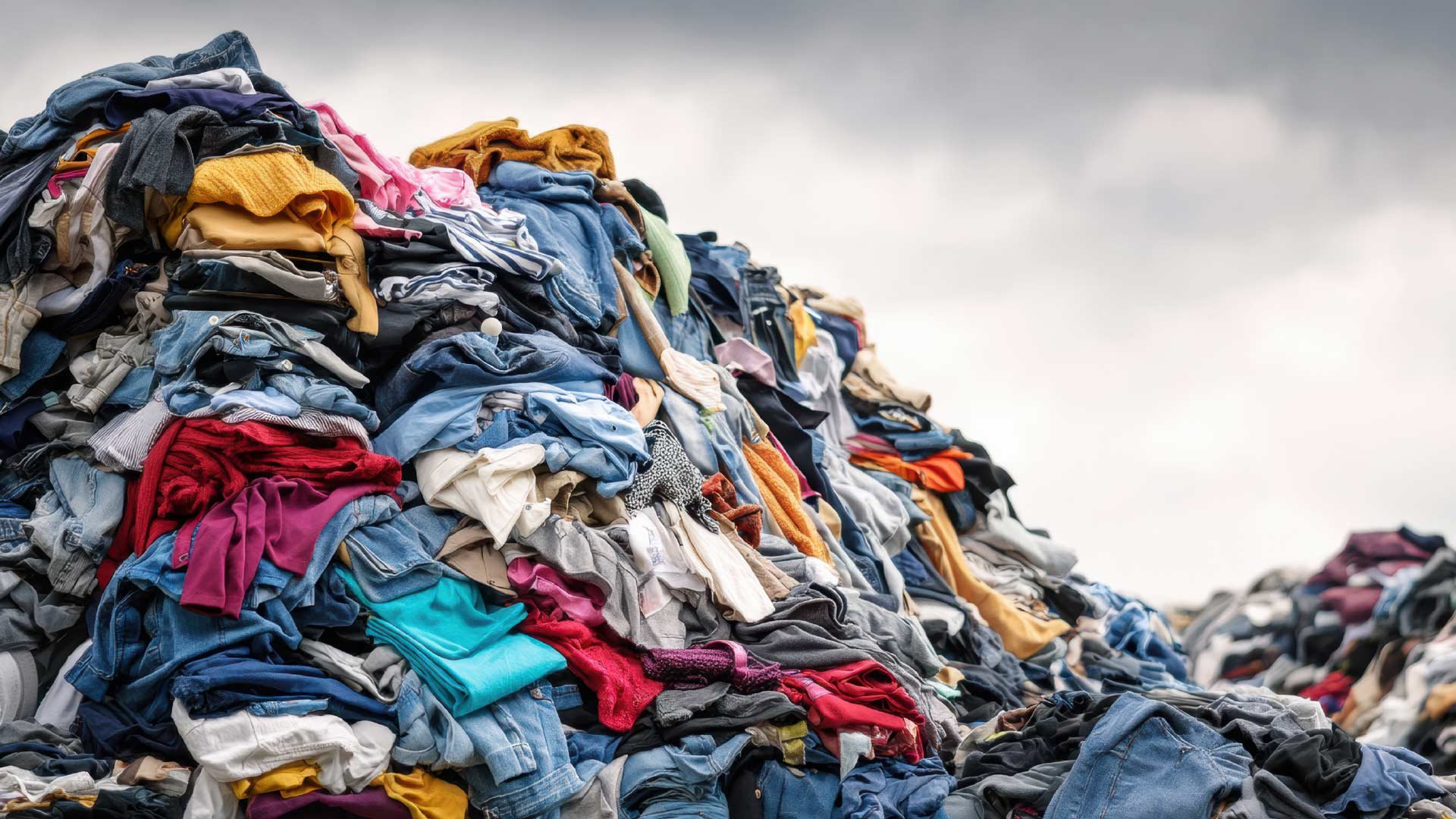
Photo by Elena Savitskaia | Dreamstime.com
Fourth, and this is a consequence of the last point, green conservatives have more trust in actual people and communities (the “Little Platoons” of Edmund Burke fame) than large machineries that dehumanize processes and policies, may those be large bureaucracies or big corporations. The idea is to put people first, and in particular the people in the communities that are the curators of our common home. Those have often been left behind in the ecological conversation, and completely ignored by the way environmentalism has led its transitions in the past. As it happens, and perhaps because they have been left outside the discussion on the environment, these people are also voters – and more often than not, they vote on the right… Another reason to take care of these people and give them the responsibilities they crave for, rather than dehumanize them in endless bureaucratic processes. More generally, this also means that conservative ecology wishes to empower people in the private sector to help preserve our environment. That can mean, for example, encouraging more private money into green finance – as opposed to relying solely on taxpayers’ money for the transition to carbon-zero.
Finally, and probably as a consequence of all the last points, the green conservative needs to be pragmatic rather than ideological. This should be almost in the veins of conservatism, which itself is not a system of thought, but rather an attitude, a behavior towards the outside world: because conservatives fundamentally distrust social engineering and grandiose societal schemes, green conservatives should focus on theirs objectives rather than the processes, and leave whenever possible the choice to the local communities on how to reach that objective – as long as it is reached: in other words, trust but verify. Conservatives know that in politics, tough choices are always between the bad and the worst – and government usually chooses the worst. So, when they set up a policy, they should leave as much as possible the initiative to local communities to organize themselves within the general framework they set up. To take a much more concrete example, if we are serious about transitioning to net-zero carbon by 2050, we should not close the door to any technology that may help us achieve it, may that technology be geo-engineering, biofuels, nuclear or solar/windmills (or a mix of all these). It is not up to a bureaucracy far away from the realities on the ground to decide these things, and technological neutrality must be the order of the day for conservatives when dealing with specific issues such as carbon emissions, mobility or the circular economy.
From values to policy
Now that these fundamental values have been laid out, the next challenge is to translate these principles into real, concrete conservative policies that can address the environmental issues that voters care about. At Shared Ground, we have worked with a group of 20 Italian conservative experts and professionals of the environmental question to do exactly that, in the context of the Bel Paese’s specific needs and issues. The result is a “manifesto for a green conservatism” that at the time of publishing this review (June 2026) has just been published, and presented to the press in Rome. It is an important document, precisely because it has been developed by conservative experts (all of them adhere to the political philosophy of the right, and claim at least a moral affiliation with one of the parties of the current coalition in power), and also because it is a 100% “Made in Italy” document: the role of Shared Ground in this endeavor has only been one of facilitation - and no ready-made solution has been imposed upon there. What we have done was simply to provide a healthy environment for people who so far had been feeling lonely in their defense of an ecological philosophy for the right to develop their own ideas and put them on paper.
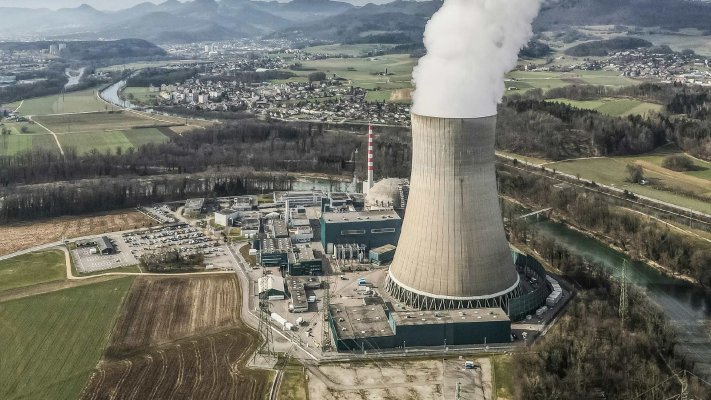
The manifesto thus summarizes nine months of debates, research and discussions, with solutions ranging from the incentivization for private capital to finance directly the transition, to specific tariffs applied to fast-fashion outlets (which use cheap but artificial and carbon-loaded plastic fabrics to make clothes that are worn only a couple of times before being thrown away), to the inclusion of nuclear in Italy’s energy mix – a move that would need to be made in conjunction with a better grid connection to energy sources in Africa, so as to make Italy an energy hub for Europe. Not all the measures proposed in this manifesto are popular - we have tested some of them in focus groups, and the reactions of ordinary voters to these proposals reflect a remarkable maturity that politicians, right and left, should take note of - for example, when it comes to fast-fashion tariffs, people are very much aware that the costs of such a measure would be principally borne by them, which they are not so keen on. In the end, voters are very well aware that there is no such thing as a free meal, and that any policy is a question of trade-offs - or rather, that there is always a price to pay for any political decision, especially when it comes to preserving our environment.
This is precisely why the policies presented in the manifesto should be seen first and foremost as a contribution to the debate, and certainly not as a one-size-fits-all solution to all ecological problems. Nor should they be seen as the only solution. The beauty of conservatism is that it allows, even encourages, internal debate as a way to get to the best resolution to a problem. There will always be a tension between the more liberal, laissez-faire wing of the conservative movement, which favors a minimum state intervention and maximum private initiative in solving common problems, and a more statist (some would say, continental) tradition defending a decisive state policy designed to compensate for the market’s failings. Thus, not every conservative will feel at ease with the proposal to impose tariffs on fast-fashion micro-packages, while efforts by the right and center-right to tackle overtourism (which often has disastrous consequences for the biosphere of affected areas) will be subject to ardent disagreement between conservatives over the extent to which private property rights should be limited (some would even say trampled) in order to save a specific biosphere.
One should note that none of these debates are new, and the same conflict between the needs for extraction and preservation, between energy and beauty, has been at play when national parks were created. In the same way, these logics are currently creating much room for debate within the right, but these disagreements should not divert conservatives away from their fundamental values and their objective to preserve the beauty and livability of their own oikos, their own home and environment. Too much is at stake for the right to sink into division, and conservatives must therefore find ways to discuss the environment openly and develop policies, solutions and a narrative allowing them not only to pick up the good fight against the left, but also to propose a sensible and credible alternative to the ecological challenge.
In search of a common sense approach to climate change
Nowhere is this dialogue more necessary than in the struggle to address climate change, a fundamentally divisive issue for the right, and at the same time a rallying cry for the left. To say that global warming (an exceptionally ideologically loaded term, much more so than climate change) has been a problem for the right is an understatement. Indeed, as Frederic C. Rich points out in his book Getting to Green, the start of the “great estrangement” between the conservative and environmentalist movements can be dated back to the 1990s and the emergence of climate change as a political issue. The (globalist) left claimed a monopoly on it, while conservatives hesitated from the outset between a skepticism that has too often slid into outright denialism, and a willingness to tackle the problem, though not necessarily on the right’s own terms. This has had a catastrophic impact on our cause: whenever conservative environmentalists have tried to discuss the issue and propose solutions, they have ultimately put themselves in a position of appearing to concede to the left or, to use the sports terminology I used at the beginning of this paper, they gave up the home turf advantage to the progressives. Meanwhile, climate deniers have made it much harder for the right to claim, let alone establish, credibility on tackling climate change.
Of course, it would be easy to blame the climate deniers within our political family for the difficulties green conservatives have faced in advancing their agenda. But their position - when it is not driven by a direct interest in protecting fossil fuels - often began as a form of healthy skepticism. And, to be fair, that skepticism has sometimes been reinforced by irresponsible rhetoric on the left. Too many environmental activists have treated every unusually warm week, dry season, or extreme weather event as immediate proof of “global warming,” using each anomaly to push a political narrative. It is therefore unsurprising that their opponents responded by pointing to colder periods or contradictory weather patterns to challenge what they saw not simply as science, but as ideology wrapped in environmental messaging.
Conservatives know that in politics, tough choices are always between the bad and the worst – and government usually chooses the worst.
The skeptics therefore do have a point. What we know about the climate is that it is an immensely complex and constantly evolving system. Long before human beings appeared, the earth’s climate was already changing and, assuming humanity does not destroy itself first, it will continue to evolve long after us. Human activity undoubtedly plays a role in this process, particularly through industrial emissions and environmental degradation, but it is not the only factor shaping the planet’s climate. Solar activity, volcanic eruptions, oceanic cycles, and many other natural dynamics also influence atmospheric conditions, sometimes in ways we still do not fully understand.
Recognising this complexity should encourage prudence and humility. It is therefore legitimate to question overly simplistic narratives that present every climatic event as entirely man-made, or that imply emissions reductions alone can restore some supposedly fixed and “normal” climate equilibrium. The climate has never been static, and serious environmental policy must begin with that reality rather than with ideological certainty.
But even if it’s reasonable to apply a certain dose of skepticism to any claim of impending doom, denying that the problem exists, or that we can do anything about it, is equally an insult to common sense. As we learn more about climate history, it becomes clear that human activity has already impacted our climate in the past – even before the industrial era: carbon studies in glaciers (which offer a valuable record of past climates) show that the periods of most intense human activity, such as the peak prosperity of the Roman Empire in the second century AD, have coincided with more carbon-heavy atmosphere and associated changes in climate patterns – often harming the very polities involved in this intense rise of human activity. Closer to home, those of us old enough to remember past winters and summers can see for ourselves that our environment is warming: we now have generally warmer (or hotter) summers, and, in areas where snow used to be a normal part of winter, it has now become something exceptional - almost an extreme event. Specific examples abound, from retreating glaciers in the Alps to the increasingly rarer occurrence of the Elfstedentocht in Friesland (the 11-city ice-skating endurance race which can take place only when the Northern Dutch canals freeze naturally). It has become difficult to deny a reality that we can see with our own eyes: there is such a thing as global warming, and even though we do not understand everything about it, we are pretty certain now that the human hand has played a role in it, and continues to do so. Applying a conservative principle - namely, that we should aim to preserve for our children what has been given to us by our forefathers - it therefore seems only logical for people on the right to seek to address this issue. That means taking a rational approach that acknowledges the costs and opportunities of any action, while making clear that the goal is not to change a society and to collectivize it, but to preserve the air we breathe, the climate that we live in (to the extent that is possible), and the eco-system that surrounds us.
Of course, this doesn’t mean that conservatives should not apply a good dose of healthy skepticism to some of the claims made by the left in the pursuit of their own agenda, quite the contrary. But once we have accepted that tackling climate change is also a conservative endeavor, and perhaps one that can actually be better addressed by the right (after all, if one is to trust the conclusions of every report published by environmentalist organizations, the left has not been doing a very good job at it over the past thirty years), then we can start thinking about what a conservative approach to climate change might look like.
Having just said that, where do we start? First with values, and therefore by asking the right questions. As we’ve just seen, it is not a question of whether we should act, but how we should act. And the answer is that we must act in a way that is consistent with our principles of prudence, responsibility, and respect for both human flourishing and inherited landscapes. If conservatism is about stewardship, then climate policy must be understood as an extension of that duty: not as an attempt to redesign the planet, but as an effort to care for what we have received and ensure its continuity.
A conservative answer to climate change
A sensible conservative climate policy should therefore prioritize resilience and adaptation alongside mitigation. Rather than investing all political capital into long-term emission targets enforced through rigid supranational frameworks, conservatives should invest in strengthening communities against the tangible effects of climate variability—flood defenses, water management systems, forest maintenance, coastal protections, and agricultural adaptation. These are concrete, place-based policies that protect people and property here and now, while also preparing societies for future uncertainties. They reflect a conservative skepticism toward abstract targets detached from lived realities, and a preference for visible, accountable action. In practice, this means decentralizing funding so that municipalities and regions can tailor their own climate resilience strategies, rather than applying uniform national blueprints that often fail to reflect local geography and needs – and, as thinkers like Roger Scruton have often lamented, blueprints that often bring inefficiency and, at times, even corruption.
Second, market mechanisms—properly designed—should be at the heart of emissions reduction. Conservatives need not reject pricing carbon; on the contrary, they can reclaim it from bureaucratic overreach by advocating simple, transparent systems that internalize environmental costs while avoiding the labyrinth of subsidies, exemptions and regulations too often attached to current policies. A carbon pricing mechanism that is revenue-neutral and that returns proceeds to citizens or reduces other taxes, aligns ecological responsibility with economic freedom. It ensures that innovation is driven by incentives rather than mandates, and that entrepreneurs—not bureaucrats —lead the transition. At the same time, conservatives should be vigilant about carbon leakage and unfair competition, and ensure that domestic industries are not undermined by imports from jurisdictions with lower environmental standards. Border adjustment mechanisms (or, to take a more Trumpian terminology, green tariffs), if designed carefully and sparingly, can help maintain a level playing field without descending into protectionism.
Third, technological neutrality must be a cornerstone of any credible conservative strategy. If the objective is to reduce emissions, then excluding entire categories of solutions for ideological reasons is self-defeating. Nuclear energy, carbon capture, the diversification of energy sources (including nuclear), next-generation biofuels, hydrogen, and even emerging geo-engineering techniques should all be part of the conversation. Conservatives should resist the temptation to “pick winners” and instead create the conditions in which multiple solutions can compete and evolve – it was a major failure of the left to exclude nuclear energy (and in particular its modernized version, based on smaller reactors) and they are paying it dearly today, the right should not repeat the same mistake.
Technological neutrality should go hand in hand with honestly acknowledging the inevitable trade-offs that come as a result of energy choices. This in turn means that conservatives need to be transparent about the sources of energy on which our economies desperately depend. There is no magic solution to satisfy our energy needs, and every decision to make one source predominant in our energy mix comes with a price to pay: true, nuclear power is much safer now, but it still carries risks, if only in terms of the pollution associated with the extraction of uranium (and which is often overlooked because this extraction is done in countries far away from home – which is also a problem when we speak about securing energy independence, as very often the material used in our power plants, including rare earths and uranium, are not mined at home). Likewise, solar and wind are clean sources of energy, but they are clearly not sufficient for our growing economies, and they also carry costs in terms of space management, particularly in rural areas (where large solar and wind farms often end up being developed). Would an urban citizen like to be living next to a gigantic solar farm, surrounded by barbed wire? This is, however, what is (too) often being asked of our rural compatriots when “clean” energy plants are being developed in their communities. Accepting the reality that there is no such thing as a free meal (itself a source of energy for our bodies) is the first step toward a responsible vision of our energy production.
But living in the present is not enough, we also need to consider the future of our energy production, and that means encouraging R&D: investing in basic research, streamlining regulatory approval for new technologies, and fostering public-private partnerships that can bring innovations to scale. In this way, the costs associated with energy production will become more manageable – even though the risks attached to any choice will always remain, they can be mitigated by technological progress - at least to an extent. Importantly, this approach not only accelerates progress but also reduces strategic dependencies—something particularly relevant in an era where energy security and geopolitical stability are increasingly intertwined.
Fourth, conservatives should emphasize local stewardship and property-based conservation. When individuals and communities have a stake in their environment—through ownership, long-term leases, or clearly defined usage rights—they are far more likely to manage resources sustainably. Policies that empower farmers, foresters, hunters and local authorities to act as custodians of their land can achieve far more than distant regulatory bodies. These could include incentives for soil carbon sequestration, support for regenerative agriculture, and the development of local energy cooperatives. In each case, the principle is the same: responsibility follows ownership, and stewardship follows responsibility. Importantly, this approach also restores dignity to professions and communities that have too often been portrayed as part of the problem, rather than as essential partners in the solution.
Fifth, conservatives should place a renewed emphasis on conservation in its own right—not only in terms of emissions, but in protecting biodiversity, landscapes, and natural heritage. Climate policy should not become so carbon-centric that it overlooks the broader ecological fabric. Reforestation, wetland restoration, and the protection of marine ecosystems are all areas where conservative principles of preservation and continuity can be directly applied. These initiatives often deliver multiple benefits: they capture carbon, enhance resilience to extreme weather, and maintain the beauty and identity of local environments. Crucially, they also tend to enjoy broad public support, helping to bridge political divides.
Responsibility follows ownership, and stewardship follows responsibility.
Sixth, global warming must be addressed through cooperation rather than coercion. Conservatives are rightly wary of grand global governance schemes that dilute accountability and impose one-size-fits-all solutions. Instead, they can advocate for pragmatic international partnerships focused on technology transfer, infrastructure investment, and mutually beneficial trade. Helping developing countries access cleaner energy sources, for example, is both an environmental and a geopolitical imperative. It reduces global emissions while fostering stability and economic growth—objectives that align squarely with conservative priorities. Such cooperation should be grounded in reciprocity and respect for national sovereignty, avoiding the paternalistic tendencies that have sometimes characterized international climate diplomacy.
Seventh, a conservative agenda should also confront consumption patterns, but in a way that avoids moralizing or coercion. Rather than attempting to regulate individual behavior through bans and restrictions, policymakers can encourage more sustainable choices by improving information, aligning price signals, and supporting durable, high-quality production. Tackling waste—particularly in sectors such as fast fashion or electronics—can be achieved through standards that promote longevity, repairability, and recycling, without dictating lifestyles. The same logic can also be extended to food. Conservatives can draw attention to seasonal produce, support for small farmers, higher standards of animal welfare and the value of fresh food over highly processed, heavily packaged alternatives that produce a lot of waste. The aim should be to encourage a culture of moderation, quality and respect for the land and those who cultivate it. This aligns with a traditional conservative skepticism toward disposability and excess, favoring instead thrift, durability, localism and respect for material goods.
Finally, and perhaps most importantly, conservatives must build their own story, their own narrative - not only for the environment, but on this particular issue. Climate policy should not be presented as a story of sacrifice and decline, but as one of renewal and continuity. It is about cleaner air in our cities, more resilient rural economies, and the preservation of landscapes that define national identities. It is about passing on not only a habitable planet, but a recognizable one—where the bonds between people, place, and tradition remain intact. This is not a utopian project, but a deeply conservative one: to conserve what is good, to repair what is damaged, and to approach the future with humility rather than hubris.
Of course, after reading this article and looking at Shared Ground’s website, people (especially from the left) might ask why we our think tank is empowering people to do on our side what others have spent years, even decades developing on theirs? After all, even though the departing point and the process may be different, if the conclusions are the same, then the process would be redundant, and if the propositions are different, even antagonistic to those advocated by the Green left, then there is a legitimate ground to question how this de-polarizes the environmental question.
I have two answers to this legitimate critique. First, if despite differences in approach, environmentalists on right and left end up agreeing on some policy points (may be for example, on allowing free, untaxed private funding as a way to top-up state expenditure for the transition?), then we must be doing our job correctly, because that means that some form of consensus is forming on the environment – at least in some issues, and this is exactly what we’re here to do.
But even if the measures defended by the right are contrary to those of the left, one should not necessarily see this as a negative – or even as yet again a polarizing contribution to a public debate that has all too much of it already. That would be short-sighted. Democracy can only function if there is a debate, and therefore some questioning, that is accepted by everybody. And if, to paraphrase Descartes, common sense is the most shared feature among human beings, that also means that people (even – actually, especially – well-meaning ones) can also get it wrong. This is the way we are done as individuals, we have prejudices and biases, and our value system sometimes impedes us from seeing the obvious – which is why we need a contrarian view to challenge us and take the better of us. The near monopoly that the left has enjoyed over the environment may have helped it win a few elections, but in the long-term, it has been good neither for the left, the right or the environment. This needs to change – and this is what makes Shared Ground’s mission so interesting.