
There are two major stereotypes surrounding the world of the right, as widespread in mainstream debate as they are false, concerning culture and the environment.
There are two major stereotypes surrounding the world of the right, as widespread in mainstream debate as they are false, concerning culture and the environment. The cliché is that conservatives do not care about either culture or the environment, but nothing could be further from the truth. Just as there is an important right-wing cultural tradition, there is also a tradition of green conservatism, although, to be fair, rather than talking about the environment we should use the term ecology.
For this reason, outlining the principles of green conservatism is a priority as well as defining the characteristics of an identity-based ecologism.
In the United States and Great Britain, green conservatism is in the limelight and it is no coincidence that the journal of the «Intercollegiate Studies Institute» (a conservative think tank chaired by Johnny Burtka) has published an article by Kai Weiss and Christopher Barnard entitled The Return to Green Conservatism.
One of the first American presidents to commit himself to the issue of the environment was Republican Teddy Roosevelt, who called the wonders of nature “the most glorious heritage” and, even the English-speaking conservative cultural world, has long been concerned with ecology and nature. In addition to Roger Scruton and his concept of oikophilia, other authors such as Richard Weaver have spoken out in favor of a green conservatism: “Man has a duty of veneration towards nature” because it is “the inheritance of a creator”. The link with God also emerges from the words of the poet T.S. Eliot who emphasizes the connection between environment and religion for which “a wrong attitude towards nature also implies a wrong attitude towards God”. On the other hand, there is a biblical foundation for the preservation of nature as early as Genesis, in which it emerges that men have dominion over all creatures and therefore are also responsible for the care of the world and, if this does not happen, God’s wrath would be unleashed.
The turmoil in the United States and Great Britain is not only cultural but also political, with organizations such as the American Conservation Coalition and the British Conservation Alliance involving thousands of young people and promoting an alternative form of environmentalism to that of the left, drawing on the legacy of Scruton and Russell Kirk.
Great Britain has an important cultural tradition dedicated to conservative environmentalism, as «The Critic» magazine recalls in an article in which it addresses the Conservative Party, “once a party of the countryside that should return to being so because it could also bring votes”. To do this, it is necessary to start from the rediscovery of the cultural heritage of the two main English writers of the twentieth century: Tolkien and Lewis.
Among the English-language authors most attentive to the theme of nature is also Wandell Berry: “the agrarian writer who preserves and prays”. Author of dozens of books, Berry is a real “writer-farmer”, he lives with his wife in Kentucky where he cultivates a plot of land referring to the teaching of the Gospel. In his writings emerges “The relationship with the land, with local traditions, the simplicity of ancient customs and a sharp criticism of technological society and the unbridled market”.
As Nicola Procaccini recounts in his book L’ecologia dei conservatori. Il ritorno al sacro della natura, one of the pillars of conservative ecologism is the theme of identity and tradition understood as the protection of food, of local customs. Another central aspect of the right-wing view of ecology is the need to reconcile environmental protection with economic growth. To make this happen, a gradual energy transition must be facilitated in order to avoid significant job losses. “Gradualness” is one of the watchwords for the conservative approach to environmental issues.
The centrality assumed by the environment in the economic, social and media agenda in recent years imposes a political recipe to decline ecological projects and initiatives not only from a cultural but also from a political point of view, in fact it is necessary to prevent the left from taking possession of a topic that should be close to the heart of all citizens, transcending any mere ideal question.
This issue cannot be given away to those who seek to pursue a globalist approach (of which Greta Thunberg is the emblem), while overlooking local customs and traditions, as Roger Scruton argued, believing that the protection of nature comes from the local dimension even before the global one.
Then there is a political reason: young people (mostly post-ideological) have a strong sensitivity to environmental issues and, neglecting to develop policies in this area, would mean that the conservative world risks failing to attract the support of new generations.
But the real reason why the environmental battle cannot be given to the left is cultural: environmentalism belongs to the history of the Italian and European right, starting from movements such as the Wandervogel to Sermons, from Jünger to conservative thought, it is enough to draw on our tradition to build a greener future.
Paraphrasing Greta Thunberg – emblem of everything that is not an identity ecologism – “we need to act quickly”, not because our planet is burning (the catastrophic narrative is another aspect to be overcome), but because the progressive world is hegemonically taking possession of the environmental issue. It’s time for green conservatism before it’s too late.
A few years ago, the magazine «The American Conservative» dedicated an entire issue to the environmental questions viewed from a conservative perspective entitled An Ecology that Conserves. In the article Look Back For The Future Of Conservative Environmentalism, Micah Meadowcroft attempts to outline the “long history of right-wing environmentalism”. The text opens with a reference to Theodore Roosevelt and his relationship with nature, as recounted in the book Rise of Theodore Roosevelt by Edmund Morris. Wilderness represented a place of escape throughout Roosevelt’s life where he could really be himself and regain vital energy. Roosevelt firmly believed in the “frontier thesis” as both a living space and a place where animals can roam freely. Meadowcroft denounces how, even in the United States, conservatives have politically abandoned environmental issues to the left “and it is a shame,” he adds, “because we will have to protect human health and the environment.” To take the dangers of pollution seriously, “we don’t need the abstract apocalypticism of the green movement.”
Environmentalism belongs to the history of the Italian and European right.
An alternative conservative perspective is therefore needed, drawing inspiration from the thought of Roosevelt and his “Boone and Crockett Club” which inspired the creation of national parks. In an ecological vision in which everything is connected, the human being is not only a preserver of the space in which he lives but “an integral pivotal point around which the natural world revolves”. Meadowcroft focuses on the shift from the centrality of conservation and ecology to a form of environmentalism that predicts human extinction or future catastrophe if the problem of pollution is not solved.
Since the post-war period and with the massive spread of industrialization, the dangers of unregulated production from an environmental point of view have become evident and political measures must be taken.
Thus, in 1969, Republican Richard Nixon approved the National Environmental Policy Act with the aim of “declaring a national policy that will encourage productive and pleasant harmony between man and his environment”.
On April 22 of the following year, the first Earth Day was celebrated marking the beginning of what would become the Environmental Protection Agency. Among the first problems addressed is the issue of pollution and waste: “Efforts against pollution fall into two categories: not producing new garbage and improving disposal, bearing in mind a sort of minimum accepted amount of dirt.” It is in this period that the awareness of coordinated public action develops, as everything is related when it comes to the environment. A systemic approach is therefore needed to address the dangers to the environment as a whole. This introduces the concept of “environmental ethics”, i.e. the need for each person to measure the impact of their actions on the environment around us. Micah Meadowcroft’s article concludes with a cautionary tale: conservative environmental policy should return to conservation and take ecological regionalism seriously. “Our job is to make sure that every American, no matter where they live or what their income is, has a clean space in which to develop, to grow into their best selves. The task is not to pile up new rules upon rules, to tell people how to conform to national standards, but rather to help them conform appropriately to their region.”
Thus emerges an environmentalism rooted in small communities and local realities which, when translated into the European context, acquires even greater centrality, given that environmentalism in Europe has taken on a supranational perspective through the policies of the European Union.
As Kai Weiss and Christopher Barnard write in The Return to “Green” Conservatism published in the journal of the «Intercollegiate Studies Institute», “while trying to protect our planet has become a problem defined by the left and often ignored by the right, embracing environmentalism would actually be the continuation of a powerful conservative legacy.” As already mentioned, in the United States one of the first presidents to commit to environmental protection was Republican Teddy Roosevelt and the conservative intellectual world has also dealt carefully with environmental issues.
Regarding the need to preserve the natural heritage, Roosevelt states: “we have fallen heirs to the most glorious heritage people ever received, and each one must do his part if we wish to show that the nation is worthy of its good fortune”.
Although the National Park Service was born seven years after the end of Roosevelt’s presidency, many of the initiatives of the National Park System are linked to him thanks to his Antiquities Act of 1906, with which he identified twenty-three sites that will become part of the National Park Service.
An article entitled Socialism Is Bad for the Environment was published in the journal «National Review» in which Shawn Regan, Vice-president of research at the Property and Environment Research Center, carrying out a historical analysis, explains why socialism (and communism) are harmful to the environment starting from the experience of the Soviet Union.
With the end of the USSR, the failure of centralized economic planning took place, but after a short time, it became clear that “the socialist economies of Eastern Europe and the former Soviet Union were not just economic failures; they were also environmental catastrophes” as witnessed by the economist Jeffrey Sachs. In the USSR there was abundant water and air pollution, as well as gaseous pollution with serious consequences on people’s health: respiratory diseases were rampant. In East Germany, 60% of the population suffered from respiratory disorders. In Leningrad (now St. Petersburg), nearly half of children population had intestinal disorders caused by contaminated water. It was found that children in Poland had five times more lead in their blood than children in Western Europe.
The fall of the Iron Curtain brought to light all the critical issues and environmental disasters that occurred within the USSR and, if the case of Chernobyl is the most striking, other very serious episodes took place such as the destruction of the Aral Sea between Kazakhstan and Uzbekistan, “one of the worst environmental disasters on the planet” caused by the Soviet government’s choice in the sixties to increase the production of rice and cotton in the area, causing the drying up of the basin. This was not only an environmental problem but also a public health issue, since, when the waters of the lake receded, pesticides accumulated through agricultural activity emerged from the seabed and were carried by the wind across the neighboring territories. The consequences are still felt today, with infant mortality rates in the Aral Sea region remaining far higher than the national average in Uzbekistan.
Yet, as Cuban-American researchers Sergio-Diaz Briquets and Jorge Pérez-López wrote, “according to conventional Marxist-Leninist dogma, environmental deterioration has been accelerated by the logic of capitalism and its relentless pursuit of profit,” and the goal of socialism was precisely to foster a classless society with men in harmony with each other and the environment. This did not happen in the USSR where utopia gave way to a very different reality. Socialist planning on heavy industry has generated consequences for the environment with massive industrial pollution in factories in Eastern Europe, and the lack of efficiency of central planning has led to an overuse of natural resources. To these problems must be added the issue of “property rights”: “in a socialist society without property rights it is impossible to hold individuals or governments responsible for environmental damage: planners can increase industrial production without compensating those who bear the costs in the form of pollution”. Shawn Regan concludes his article by stating: As socialist ideas capture the American imagination – and are often portrayed, as with the Green New Deal, as necessary to avoid environmental catastrophe – it’s important to remember socialism’s dismal environmental legacy. Capitalism may be a dirty word these days, but when it comes to producing the prosperity and creativity necessary to sustain a clean environment, it’s still the best system we’ve got.
When politics deals with the environment, interests and pressures come into play, the consequences of which emerge in the writing of laws. Many environmental problems can be solved “by giving power back to communities and individuals, recognizing their sovereignty rather than stifling it through centralized, top-down decision-making,” so “conservative principles are the basis of the best solutions to protect the planet.” We need to focus on local and decentralized forces. The Swiss villages that manage their shared pastures are an example of how the best tool for protecting nature is based “on mutual trust, local knowledge and community traditions, none of which can be provided by a central government”.
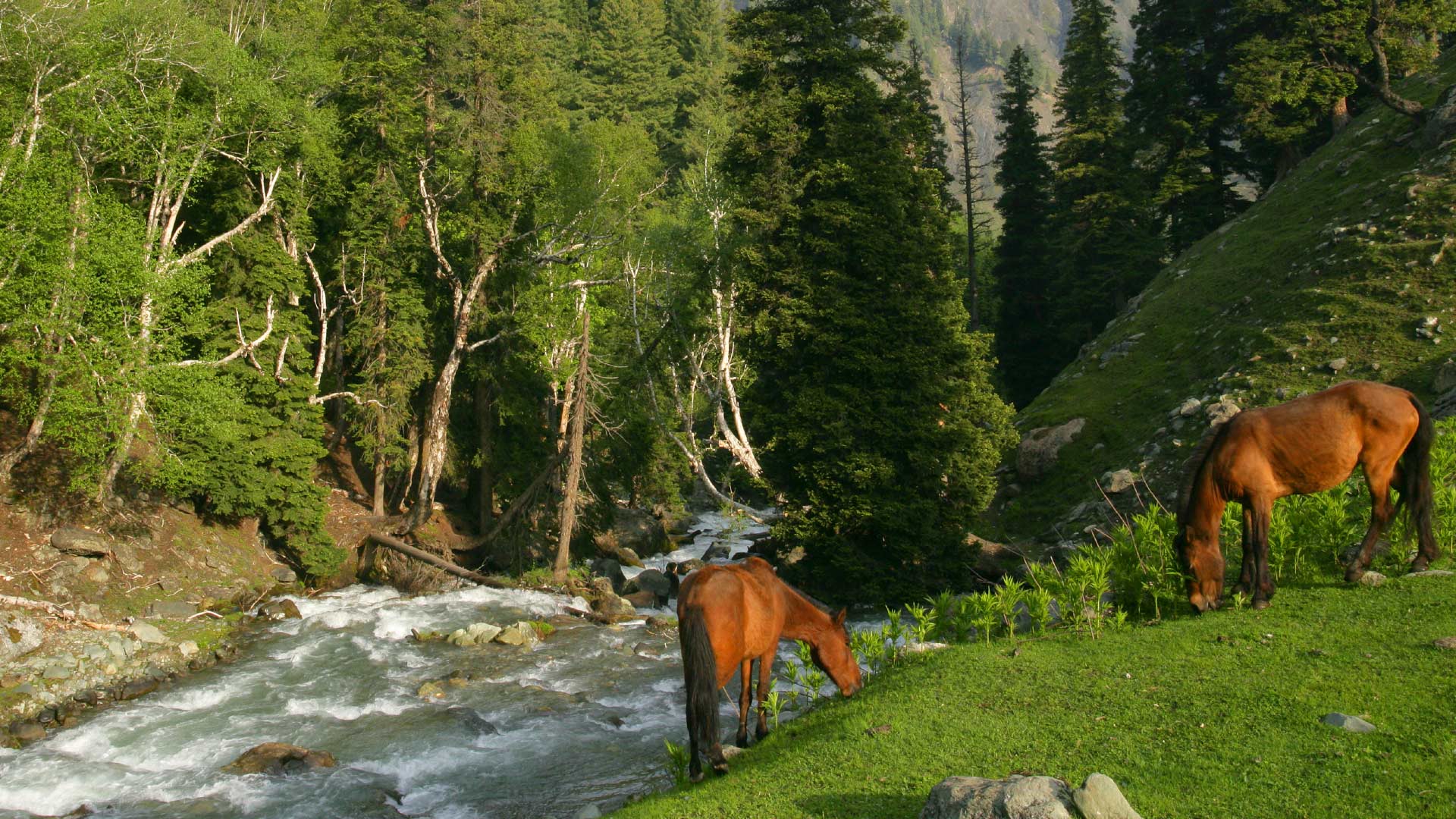
Photo by Ron Sumners | Dreamstime.com
The survey of young members of the American Conservation Coalition is interesting: “77% consider climate change a top priority, while 76% want greater conservative leadership on environmental issues”. The strength of realities such as the ACC is the connection with the political world; in the United States, the Republican Party has introduced environmental laws such as the American Energy Innovation Act and the Great American Outdoors Act in various states. Weiss and Barnard conclude their article by stating that: making the world a greener place should be a thought rooted in the psyche of conservatives. Doing so starting from the local and through personal, entrepreneurial and voluntary responsibility through the market economy is not only the best way to achieve this goal but is also the most conservative.
The existence of a particular concern within the conservative world for the theme of nature is also reflected in the history of English literature, as emerges from Ferdie Rous’ article The writings of Lewis and Tolkien embody conservative environmentalism, in explores the issue through the works of Lewis and Tolkien. Rous, referring to an Extinction Rebellion demonstration, emphasizes their political character and the feeling that “the climate is just another vehicle with which to fight the system.” As Roger Scruton writes in his book Confession of a Heretic, true environmentalism is about “the preservation of resources... conservation and balance”. In addition to the contribution of their books to the history of world literature, Tolkien and Lewis have dedicated important pages to recounting “the dangers of industry and the death of greenery and the earth”.
On the one hand, C.S. Lewis’s descriptions of “the animals, trees and fruits of Narnia that focus on the individuality of nature”, talking animals that represent “the constant dialogue in nature, the push and pull that maintains a balance and the uniqueness of any ecosystem”. Thus, characters such as Uncle Andrew, the magician who “wants to monetize nature by bending it to his will at the expense of balance” are represented as enemies of Narnia.
Tolkien, on the other hand, personifies “nature in time and terrain”. The figure of Saruman burning wood to fuel the fires of the Isengard furnaces is the emblem of evil, an ante litteram denunciation of the scourge of deforestation: “The different approaches of Lewis and Tolkien demonstrate the weakness of nature, the ease with which it can be destroyed or exploited and the impossibility of replacing it”.
Both are witnesses of the First World War, the construction of the trenches along the Somme and the devastation that the conflict inflicted upone the land. As a result, “their writings speak of the need to defend nature from the industrial drive that made war possible”.
The Lord of the Rings and The Chronicles of Narnia do not have a happy ending, “the innocence of the pre-industrial Shire and Narnia are lost and the latter is abandoned”, today we live in a historical moment characterized by increasing urbanization and “an inability to understand nature, often on the part of those who claim to protect it”.
In France, too, the need for conservative environmentalism emerges. Pierre Caye Dürer, for example, questions the need to transform the production system; ecology has been on the public policy agenda for 50 years and both the right and the left aspire to “change the current model”.
According to Caye, “the entire production system must be transformed and capital should no longer have only the sole concern of profitability but also of preserving our heritage”.
Thus emerges the relationship between ecology and the “ancient virtues swept away by the design of the bourgeois Civil Code”, ecology is in fact “transmission and conservation” and requires a “policy of heritage”, this does not mean being against property but underlining the contradictions of modern capitalism that flows faster and faster and in constant search of greater profitability. As Caye writes in his book, “globalization is the generalized transformation of closures. Its opposite is the return to heritage as a protected resource.” A capitalism that no longer knows borders and even goes beyond property, governments have renounced their sovereignty to chase modern “governance” which has as its “sole mission to integrate populations into the globalized system”.
Also in France, the newspaper “Le Figaro” published an interview with Caspar van den Berg, professor at the University of Groningen, entitled Le rêve écologique des urbains ne doit pas briser le monde rural. The professor points out that a socio-economic and socio-cultural conflict is underway that leads the working classes to vote no longer for the left but for right-wing parties. In this sense, he takes up the city-suburban dichotomy of Christophe Guilluy, which is grafted onto the debate on the theme of the environment and the future of agriculture. Caspar van den Berg poses a very important question related to alternative energy sources: “Rural people fear that solar panels and wind turbines will be imposed on them and that the landscapes and identity of their world will be ruined. The energy transition will take place in rural areas but with the aim of serving mainly urban areas.”
Yet the voice of rural areas does not reach the places of power and so, the vote of these areas is oriented either towards populist movements or towards right-wing parties, also due to the rejection of multiculturalism and immigration for which people no longer recognize their old neighborhoods.
However, reducing this vote to the issue of immigration alone would be wrong, since it is also a choice against the city elites and their hegemony in decision-making processes. The point raised by Caspar van den Berg is that the “urban dream” cannot be pursued at the expense of rural areas and that the real challenge for the future “will be to understand whether we are able to implement a just transition for all and whose side effect is not to break the fibers of our society”.
Also “Le Figaro” published an article entitled À la recherche d›un conservatisme vert qui réconcilierait villes et campagnes by Laure Mandeville, in which she tries to define the line for a green conservatism capable of reconciling city and countryside. The ecological transition in Western countries risks generating a conflict between urban elites who dream of green cities and the countryside who are afraid to pay the social and cultural costs of transformation with the risk of creating a fracture between center and periphery.
Laure Mandeville refers to Caspar van den Berg’s article by pointing out the growing divisions between large cities and suburbs and the risk of a major social fracture resulting from the ecological transition. On the one hand, there is the fear on the part of rural communities of seeing the landscapes and identity of their world ruined due to the ecological transition, on the other hand, the risk feared by the Californian urban planner Joël Kotkin, worried about the alliance between the world of Silicon Valley and the progressive green area, which does not take into account the difficulties of SMEs “to face the drastic ecological standards put in place in their state”. Thus there is a fracture between social classes determined by globalism and described by David Goodhart in his book Les Deux Clans, while “rural populations are afraid that we will impose solar panels and wind turbines without asking their opinion”.
The risk that the cost of the ecological transition will be passed on to the countryside is high, thus increasing the social gap.
“Appealing to the ‘conservatism of values’ and the defense of the natural environment, rejecting predatory liberalism no less than Marxist ‘Prometheanism’ [...] it is at the same time revolutionary both in scope and in values. It is ultimately, by deliberately cutting bridges with the universe of mechanistic, analytical and reductionist thought that has accompanied the emergence of the modern individual, it recreates a relationship between man and the totality of the cosmos, which is perhaps nothing more than a way to protest against the ugliness of the world and to respond to the eternal enigma of beauty”.
Thus, a market-dominated society is contrasted with an identity-based vision grounded in localism. Among the cultural references of the new ecologism, we cannot fail to mention Christope Guilluy, author of the essay La France périphérique in which he recounts the split of the country divided between metropolitan areas and provinces.
There is one theme that unites the conservatives’ vision of ecology: the link with the sacred and with Christianity.
The Christian approach to nature emerges from the book by Riccardo Cascioli and Antonio Gaspari The Lies of the Environmentalists. The false alarmism of the ecological movements in which the activity of environmental organizations is analyzed and what does not add up from their management.
Making the world a greener place should be a thought rooted in the psyche of conservatives.
Msgr. Dominique Rey’s text Is it possible to be Catholic and environmentalist deserves special attention? Letter on ecology, a true summa of Catholic ecologism as Samuel Gregg of the Acton Institute writes in the preface: the Catholic vision of the environment is in itself relatively easy to synthesize. Man is conceived as a being intrinsically superior to the natural world. He has been entrusted with dominion over nature so that he can use it to promote integral human development.
But man’s domination is not absolute. We can’t literally do what we want with animals and nature. Absolute dominion belongs to God alone.
Man is therefore subject to the divine moral law, as the theologian Germain Grisez also affirms, and the objective of Monsignor Rey’s text is “to show Catholics and other Christians a way of understanding the environment, so as to act correctly and consistently with the sacred scriptures, tradition and the Magisterium of the Church”.
The crisis of our conception of the environment arises from a deeper crisis of man, “when we lose the correct understanding of man’s relationship with God and of how this relationship shapes man’s understanding of himself, then it should not be surprising that our ability to conceive ecological issues coherently also begins to fail”.
It is no coincidence that Dominique Rey’s text opens with the words of Pope Benedict XVI during the World Day of Peace in 2008.
According to the French Bishops’ Conference, “the question of ecology cannot be reduced to perspectives concerning energy or technical questions alone”, and it is therefore necessary to rediscover the teaching of the Gospel.
Pope Benedict XVI maintains that “we must listen to the language of nature and respond to it coherently”, it is therefore necessary to establish an alliance between man and the earth as emerges from Caritas in Veritate, since “the earth, and all that it contains, reflects the beauty and glory of God. It is the wonderful work of the creator.”
Msgr. Rey’s analysis of radical environmental movements that embrace so-called “deep ecology” and that “are clearly inspired by a pagan pantheism that leads to the deification of nature” is important. Thus we arrive at the conception of ecologism as a new religion: the contemporary ideology of ecologism transforms the nature of a cult: it is not a nature humanized by man, with his knowledge and his work, but an entity that exists before man and that can exist without him. The planet is seen as a divine spiritual being, the famous mother earth deity, Gaia, to whom we address through different channels, chthonic forces and life forces.
Monsignor Rey, analyzing the Earth Charter promulgated by UNESCO in 2000, argues for the risk that lies in deifying the earth and desecrating man. Thus a fundamental passage emerges in which he affirms that “the ecological crisis also derives from an anthropological crisis”, while the biblical point of view is anthropocentric since God created man in his own image and likeness. In this sense, if it is true that man can destroy nature, it is also true that he is the only creature capable of “giving it the meaning and value desired by God” and it is “impossible to conceive of a true ecology that is not one centered on man and not simply on the earth”.
A Christian vision of ecology must overcome the inhuman logic and “antispeciesism” theorized by Peter Singer, professor of bioethics at Princeton University. On the other hand, it is worth taking up the words of Joseph Ratzinger expressed in 1981 and collected in the text ‘In the Beginning...’: A Catholic Understanding of the Story of Creation and the Fall, in which he stigmatizes the attitude that “considers the human being as a disturber of peace, as the one who destroys everything, as the true parasite and disease of nature.”
Linked to this is the issue of overpopulation, which is considered one of the causes of the destruction of the environment with “a Malthusian-eugenic vision that in fact lacks an empirical scientific basis”.
A “human ecology” is necessary, as St. John Paul II affirmed already in the Encyclical Centesimus Annus, combining respect for human life with respect for the environment: “it would be vain to insist on respect for the environment when the right to life is not respected,” a recurring theme in the magisterium of Benedict XVI because “an authentically Christian concept of ecology requires a defense of human life”: abortion, much more than deforestation or greenhouse gases, threatens man’s harmony with the natural order! Therefore, the ecological crisis is not disconnected from the demographic crisis of countries that today are currently experiencing population ageing and, in some cases, population decline.
The ecological crisis has a moral demension and also stems from their idea that, in the contemporary era, human beings replace God and ultimately provoke a form of rebellion of nature. This arises from the application of scientific and technical progress with serious consequences on nature and, in particular, for human nature. Today “ecological problems are first and foremost ethical problems. We are facing a moral crisis, that is, a crisis of human choice and action. Therefore, the root of the problem lies in the human heart.” From a Catholic social perspective, environmental ecology is placed within the boundaries of human ecology, since “the ecological crisis was born in the human heart and is only the external extension of this internal tragedy”.
It is Benedict XVI himself who formulates an analogy between environmental ecology and spiritual ecology, there is not only air pollution that damages the environment but also pollution of the heart that is linked to spiritual life.
Among the main contradictions that animate environmental struggles, there is the fact that many people are concerned “more for the environment or for the natural habitat of the various animal species on the verge of extinction than for the well-being of man himself”. We are experiencing the loss of the meaning of man’s history and his distancing from God which leads to a suffering of nature “because man no longer lives in filial obedience to God, but as a rebel and ungrateful”, generating “catastrophic consequences for the environment due to the betrayal of the covenant with God”, therefore “animals and the natural world itself die because man distanced himself from God”.
Responsibility for the nature that sorrounds us rests first and foremost with human beings. If a conversion in action is to take place, a prior conversion of hearts and minds is required. To do this, according to Monsignor Rey, it is necessary to rediscover the three fundamental means provided by the Church during Lent: prayer, fasting and charity (or prayer, penance, sharing).
The Canticle of the Creatures reveals God’s love and the need for a feeling of gratitude: it is necessary not only to respect but also to thank God for all that He has given us. The Benedictine tradition of ora et labora testifies to the care for the environment “where the Word of God is welcomed and meditated on, creation is saved rather than destroyed”.
Penance arises from the need to rethink our lifestyles to find a solution to the ecological problem by putting an end to a consumerism based on “excessive consumption, excessive use of means of transport, waste of all kinds” by learning the control and self-control of one’s instincts. What is needed is a return to the earth founded on love for it, as St. John Paul II said: “No one like those who cultivate the land can testify that if it is sterile, it does not bear fruit, while cared for with love it is a generous nourishment”.
It is no coincidence that in his Message for the World Day of Peace on January 1, 2010, Benedict XVI emphasizes how environmental issues have “a profound impact on the exercise of human rights, such as the right to life, food, health and development.”
In the conclusions of his text, Monsignor Rey affirms that an “ecological conversion” must begin with “a conversion of the heart with the aim of being able to trigger a conversion of morality and then of structures”. More than anything else, it is necessary to respect and preserve human ecology, Christians “can rebel against the exclusively materialistic vision of life, radical individualism and unbridled consumerism”. However, care must be taken because the search for harmony between man, God and the natural world “must keep away from neo-pagan pantheistic temptations that intend to show greater respect for nature and in doing so end up deifying it”, a vision that represents an antidote to radical individualism and collectivism.
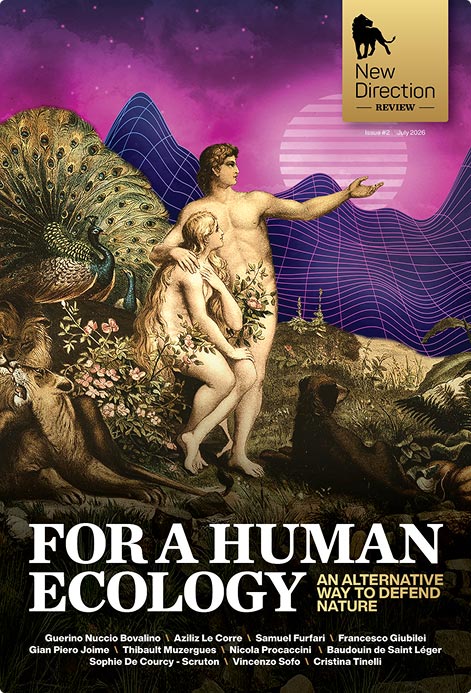
In recent years, in conjunction with a growing attention to the environment, a marked sensitivity has emerged even among citizens of the problems related to pollution, land consumption, uncontrolled overbuilding, undoubtedly positive news but in the meantime we have witnessed the attempt to impose ideas and values that have nothing to do with the protection of the environment. Thus emerges a one-sided form of environmentalism that promotes a specific vision of the world and society, one that risks becoming unquestionable for fear of being labelled as opposed to environmental protection. In reality, an alternative perspective on environmentalism exists, but it is not only overlooked; in many cases, it is largely unknown. For this reason, it is necessary to give voice to “green conservatism”, and to a Christian, identity-based ecologism by overcoming the stereotype that the environment, as well as culture, cannot be a concern of the political right. Of course, center-right politics bears responsibility for not having paid the necessary attention in recent years to the environment, despite an important cultural tradition behind it, but something is changing and the interviews in the following pages are a testimony to this.
In reality, the protection of nature should not have a political color but should unite all citizens regardless of their ideas and the party they vote for. Therefore, the ideologization of environmentalism that has taken place in recent years risks being counterproductive by making us lose sight of the common goal in favor of the defense of the earth.
A different approach not only in terms of content (local before global, identity, protection of the weakest and the productive classes, man conceived as an ally and not as an enemy of nature) but also in the lexicon and terminology. The frequency with which the term environment (and environmentalism) is used and the scarcity of use of the word ecology (and ecologism) is striking. It is no coincidence that ecology refers to the science that studies the relationships between humans, plant and animal organisms and the environment in which they live. By referring only to the environment, the presence of man is erased and therefore an approach is concretized that tends to minimize (or even erase) the human presence. The opposite of the Christian approach and the concept of creation. But there is another word that has taken a back seat to the environment and it is “nature”. What we must keep at heart is first and foremost the nature that surrounds us, its rules, its times, respect what has been given to us and not pretend to be superior to it. In this sense, the opposite extreme occurs to those who deny the role of man represented by the triumph of materialism and rationalism. The watchwords must be respect, balance and harmony. Respect for everything that surrounds us, for the nature that has been given to us and that we have a duty to preserve. Balance because man and nature must create a balance based on harmony, from the way of living to that of building, without ever forgetting the preservation of what the ancient Romans called genius loci, the spirit of man, his soul, identity, sacredness without which there can be no true love for the earth and nature. A sacredness that unites nature and literature united by the sense of beauty, which is why we have decided to publish Pier Paolo Pasolini’s verses dedicated to the divine right “defend, preserve, pray”, the pages of Gabriele D’Annunzio with his descriptions of nature, the unpublished memories in Italy of the leading European philosopher Roger Scruton, as well as Thoreau. Separating nature from the concept of beauty means not being able to understand its profound meaning that only by living in close contact with it and letting ourselves be carried away by the words of the great writers, we can truly appreciate.