
Idolatry destroys that which it venerates, and... an ethics of limits is not a modern invention but one of the oldest foundations of Western civilization.
The idolatry of growth - A progressive pathology
There is a dogma at the heart of modern economic civilization that has survived every crisis, every contradiction, and every catastrophe. It is the dogma of unlimited growth—the idea that economic expansion is not merely desirable but necessary, not merely a means but an end, not merely a measure of prosperity but the organizing principle of political life itself. It is, in the most precise sense of the term, an idolatry: the worship of a human construct as though it were a natural law.
Conservatives have always understood that idolatry destroys that which it venerates, and that an ethics of limits is not a modern invention but one of the oldest foundations of Western civilization. From the classical tradition of moderation and prudentia, through the Christian understanding of human finitude and stewardship of creation, to Burke’s intergenerational covenant and Scruton’s oikophilia, the recognition that freedom requires boundaries, and that order precedes freedom, runs as a continuous thread through the conservative inheritance. Ecology did not invent limits. It was the rationalist revolution of the seventeenth century that forgot them, dissolving inherited bonds in the acid of abstract reason and replacing the ancient wisdom of living within nature with the boundless project of human mastery over it. The dogma of unlimited growth is the secular heir to this forgetting: it promises salvation through accumulation, progress through expansion, freedom through the limitless multiplication of wants and their satisfaction. And like all false religions, it demands sacrifices: of communities, landscapes, traditions, and of the natural world upon which human life itself depends.
Almost the entirety of contemporary ecological discourse unfolds within a progressive framework. The Right has too often retreated into denial or laissez-faire complacency, while the Left has appropriated the environmental crisis as its own political terrain, presenting technocratic planning as the sole credible response. This essay challenges both positions—not from the centre, but from a deeper and more coherent conservatism. Its claim is not merely that conservatives ought to concern themselves with the environment; it is that conservatism alone possesses the intellectual resources necessary to apprehend the ecological crisis in its proper dimensions and to formulate an adequate response.
The European Green Deal is the most consequential expression of this progressive framework, and it is the clearest demonstration of its limitations. This is not because it is too ambitious, but because it is philosophically flawed. At its root lies what we may call the “transition paradigm”: the view that the environment is an external variable to be regulated ex post, and environmental damage an accounting constraint to be managed through regulatory coercion. An economy built upon this premise treats land, energy, and nature as mere inputs to be optimized, rather than as the material foundations of human and communal life, thereby consuming the very roots from which it springs. Growth that devours its own roots is not progress. It is a slow suicide, masquerading as prosperity.
The conservative response to the ecological crisis is older than the crisis itself. It begins with the Burkean intergenerational covenant—the recognition that each generation holds the natural and institutional order in trust, not in ownership. It continues through Scruton’s oikophilia—the understanding that environmental responsibility springs from the love of particular places, not from compliance with universal mandates. It finds its institutional architecture in the ordoliberal tradition—Eucken, Röpke, and the Freiburg School—which insisted that market freedom requires constitutive rules, not merely corrective interventions: Ordnungspolitik, not Prozesspolitik.
The conservative tradition finds unexpected confirmation in thinkers who arrived at convergent conclusions via different paths. Polanyi demonstrated that land, energy, and nature cannot be treated as ordinary market commodities without generating social and institutional dissolution. Georgescu-Roegen and Daly proved that economic growth operates within biophysical limits that no regulatory package can circumvent. These are not conservative arguments, yet they reinforce from the outside what the conservative tradition has always understood from within: that the economy is embedded in a natural and social order that it did not create and cannot indefinitely consume.
What unites these traditions is a conviction that the progressive environmental movement has systematically ignored: ecological limits are not external constraints to be managed ex post. They are constitutive principles of any enduring economic order—as foundational as the rules of competition, monetary stability, or the rule of law. From these convergent traditions emerges the need for a paradigm distinct from that of transition: not the external correction of environmental damage, but its structural incorporation into the economic order. This is what we call ecological integration—the attempt to build this incorporation into the very architecture of the economic order, not as a constraint imposed from without, but as a constitutive principle from within. This is precisely what the Green Deal, for all its ambition, has failed to honour.
Ecological integration is not environmentalism dressed in conservative clothes. It is conservatism returning to one of its deepest insights: that unfettered freedom destroys its own conditions of possibility, and that the measure of a civilization is not what it produces, but what it preserves.
From Transition to Ecological Integration
The European Green Deal has been the most ambitious progressive experiment in ecological governance in history. And it has demonstrated precisely what conservatives already knew: harmony with nature cannot be achieved by decree.
Launched in 2019, the European Green Deal committed the European Union to achieving climate neutrality by 2050 through an elaborate architecture of regulatory instruments: the ETS system, the CBAM mechanism, the Fit for 55 package, the sustainable finance taxonomy, the Farm to Fork strategy, the ban on internal combustion engines, and binding energy-efficiency standards for buildings. Thousands of pages of regulations, targets, and timetables—all grounded in a single organizing premise: that reconciliation between economic development and ecological limits can be achieved only through the regulatory correction of market failures, combined with the technological substitution of fossil-fuel-based systems with cleaner alternatives.
The results of this experiment are instructive—not because the Green Deal failed to produce results, but because the results it produced revealed, with unusual clarity, the structural limitations of the paradigm upon which it was founded.
The Green Deal reduced European emissions. It accelerated the deployment of renewable energy. It established a carbon-pricing regime that altered investment decisions across the industrial economy. These are genuine achievements. Yet they were purchased at a cost that the paradigm of transition was unable to perceive precisely because of its philosophical premises. A framework built upon corrective intervention—upon repairing environmental damage ex post—cannot, by its very nature, generate the harmonious alignment between ecological and industrial development that ecological integration would have sought from the outset. This was not bad luck. Nor was it a failure of implementation. It was the logical consequence of an inadequate philosophical framework. Three systemic and perverse effects followed, effects that its architects neither anticipated nor possessed the conceptual resources to address.
The first was technological dependency. The Green Deal generated massive European demand for clean technologies—solar panels, wind turbines, batteries, electric vehicles—without creating the productive capacity necessary to supply that demand from within Europe itself. The result was a form of green colonialism: Europe set the environmental standards; Asia supplied the technologies required to follow them. Sustainable in European accounting terms; disastrous in European industrial and geopolitical terms. As Europe became the Kingdom of Regulation, global competition consolidated the Empire of Technique.
The second was distributive regressivity. The costs of transition fell unevenly across society. Lower-income households, which devote a larger share of their budgets to energy and transportation, bore a disproportionate burden of the price increases associated with carbon taxation. Workers in hard-to-abate sectors—steel, chemicals, cement, ceramics, glass—faced growing threats to their livelihoods without commensurate support. A policy designed to protect future generations risked doing so at the expense of the most vulnerable members of the present one.
The third was selective deindustrialization. The regulatory burden imposed by the Green Deal increasingly placed European firms—particularly medium-sized enterprises in traditional industrial sectors—at a competitive disadvantage relative to non-European competitors operating under less stringent constraints. In some sectors, production simply relocated beyond Europe’s borders. Emissions did not disappear. They merely migrated beyond the boundaries of European accounting. A transition that exports emissions is not an ecological transition. It is creative accounting applied to the atmosphere. Europe reduced emissions on paper. Asia increased them in reality. The atmosphere does not read European accounting standards.
There is a profound irony at the heart of the ecological transition model—one that the architects of the Green Deal appear never to have confronted. The theory of sustainable development, rooted in the Brundtland Report, rests upon three pillars of equal importance: environmental, economic, and social. The Green Deal systematically privileged the first at the expense of the latter two. This is not merely a policy error. It is a theoretical heterodoxy—a departure from the very intellectual framework that progressive politics claimed to implement.
Moreover, the original theory is explicit in its understanding that the concept of the “environment” encompasses the human world itself: the built landscape, productive assets, and the industrial culture of territories. Within this logic, the destruction of an industrial district is no less an environmental catastrophe than deforestation. The loss of a thousand skilled jobs in a ceramic-producing valley constitutes a form of unsustainability—of community, knowledge, and place—as real and irreversible as the loss of a thousand hectares of forest.
The Green Deal did not protect the environment in any theoretically coherent sense. It protected one environmental dimension while often compromising the economic and social dimensions.
Sustainable development theory, at its best, already describes what ecological integration ought to be: the harmonious interdependence of environmental, economic, and social dimensions as aspects of a single system rather than objectives to be balanced against one another. What has always been lacking is the institutional architecture capable of rendering this vision real—the constitutional moment that transforms a shared aspiration into a binding order. The Green Deal claimed to implement sustainable development. In practice, it dismembered it.
Growth that devours its own roots is not progress. It is a slow suicide, masquerading as prosperity.
These failures share a common root. A conservative analysis reveals something that a progressive analysis cannot easily perceive: the problem is not implementation. It is philosophy.
The Green Deal is founded upon the paradigm of transition: the belief that the relationship between economy and nature can be repaired through external correction—regulatory instruments, technological substitution, compensatory mechanisms—without transforming the philosophical foundations of the economic order itself. The transition paradigm presupposes a separation between economy and nature which it subsequently attempts to bridge through policy. It treats ecological limits as constraints to be managed rather than as constitutive principles of economic life. In philosophical terms, it remains Cartesian: a rational subject acting upon an external object, correcting from without a relationship that has gone awry.
The paradigm of ecological integration proposes something fundamentally different.
Ecological integration is the harmonious, simultaneous, and enduring interaction of economic, environmental, and social factors: a unified order in which none of these dimensions may be sacrificed to the others. Its fundamental premise is that the economy is structurally embedded within the natural order and the productive traditions of particular places. It is not a separate sphere that interacts with nature and local identities from the outside, but a complex system operating within the biophysical and cultural conditions that make its existence—and its durability—possible.
From transition to ecological integration
The European Green Deal was the most ambitious progressive experiment in ecological governance in history. And it demonstrated what conservatives already knew: harmony with nature cannot be achieved by decree.
Launched in 2019, the European Green Deal committed the European Union to climate neutrality by 2050 through a complex architecture of regulatory instruments: the ETS system, the CBAM mechanism, the ‘Fit for 55’ package, the sustainable finance taxonomy, the Farm to Fork strategy, the ban on internal combustion engines, and binding energy efficiency standards for buildings. Thousands of pages of regulations, targets and timetables – all based on a single organisational premise: that the reconciliation of economic development and ecological limits can only be achieved through regulatory correction of market failures, combined with the technological replacement of fossil-fuel-based systems with clean alternatives.
The results of this experiment are instructive — not because the Green Deal failed to produce results, but because the results it did produce revealed, with unusual clarity, the structural limitations of the paradigm on which it was founded.
The Green Deal has reduced European emissions. It has accelerated the development of renewable energy. It has introduced a carbon price that has altered investment decisions across the entire industrial economy. These are real results. But they have come at a cost that the transition paradigm could not foresee, precisely because of its philosophical foundations. A paradigm built on corrective intervention – on repairing environmental damage after the event – cannot, by its very nature, bring about the harmonious alignment between ecological and industrial objectives that ecological integration would have pursued from the outset. Not bad luck. Not poor execution. The logical consequence of the wrong framework. This led to three systemic perverse effects that its architects had not foreseen and that their paradigm could not manage.
The first was technological dependence. The Green Deal created massive European demand for clean technologies — solar panels, wind turbines, batteries, electric vehicles — without building the production capacity to meet that demand from within Europe. The result was a form of green colonialism: Europe set the environmental standards; Asia supplied the technologies to meet them. Sustainable on paper in European accounting terms. Catastrophic in terms of European industry and geopolitics. Whilst Europe became the Kingdom of Standards, global competition established the Empire of Technology.
The second issue was distributional regressivity. The costs of the transition have been borne unequally. Low-income households, which spend a larger proportion of their household budget on energy and transport, have borne a disproportionate share of the price increases resulting from carbon taxation. Workers in ‘hard-to-abate’ sectors – steel, chemicals, cement, ceramics and glass – saw their jobs threatened without adequate support. A policy designed to protect future generations risked doing so at the expense of the most vulnerable members of society today.
The third issue was selective deindustrialisation. The regulatory burden of the Green Deal has placed European businesses – particularly medium-sized firms in traditional industrial sectors – at an increasing competitive disadvantage compared with non-European competitors not subject to equivalent constraints. In some sectors, production has been relocated outside Europe. Emissions have not disappeared. They have simply shifted outside the European accounting perimeter. A transition that exports emissions is not an ecological transition. It is creative accounting applied to the atmosphere. Europe has reduced its emissions on paper. Asia has increased them in reality. The atmosphere does not recognise European accounting standards.
There is a profound irony in the model of the ecological transition, which the architects of the Green Deal seem never to have addressed. The theory of sustainable development, rooted in the Brundtland Report, rests on three pillars of equal weight: environmental, economic and social. The Green Deal has systematically prioritised the first at the expense of the other two. This is not merely a policy error. It is a theoretical heterodoxy, a betrayal of the very intellectual framework that the progressive left claimed to be implementing. Moreover, the original theory explicitly holds that the concept of ‘environment’ encompasses human endeavour: the built landscape, productive heritage and the industrial culture of local areas. According to this logic, the destruction of an industrial district is no less of an environmental catastrophe than deforestation. The loss of a thousand skilled jobs in a ceramics-producing valley is a form of unsustainability – of community, of knowledge, of place – that is just as real and irreversible as the loss of a thousand hectares of forest. The Green Deal has not protected the environment in any theoretically coherent sense. It has protected the environmental dimension, often at the expense of the economic and social dimensions.
The theory of sustainable development, at its best, already describes what ecological integration should be: the harmonious interdependence of the environmental, economic and social dimensions as parts of a single system, not as objectives to be pitted against one another. What has always been lacking is the institutional framework to make this a reality, the constitutional moment that transforms a shared aspiration into a binding order. The Green Deal claimed to implement sustainable development. In practice, it has dismantled it.
These failures share a common root. A conservative analysis reveals something that a progressive analysis cannot see: the problem is not the implementation. It is the philosophy. The Green Deal is founded on the transition paradigm: the idea that the relationship between the economy and nature can be repaired through external corrections – regulatory instruments, technological substitution, compensatory mechanisms – without transforming the philosophical foundations of the economic order itself. The transition paradigm presupposes a separation between the economy and nature, which it then attempts to bridge through policy. It treats ecological limits as constraints to be managed, not as constitutive principles of economic life. It is, in philosophical terms, still Cartesian: a rational subject acting upon an external object, correcting from the outside a relationship that has gone awry.
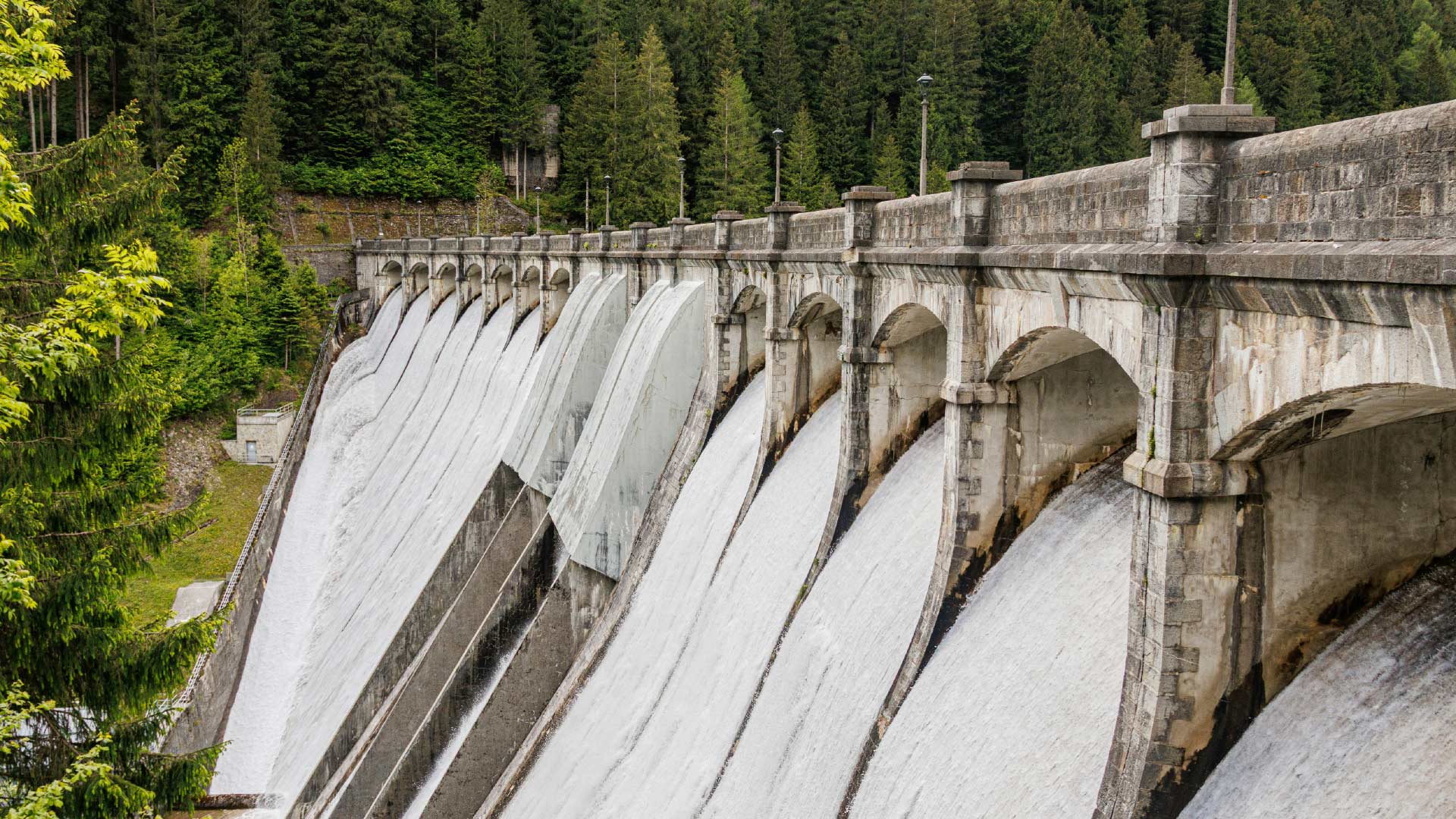
Photo by Taras Terletskyy on Unsplash
The paradigm of ecological integration proposes something radically different. Ecological integration is the harmonious, simultaneous and enduring interaction of economic, environmental and social factors: a unified system in which no dimension can be sacrificed for the sake of the others. Its premise is that the economy is structurally integrated into the natural order and the productive traditions of local areas: not a separate sphere that interacts with nature and local identities from the outside, but a complex system that operates within the local biophysical and cultural conditions that make it possible and sustainable.
From this premise follow three operational consequences that distinguish integration from transition.
First, ecological limits are not external constraints to be managed ex post, but constitutive principles of economic order to be incorporated ex ante—just as the rules of competition, monetary stability, and the rule of law are embedded within the foundations of market economies. They define the architecture within which economic freedom operates, not the cage that restricts it.
Second, sustainability is not a final destination to be reached at the end of a transitional process. It is a permanent operational criterion—environmental, economic, and social—that must orient every industrial and political decision. This means that ecological and industrial objectives cannot be pursued sequentially—first decarbonization, then the reconstruction of competitiveness—but must be integrated from the outset within a coherent strategy. A Europe that achieves its climate targets by dismantling its industrial base has not solved the problem. It has merely exported it.
Third, the governance of ecological integration cannot be entrusted to centralized planning or to the proliferation of sector-specific regulations. It requires an architecture of general, predictable, and binding rules—following the ordoliberal model—that defines the limits within which market freedom, territorial autonomy, and the responsibility of economic actors may operate. Rules that accommodate rather than suppress the plurality of local solutions.
The Draghi Report (2024) and the Clean Industrial Deal (2025) represent a partial recognition of these failures. The language has changed: less transition, more competitiveness; fewer climate targets considered in isolation, more emphasis on industrial sovereignty. Decarbonization can no longer be pursued independently of industrial policy, energy security, and the competitive position of European firms within global markets.
This represents progress, but progress that remains partial and fragile. The Clean Industrial Deal adjusts the instruments of transition without transforming its philosophical foundations. It remains a corrective approach—one that acknowledges the competitive distortions generated by the Green Deal and seeks to remedy them. Yet it still does not incorporate ecological limits as constitutive principles of economic order. It places them alongside industrial policy rather than integrating them structurally within it. The underlying logic of a regulatory doctrine imposed from above remains unchanged.
A genuinely conservative approach to ecological governance must go further. It must construct a European economic order in which ecological limits function as foundational rules—as binding and as general as the rules of competition themselves—within which the diversity of national industrial strategies, energy mixes, and territorial traditions can pursue their own paths of development.
Fewer rules, but more fundamental ones. Fewer regulations, but more binding principles. Less standardization, more constitutional order. Less micro-management from Brussels, greater national strategic autonomy within a shared ecological framework.
Properly understood, this is the only architecture of ecological governance consistent with conservative principles.
The Italian Approach - Industrial Sovereignty and Ecological Integration
Italy’s position within the European debate on ecological governance is at once distinctive and instructive—and distinctive precisely because its underlying logic is profoundly conservative. It is distinctive because no other major European economy combines the same structural characteristics: a manufacturing base built upon territorial industrial districts rather than national champions; deep energy dependence; a central geopolitical position within the Mediterranean; and industrial sectors whose very nature resists rapid decarbonization. It is instructive because the Italian condition renders visible, in concentrated form, precisely what ecological integration ought to mean in practice: not a universal regulatory model imposed from above, but a strategy rooted in the particular productive traditions, territorial identities, and strategic interests of a specific place. Italy is not merely a case study. It is the conservative argument made concrete.
Italy is a manufacturing power of a distinctive kind. Its industrial system is not organized around large national champions but around a constellation of local production districts, highly specialized medium-sized enterprises, and long, flexible supply chains spanning sectors that much of the developed world has largely abandoned: precision engineering, specialty chemicals, ceramics, glass, paper, specialty steels, and high-quality agri-food production. These are energy-intensive sectors, difficult to decarbonize rapidly through electrification alone, highly exposed to energy costs, and deeply embedded in international competition.
This industrial structure carries direct implications for ecological policy. Any strategy of decarbonization that fails to account for the specific characteristics of Italy’s hard-to-abate sectors risks producing deindustrialization rather than sustainability. The ceramics of Sassuolo, the engineering firms of Brescia, the glassmakers of Murano: these are not merely industrial sectors awaiting decarbonization. They are civilizations in productive form.The communities built around them—in the Po Valley, Tuscany, the North-East, and the Mezzogiorno (the South of Italy)—carry within them centuries of productive tradition, cultural identity, and social cohesion shaped by particular forms of labour. To destroy them in the name of net zero is not to save the planet. It is to impoverish Europe.
This is the deepest meaning of the conservative critique. By imposing universal technological standards from above, indifferent to territorial particularities and to the rhythms of local productive life, the Green Deal has too often sacrificed the human and social capital that constitutes the true foundation of sustainable development. It has sacrificed the concrete reality of communities, skills, and places upon the altar of climatic abstraction.
Italy’s geographical position is equally distinctive. Italy is not, as Brussels sometimes appears to assume, the Southern periphery of a Northern European economic order. It is the centre of the Mediterranean: the hinge between Europe and Africa, between the Atlantic system and the Middle East, between the old industrial world and the emerging economies of the Global South. This position carries strategic implications for energy and ecological governance that no European regulatory framework has yet adequately recognized.
The Mediterranean is one of the principal theatres of twenty-first-century energy geopolitics. The natural gas reserves of the Eastern Mediterranean, the solar energy potential of North Africa, the future hydrogen corridors linking Sub-Saharan Africa to Europe—these are strategic assets whose development will significantly shape the energy sovereignty of the European continent. Italy, by virtue of its infrastructure, industrial capabilities, relationships across the Mediterranean basin, and geographical centrality, occupies a unique position. It can become not a passive terminal for decisions taken elsewhere, but an active hub of Euro-Mediterranean integration.
The Mattei Plan for Africa represents, in embryonic form, the correct approach to this role: not extractive dependence but co-development; not resource exploitation but shared infrastructure, technological transfer, and integrated supply chains linking the Northern and Southern shores of the Mediterranean. It offers the outline of a sovereign ecology—one that honours the bond between people and land on both sides of the sea.
For Italy, the integration of territorial ecological limits into economic order is not an ideological choice. It is a strategic necessity. Energy security is not an alternative to environmental sustainability; it is its political precondition. Without abundant and reliable energy, Italy’s manufacturing economy cannot remain competitive. Without a competitive manufacturing economy, there can be no social foundation for the investments, transitions, and long-term commitments that genuine ecological responsibility requires.
Technological neutrality is the operational expression of this principle. Italy’s hard-to-abate industries—steel, chemicals, cement, ceramics—are not problems to be eliminated. They are the productive backbone of entire regional economies, carrying within them centuries of accumulated expertise, local identity, and industrial culture. They cannot be decarbonized through electrification alone within any realistic time horizon. Green hydrogen, biomethane, carbon capture and storage, low-emission industrial processes: these are different pathways toward the same destination, each suited to different conditions, temporal horizons, and investment logics. A system of governance that imposes a single technological solution is not ecological integration.
It is technocratic planning with a green veneer: the conservative’s oldest adversary clothed in contemporary garments.
A single example is worth more than a thousand definitions. For more than a century, Alpine communities in Italy have managed their hydroelectric resources not because a European directive required them to do so, but because their relationship with water is constitutive of their economic and cultural identity. Here, the natural limit is not a bureaucratic constraint. It is the founding principle around which the entire local economy has been organized. Sustainability appears not as a destination to be reached, but as a permanent criterion governing every decision. Governance emerges not from administrative imposition, but from territorial rootedness. This is ecological integration in practice.
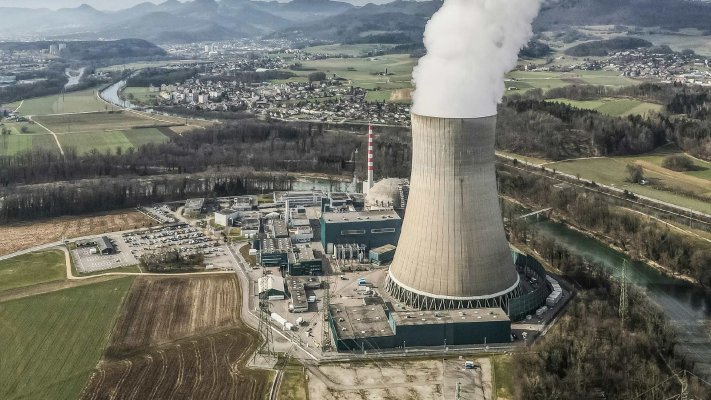
The question of nuclear energy belongs within this same line of reasoning. Italy’s two nuclear referenda took place in a world that no longer exists—technologically, geopolitically, or industrially. The emergence of new generations of small modular reactors and the growing plausibility of nuclear fusion fundamentally reframes the debate. Nuclear energy is not an alternative to renewables; it is the stable, zero-carbon baseload that makes a predominantly renewable electricity system possible without sacrificing reliability.
For an industrial economy that requires abundant, predictable, and affordable electricity in order to decarbonize its most energy-intensive processes, excluding nuclear power on ideological grounds is not an environmental principle. It is an act of strategic self-harm. Italy is moving decisively in the right direction. The legislative delegation recently approved by the Italian Parliament, establishing the regulatory conditions for the return of civilian nuclear energy, is completing its parliamentary course—a long-awaited step toward restoring nuclear competence as a strategic pillar of national energy sovereignty.
Sustainability appears not as a destination to be reached, but as a permanent criterion governing every decision.
Europe’s partial response to these failures—the Clean Industrial Deal—has shifted the language toward competitiveness and industrial sovereignty, implicitly recognizing that transition cannot be pursued at the expense of the productive base. Yet the tension at the heart of this new approach—between common binding objectives and the freedom of member States to define their own paths—is not a technical problem. It is a political question concerning the kind of Union, Europe wishes to become. No country renders this question more concrete—or more urgent—than Italy.
The conservative answer is clear: a Europe that establishes common principles and safeguards their coherence, while leaving strategic and operational responsibility for implementation to the member states. Subsidiarity, not as a rhetorical concession to national sensitivities, but as a genuine constitutional principle. The diversity of Europe’s territories, traditions, and industrial systems is not an obstacle to ecological governance. Properly understood, it is its richest resource—provided that governance is designed to cultivate such diversity rather than suppress it.
Ecological integration is not a federalist project. It does not ask member States to surrender sovereignty to a supranational ecological authority. It asks for something more demanding, and more genuinely conservative: that each nation exercise its sovereignty responsibly within a framework of shared principles that no state may unilaterally dissolve.
The distinction is fundamental. A Europe that imposes uniform ecological standards from Brussels does not strengthen the sovereignty of its member states; it substitutes its own for theirs. A Europe that defines common ecological principles while leaving nations responsible for discovering their own paths towards their realization does not weaken European ambition: it makes it credible, because it grounds it in the concrete diversity of the territories, traditions, and productive orders from which Europe is composed.
The practical architecture of such a framework remains an open question. How are shared principles translated into binding commitments without degenerating into uniform mandates? How are asymmetries to be managed when one nation’s investment in nuclear power, renewable energy, or strategic infrastructure becomes a new dependency for another? These are not objections to ecological integration. They are the questions that any serious conservative intellectual project must now confront.
This essay does not claim to resolve them. It proposes the framework within which they must be posed, and invites the debate that only honest political thought can advance.
This is the European question that Italy makes impossible to avoid. The issue is not how to make the transition more efficient. It is whether the European Union is capable of constructing, at last, a genuine ecological order founded upon shared principles, national autonomy, and the recognition that sustainability cannot be standardized across the irreducible diversity of European civilizations.
Italy is not a special case. It is the European case in its most concentrated form. Every tension brought to light by the Green Deal—between decarbonization and deindustrialization, between regulatory uniformity and territorial diversity, between energy dependence and strategic sovereignty—is experienced by Italy with more intensity than another European economy. For this reason, the Italian path toward ecological integration is not a national idiosyncrasy. It is a prototype: a concrete demonstration that an ecological order grounded in shared principles and national autonomy is not a theoretical abstraction, but an already practicable possibility.
Conclusion - Ecological Order as Conservative Renewal
The distinction between the paradigm of ecological transition and that of ecological integration is more than semantic. It marks the difference between a corrective approach that leaves intact the philosophical foundations of unlimited growth—even when growth is disguised as a green economy—and an integrative approach that incorporates territorial ecological limits into the very architecture of economic order itself.
The conservative tradition, properly understood, has always stood on the side of integration.
Burke’s intergenerational covenant, Scruton’s oikophilia, and the ordoliberal conception of the market as an institutional order are not isolated insights. They are convergent expressions of a single, profound intuition: that freedom without limits destroys the conditions that make freedom possible; that communities remain sustainable only when they live within the bounds of their natural and cultural inheritance; and that the measure of a civilization lies not merely in what it produces, but above all in what it preserves and transmits.
The idolatry of unlimited growth—including that version founded upon imported clean technologies and the externalization of climate ambition to Asian supply chains—is not conservative. It is revolutionary in Burke’s deepest sense of the term. It severs the continuity between past, present, and future. It consumes the natural and cultural capital upon which communities depend. It substitutes the abstract logic of accumulation for the concrete wisdom of limits. A conservatism that defends this idolatry in the name of economic freedom has confused means with ends. In doing so, it has abandoned its most important insight in favour of its most superficial reflection.
The progressive solution— the regulatory engineering of the Green Deal, the technocratic imposition of universal standards, the centralized management of ecological transformation— is not an answer. It is the same disease in a different uniform. It corrects the symptoms of the dogma of unlimited growth without confronting its causes. It imposes from above what can be sustained only from below. It substitutes bureaucratic compliance for civic responsibility. And it produces, as the decade of the Green Deal has demonstrated, many of the same resistances and pathologies it was intended to overcome.
The ecological question does not belong to the Left. It never did. The Left appropriated it and clothed it in the language of technocratic planning—and this is precisely why the Green Deal failed. The conservative tradition—from Burke to Kirk, from Eliot to Röpke, and ultimately to Scruton—possessed the answer long before the question acquired its present urgency. Ecological integration is not an accommodation to progressive pressure. It is conservatism returning to itself.
Limits are not the enemy of freedom. They are its condition. A river without banks is not water set free. It is a flood.
From this principle follows a different understanding of sustainability itself. Sustainability is not a metric to be optimized, but the capacity to preserve through time the defining characteristics of a community. It means not producing more at any cost, but producing better: honouring quality, attachment to place, and the rhythms of local productive life.
Growth that devours its own roots is not progress. It is suicide disguised as prosperity. Ecological integration is a conservative third way, though not in the tepid and centrist sense that phrase has sometimes acquired. It is not a compromise between a Right that denies limits and a Left that instrumentalizes them. It is a more radical alternative to both: a return to the deepest conservative insight that durable order requires constitutive rules, that freedom presupposes boundaries, and that the health of a civilization is measured not by the rate of its growth but by what it chooses to protect and transmit.
Against the laissez-faire of market liberalism, it insists upon limits. Against the technocratic planning of a left progressive politics, it insists upon freedom. It is not the middle ground. It is the higher ground.
What is required is not another regulatory package, but a constitutional moment of a different kind: one that incorporates ecological limits into the foundational architecture of the European economic order while simultaneously redistributing power downward. Brussels defines the principles—the ecological boundaries within which market freedom must operate. The member States choose the paths.This is not a weakening of European ambition. It is its only realistic form: shared objectives, sovereign implementation, and the recognition that sustainability cannot be standardized across the irreducible diversity of European civilizations. The intellectual resources for such a constitutional redesign are not to be found in progressive planning, which has consistently confused the destination with the route. They are to be found in conservatism, which has always understood that a durable order requires general rules, local freedom, and the wisdom to distinguish between the two.
The eco-conservative path is an alliance between man, legal order, and the land. To recall Burke’s immortal teaching, society is a covenant of historical continuity that transcends the caprice of the present. And as Scruton demonstrated, environmental stewardship flourishes only where oikophilia—a rooted love of place and of the memory of one’s forebears—transforms limits from regulatory constraints into the very conditions of responsible freedom.
At its deepest level, the ecological crisis is a crisis of rejected limits. The conservative response is neither to reject those limits further nor to entrust them to technocratic management. It is to build the institutional order—national, European, and Mediterranean—within which limits cease to appear as constraints and become the very foundation of freedom itself. This is ecological integration: not a programme of reforms, but a conception of order in which sustainability is not imposed from above but rooted within the institutions, territories, and communities that embody it. A civilization that understands this does not need to be made sustainable by decree.