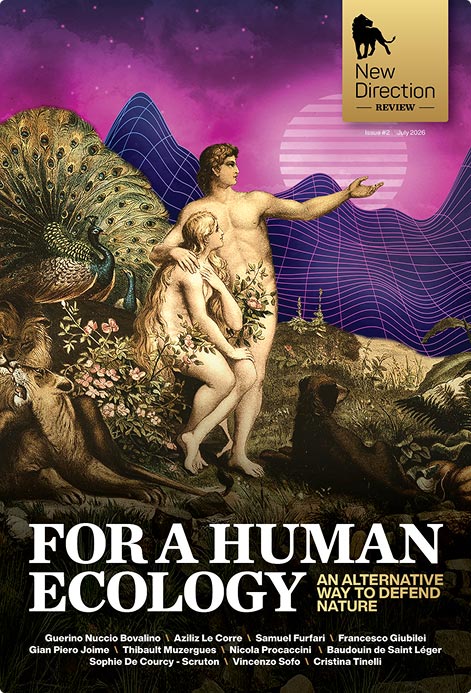
Wherever men are poor, nature is plundered... Wherever men are prosperous, nature is cultivated, restored, and admired.
True environmentalism is not the enemy of humanity, but its servant – and prosperity is its first instrument. Wherever men are poor, nature is plundered: forests are cut for firewood, rivers are fouled, soils are exhausted, animals are hunted to the limit of survival. Wherever men are prosperous, nature is cultivated, restored, and admired. And prosperity itself has a single material foundation: the massive, reliable, affordable use of energy. No civilisation has ever grown rich in scarcity; none ever will. The Green Deal and progressive environmentalism have inverted this elementary truth, sacrificing European union prosperity on the altar of ideology by attacking the very thing that produces it – energy in abundance. It is time to reclaim a human ecology – one that places the dignity, creativity, and flourishing of man at the centre, and that recognises a simple historical fact: prosperous men protect nature; impoverished men consume it. Abundant energy, technological progress, and pragmatic stewardship are not threats to the environment – they are the conditions of its preservation.
Preamble - A pollution fighter speaks
I write these lines not as a theorist, but as a practitioner – a scientist, an officer of an international administration and also a university professor who has spent several decades at the core of EU energy policy, addressing tangible forms of pollution rather than abstract or hypothetical threats. My career at the Directorate General for Energy of the European Commission was shaped by the major environmental challenges of the late twentieth century.
In parallel, I contributed to the decentralisation of energy policy towards local authorities and to the early structuring of climate governance prior to COP1. My professional engagement also encompassed the promotion of energy efficiency, energy conservation, and the development of renewable energy sources. I regard this body of work as a significant and tangible contribution to environmental protection, and as representative of what may be considered the authentic legacy of European environmentalism.
Let us be clear: the environmental achievements of the 1970s through the 2000s were not the product of ideological crusades. They were the result of pragmatic and technology-driven policies. We measured our success in the declining concentrations of SO₂, NOₓ, and lead in the air our children breathe; in the recovery of forests and lakes once devastated by acid rain; in the transformation of rivers from industrial sewers to living ecosystems. We did not need to demonise energy, nor did we need to sacrifice prosperity on the altar of abstract virtues. What conservatives understood then, and what progressive ecologism has since forgotten, is that the prosperity which paid for these clean-ups was not the enemy of environmental progress – it was its precondition.
Today, however, a new orthodoxy reigns in Brussels-Strasbourg and across the capitals of Member States. The Green Deal, presented as the apotheosis of ecological responsibility, is in fact a political instrument responding to ideological imperatives. It is constructed according to an obstructive and repressive approach to human activity.
I reject this inversion. Man is not the problem; man is the solution. The central thesis of this essay is simple: protecting nature requires protecting humanity, and the first tool for that is abundant energy – not degrowth, not restriction, not the cult of CO₂ to use the words of Marco Rubio in the Munich Conference. It is time for conservatives to stop capitulating to green ideology out of fear of being blamed. We must reverse the narrative. We must reclaim the tradition of human ecology – a tradition that recognises man’s superiority to nature, not as a license for exploitation, but as a duty of stewardship and creativity.
The Philosophical Foundations - What is human ecology?
What, then, is human ecology? It is not a slogan, but a coherent philosophical and theological alternative to the progressive environmentalism that has captured our institutions.
The Judaeo-Christian tradition that creates Europe offers anthropology radically opposed to contemporary ecologism, and it is worth stating this clearly rather than apologetically. From Genesis onward, man is not merely one species among others, but a being created in the image of God, to whom dominion over the earth has been explicitly entrusted: ‘Fill the earth and subdue it; have dominion over the fish of the sea, over the birds of the air, and over every living thing that moves on the earth’ (Genesis 1:28). This is not an embarrassing residue of a pre-scientific age, but the very foundation upon which Western civilisation, its sciences, its agriculture, and its prosperity were built. Until the cultural rupture of the 1960s, this hierarchical vision – God, then man, then the rest of creation – was the shared inheritance of European civilisation, Catholic, Protestant, and largely secular alike.
This dominion, properly understood, is not tyranny. It is responsibility. Man cultivates the garden; he transforms nature through his labour and his intelligence. The Hebrew verbs of Genesis – kabash (to subdue) and radah (to rule) – are strong words, and the tradition has never sought to soften them into a vague ‘stewardship’ in which man would merely tiptoe through a sacred wilderness. Rather, the earth exists for man, who in turn answers to God for its right use. The fields, the mines, the forests, the rivers harnessed for energy – these are the legitimate domain of human industry. To clear a forest to feed a family, to extract coal to lift a nation out of poverty, to drill for oil to power a civilisation, are not acts of desecration but acts proper to the human vocation.
Aristotle, though pre-Christian, arrived at a convergent conclusion through natural reason. In the Politics, he writes that ‘plants exist for the sake of animals, and the other animals for the sake of man’. Man stands at the summit of the natural order because he alone possesses reason. Aquinas, integrating Aristotle into Christian thought, made this teleology explicit: the lower orders of creation are ordered toward the higher, and ultimately toward man, who is himself ordered toward God. This is not anthropocentrism in the caricatural sense denounced by deep ecologists; it is simply the recognition of a hierarchy of being that was self-evident to almost every civilisation until very recently.
What has changed, and changed recently, is not the natural order itself but our cultural perception of it. Beginning in the 1960s, and accelerating through the following decades, a new sensibility took hold in the Western imagination: nature was no longer in the field of human action but its judge; no longer a gift to be cultivated but a sanctuary to be preserved from man. The forest became more sacred than the village, the wolf more deserving of protection than the shepherd, the ‘untouched’ wilderness more valuable than the cultivated countryside. This inversion has no precedent in two thousand years of European civilisation, nor indeed in any agricultural society known to history. Farmers, miners, fishermen, foresters never held such views, and do not hold them now. The sacralisation of nature is, almost without exception, an urban ideology, professed by populations who no longer derive their living from the soil and who therefore mistake their aesthetic preferences for moral imperatives.
The neopagan biocentrism that animates much of today’s ecologism – the idea that Gaia has rights, that the biosphere has a moral standing equal or superior to humanity, that human flourishing must be constrained for the sake of ‘the planet’ – is not a scientific position but a religious one. It is no accident that the rise of environmental ideology in the West has coincided with the collapse of Christian practice. The religious instinct does not disappear; it merely seeks new objects of worship.
For too long, conservatives have abandoned this rich tradition, surrendering environmental discourse to the Left. We have allowed the narrative to be rewritten: man as the enemy, energy as pollution, growth as destruction. This must stop. True ecology is human ecology – the protection of nature in the service of human flourishing, not the sacrifice of human prosperity at the altar of nature.
The Roots of the Disease - The ideological genealogy of progressive environmentalism
The founding error is Thomas Malthus’s 1798 Essay on the Principle of Population. Malthus prophesied collapse from unchecked population growth, establishing the intellectual template for all subsequent catastrophism. It is worth noting, not without a certain irony, that Malthus was himself an Anglican clergyman – and yet his bleak forecast stood in curious tension with the very tradition he was meant to serve. Malthus chose to place greater confidence in his own arithmetic – the famous contrast between geometric population growth and arithmetic agricultural growth – than in the wisdom, ingenuity, and adaptive capacity with which man has been endowed. Two centuries of history have vindicated that trust and refuted Malthus’s arithmetic – world population has grown roughly eightfold while living standards, life expectancy, and food supply per capita have risen to levels he would have judged impossible. Yet his intellectual heirs, from the Club of Rome to today’s degrowth movement, continue to repeat his essential error: substituting the narrow confidence of their own models for the broad confidence in human wisdom that the older tradition, both Christian and classical, took for granted.
Paul Ehrlich’s The Population Bomb (1968) radicalised the discourse, predicting imminent global famine and advocating coercive population control. His vision was revived in the 1972 Club of Rome report, The Limits to Growth. This wholly mistaken perspective – including the predicted exhaustion of oil reserves by 2000 – shows that models should never be trusted, as they invariably confirm the prejudices of their creators.
There is no rich country with a degraded environment, and no poor country with a protected one.
Arne Naess’s deep ecology (1973) took, with others, the next step: the explicit rejection of human supremacy, the call for population reduction, the anti-industrial manifesto that became foundational for radical environmentalism. In the 1980s and 1990s, as the Berlin Wall fell and Marxism lost its political home, the hatred of capitalism found a new refuge in environmentalism. Eco-socialism dressed the red revolution in green clothes.
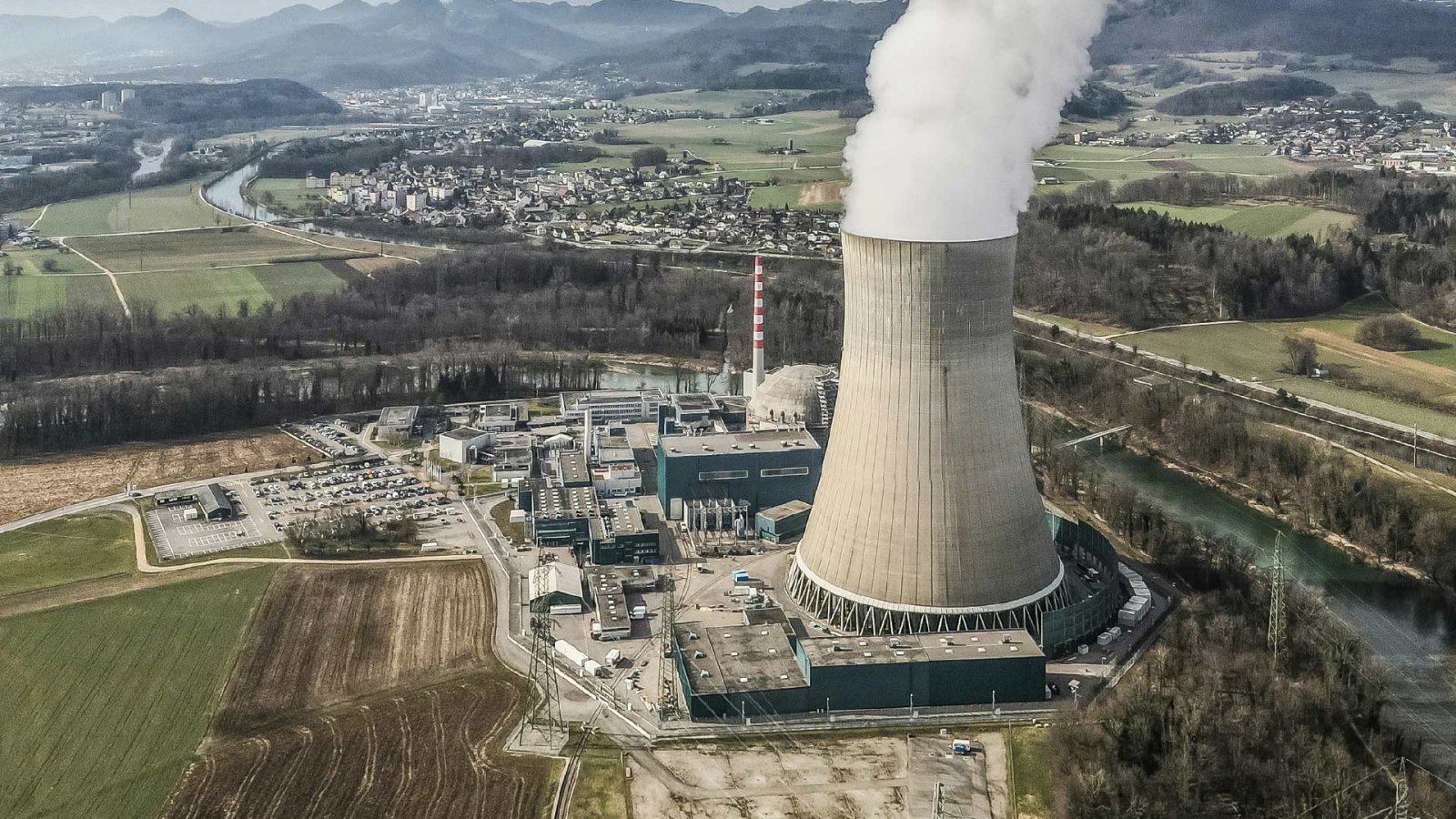
Once one grasps that the underlying project is the contraction of human activity, the otherwise puzzling behaviour of the Green movement becomes perfectly intelligible – above all, its visceral and unrelenting hostility to nuclear energy. Nuclear power is an inexhaustible source of clean, dense, dispatchable energy. A serious environmentalist would be its first champion. Yet the Green movement has fought nuclear energy with passion – not for ecological reasons but ideological ones – because nuclear power would deliver precisely what the degrowth project cannot tolerate: abundance. A civilisation powered by uranium and, tomorrow, fusion is a civilisation in which the Malthusian premise collapses, in which scarcity ceases to be the master argument, in which billions of human beings can rise to prosperity without the planet noticing. Nuclear energy threatens the entire ideology of limits, and an ideology of limits is exactly what progressive environmentalism has become.
During my first thirty years at the Directorate General Energy, the real threats to the environment were sulphur dioxide and acid rain. Nobody was talking about CO₂ as the primary enemy. The shift from pollution-fighting to CO₂ obsession was a political choice, not a scientific necessity. Well-funded NGOs, often with opaque sources of support, shaped directly or indirectly EU energy policy. The anti-human character of modern eco-ideology is unmistakable: it places the spotted owl above the steelworker, the wilderness above the farmer, the abstract climate model above the concrete family struggling with energy bills.
Really Environmental Achievement - What Europe actually accomplished
Let us return to facts. The genuine achievements of EU environmental policy before the Green Deal era are a source of pride for anyone who values results over rhetoric.
The Large Combustion Plant Directive (1988) targeted the real pollutants from power plants. By 2015, SO₂ emissions from large combustion plants fell by 81%, NOₓ by 49%, and dust by 77%. The National Emission Ceilings Directive (2001) set binding national ceilings for SO₂, NOₓ, VOCs, and ammonia, implementing the Gothenburg Protocol. By 2010, all member states met their SO₂ targets.
The EU Air Quality Framework Directive (1996) and its successors systematically eliminated toxic pollutants from EU air. The triumph of the Euro emission standards (Euro 1 through Euro 6) is a case study in technological progress: catalytic converters, particulate filters, and progressive tightening achieved a 96% reduction in key pollutants from 1992 levels. The Auto-Oil voluntary agreement – a market-based tool that the Greens abhor – achieved the elimination of sulphur from petrol, with dramatic benefits for children’s health. The Greens reject voluntary agreements despite the evidence of their results.: blood lead levels in children fell from ~60 µg/L in 1978 to below 15 µg/L in 2007; population exposure dropped from 88% to near 1%.
Acid rain, once a crisis, became a recovery story. The IPPC/IED directives imposed industrial emissions control through Best Available Techniques, achieving near-total elimination of pollutants from large industrial installations.
All of this was achieved without the Green Deal, without COP theatrics, without NGO, without the demonisation of fossil fuels, and without the destruction of EU industrial competitiveness. It was achieved by pragmatic, technology-driven, result-oriented legislation that addressed real pollution causing real harm to real people.
None of these achievements would have been remotely affordable to a poor continent. They are the dividend of EU prosperity, paid in the only currency nature accepts: capital, technology, and time. A society that destroys its prosperity in the name of protecting nature has, by that very act, destroyed its capacity to protect nature. I am proud to have been part of that legacy.
The Great Statistical Illusion - There is no ‘energy transition’
Now let us dismantle the foundational myth of the so-called energy transition with the only weapon that matters: data. Since the oil shocks of 1973, when the Western world collectively resolved to develop ‘alternative energies’, half a century of effort and trillions of dollars of investment have produced a remarkably modest result: wind and solar together still account for only 3% of global primary energy consumption (Energy Institute Statistical Review of World Energy, 2025) and around 5% within the EU. The successive initiatives by which the EU has sought to accelerate this so-called transition, and the heavy industrial and economic price EU has paid for them, are examined in detail in my book Energy Insecurity: The Organised Destruction of the EU’s Competitiveness. After fifty years, the verdict is plain: what is presented as an energy transition is, in reality, no more than a marginal addition to a global energy system that remains, and will long remain, overwhelmingly fossil and nuclear.
Global primary energy consumption reached a record 620 exajoule in 2023. Fossil fuel consumption simultaneously hit a record 505 exajoule. Oil consumption exceeded 100 million barrels per day for the first time in history in 2023; in 2024 it exceeded 101 million barrels per day – new records while the EU celebrates its ‘transition’. Coal consumption breached 165 exajoules in 2024 – another record. China and India together account for 71% of global coal consumption; China’s coal use grew 3%, India’s 5%, while the EU reduced coal by 12% – a reduction more than offset in a matter of months by Asian growth.
The authoritative Statistical Review of World Energy, published by the Energy Institute, confirms that fossil fuels still met 86.7% of global energy demand in 2024 – a share that has barely shifted in thirty years, despite three decades of climate conferences, international treaties, and ever more ambitious ‘transition’ plans. Global CO₂ emissions, far from declining, reached a new record of 37.8 gigatonnes in 2024. Every year brings a new record, and every year the gap widens between the rhetoric of EU decarbonisation and the reality of global energy consumption. The EU has dismantled large parts of its industrial base, driven up the cost of energy for its households and businesses, and weakened its strategic position vis-à-vis the United States, China, and the rest of Asia – all for a result that is, on a planetary scale, statistically invisible. Yes, new renewable energy sources are growing, but over the last ten years fossil fuel demand has grown seven times more – demonstrating that renewables are adding to global energy demand rather than displacing it.
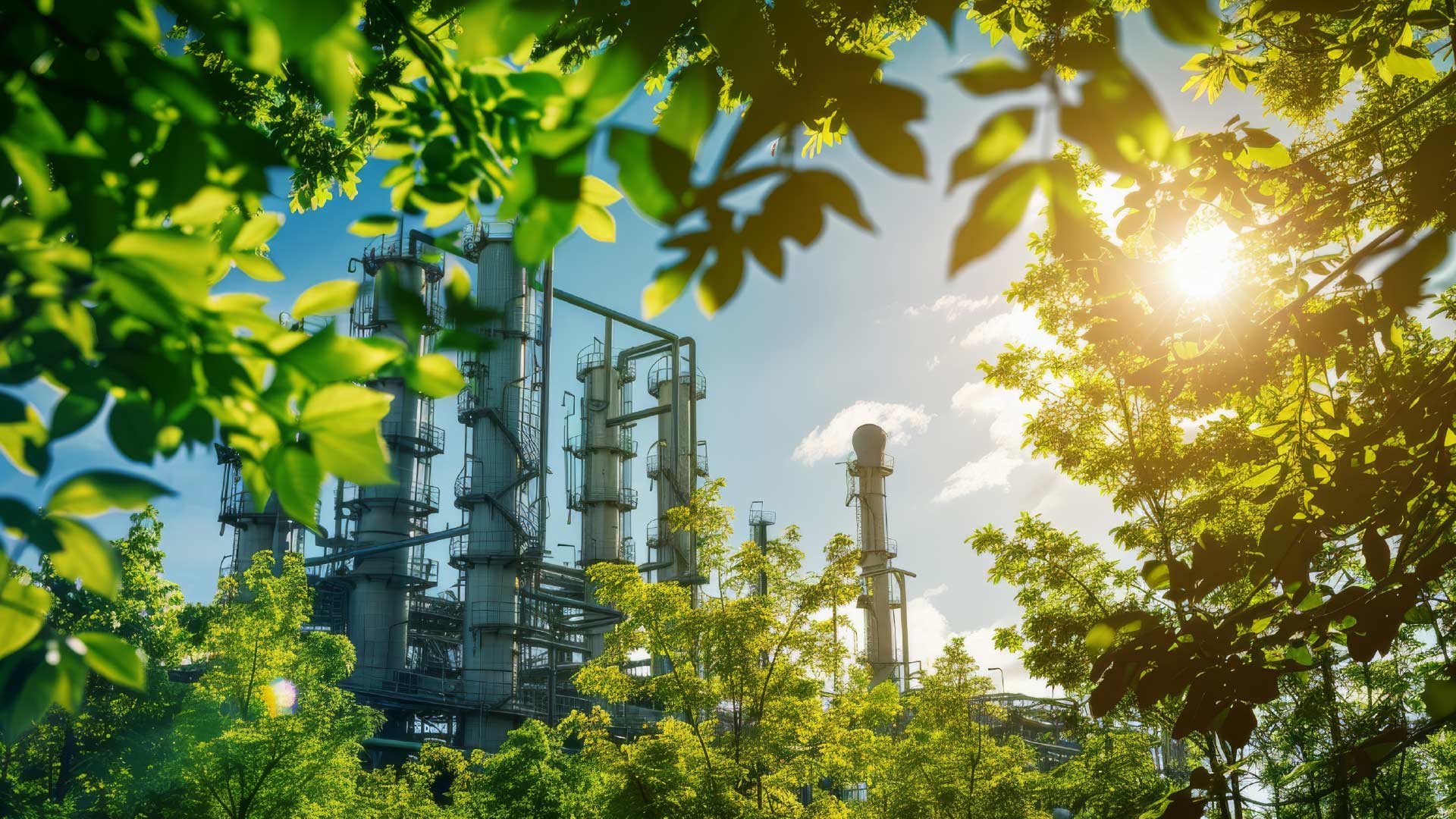
Photo by JonathanShots | Shutterstock.com
The Draghi report published in September 2024, acknowledges this troubling situation with honesty: the EU is falling behind the United States and China, its industry is being hollowed out, and its energy prices remain structurally two to three times higher than those of its competitors. Yet Mario Draghi does not dare to name the true cause. Nowhere does the report acknowledge that this loss of competitiveness is the direct and predictable consequence of the Net Zero policy itself – of the deliberate decision to dismantle reliable, affordable energy sources in pursuit of an ideological target. On the contrary, it is to pour yet more public money into the very policies that have produced the disease: hundreds of billions of euros in additional subsidies for wind, solar, hydrogen, and other so-called green technologies, all to be financed by European taxpayers and by new common debt. It is a remarkable spectacle – a diagnosis that stops just short of the truth, followed by a prescription that doubles the dose of the poison.
The arithmetic of this futility is sobering. The EU accounts for less than 7% of global CO₂ emissions, and its share is shrinking every year, not because it is succeeding but because the rest of the world is growing. Even if the EU were to reach zero emissions tomorrow, the annual growth of emissions in the developing world would replace the entire EU contribution within a handful of years. The EU is not saving the planet; it is merely impoverishing itself while the global energy system continues, perfectly rationally, to rely on the fuels that actually work : coal, oil, gas, and nuclear.
The EU has reduced its own CO₂ emissions since 1990, but let us analyse the causes: (1) renewable energy; (2) the integration of post-communist Eastern European states whose inefficient socialist industries were
modernised – this ‘statistical trick’ inflates
apparent EU progress; (3) deindustrialisation – we emit less emissions because we produce less; (4) economic stagnation.
We are not witnessing an energy transition – we are witnessing an energy addition. The world needs more energy, and it is getting it from all sources simultaneously. The correct question is not ‘how do we eliminate fossil fuels?’ but ‘how do we provide the energy the world needs while improving efficiency and reducing real pollution?’ I warned of this already in my 2017 article “The Myth of a Fossil Fuel Phase-Out”. The warning was ignored.
The Green Deal - Anatomy of an ideological instrument
The EU Green Deal is not an ecological project; it is an ideological construction.
Launched in December 2019 by Ursula von der Leyen – a CDU conservative, with Frans Timmermans of the Party of European Socialists as its executive champion – the Green Deal was a response to the Green wave in the 2019 EU elections. Climate neutrality by 2050 was enshrined as a civilisational objective, embedded in legally binding EU Climate Law. The ratchet mechanism compels evermore ambitious measures, transforming decarbonisation from a policy choice into a legal commitment.
The legislative arsenal is formidable: nearly 160 acts, including the Fit for 55 package (55% emission reduction by 2030 from 1990 levels and 90% by 2040), the EU ETS reform (62% reduction by 2030 versus 2005 for covered sectors), the Carbon Border Adjustment Mechanism (CBAM), the REPowerEU plan (€300 billion), the Nature Restoration Law (restoring 20% of EU land and sea by 2030), the Farm to Fork strategy, and the ban on internal combustion engines automotive by 2035. The last is the single most damaging industrial policy decision in EU history, eliminating the technology foundation of the continent’s largest manufacturing sector without a viable replacement. The automotive sector value fell by €70 billion (9%) in 2024 alone.
Farm to Fork is the agricultural component of the ideological dismantlement. The 2024 farmers’ protests across the EU – tractors in Brussels – were not a coincidence; they were the rational response of people whose livelihoods were being destroyed by regulations designed in Brussels offices without knowledge of how farming works. This very same day in the same city, the European Commission adopted the objective of 90% CO₂ reduction by 2040.
The REPowerEU paradox is breathtaking: the war in Ukraine revealed the catastrophic vulnerability created by decades of green ideology (Germany’s EnergieWende, the closure of nuclear plants, the dependence on Russian gas). Instead of correcting the error, Brussels used the crisis to accelerate the very policies that caused it, relabelling the Green Deal as a security strategy. This is a remarkable instance of intellectual evasion in recent EU policy.
NGOs have played a decisive role: the documented influence of environmental NGOs on Commission proposals, the revolving door between green advocacy and EU institutions, the capture of regulatory processes by ideologically motivated actors.
Among the most revealing instruments of this self-inflicted decline is the Corporate Sustainability Due Diligence Directive, known as CS3D, adopted in July 2024. Under its original provisions, large EU companies – and, by extension, any non-EU company that wished to do business with them – were required to identify, prevent, and report on adverse human rights and environmental impacts throughout their entire chain of activities, from the extraction of raw materials to the final disposal of products. An EU manufacturer would have had to interrogate its suppliers in Africa, Asia, and Latin America on their carbon emissions, their labour practices, their water usage, and a long list of ESG criteria, and to demonstrate to EU regulators that this surveillance had been duly performed. Non-compliance exposed EU companies to civil liability, and to penalties calibrated as a percentage of worldwide turnover.
The pretension was breathtaking. The EU, which represents a declining share of global trade and an even smaller share of global production, was claiming the right to impose its environmental and social preferences on sovereign producers in countries that had not asked for its guidance, and that are pursuing their own legitimate path to development. African mining companies, Indian textile manufacturers, Indonesian palm-oil producers, Brazilian agribusiness – all were expected to align their internal practices with norms drafted in Brussels by officials who have never set foot in their factories or on their land. The directive was, in effect, an extraterritorial extension of European regulation, an exercise in moral imperialism that no rising economic power would tolerate for a moment if the roles were reversed.
Prosperity is not nature’s adversary. It is nature’s most reliable patron.
The reaction was swift, and revealing. EU businesses protested, third countries objected, and within months even the political figures who had championed such directives began to retreat. At the Choose France summit in May 2025, President Macron declared that the CS3D and similar regulations had to be “put off the table” altogether; Chancellor Merz, the following month, announced that Germany would repeal its own transposition law and called on the Union to do the same. Under this pressure, the Commission’s “Omnibus I” simplification package, agreed in late 2025 and brought into force in March 2026, has substantially gutted the directive: its application has been postponed to July 2029, its scope reduced to companies of more than 5,000 employees and €1.5 billion in turnover, the obligation to adopt a climate transition plan has been removed, the harmonised EU civil-liability regime has been dropped, and the maximum penalty capped at 3% of global turnover. CS3D has not, in truth, been abolished – it has been hollowed out, quietly and without public reckoning (see my analysis in The European Conservative).
This trajectory is instructive. A directive whose ideological ambition was clear from the outset, voted into law with enthusiasm by the European Parliament, has had to be dismantled piece by piece within eighteen months of its adoption – not because its proponents have changed their minds, but because reality intervened. The competitiveness gap with the United States and China became too visible to ignore; the diplomatic costs with the Global South too high to bear; the protests of EU industry too loud to dismiss. And yet no one in Brussels has drawn the obvious conclusion: that the entire approach – the conviction that the EU can regulate the moral conduct of the world from its offices in the Berlaymont building – was misconceived from the start. CS3D will doubtless return in another form, under another name, with the same underlying ambition. It is, in miniature, the whole tragedy of contemporary European environmental policy – a costly gesture, addressed primarily to its own conscience, paid for by the competitiveness of its industry, and producing no measurable improvement anywhere on earth.
The fundamental contradiction is now undeniable: the Green Deal claims to be a growth and competitiveness strategy, but every independent analysis – including the Commission’s own Draghi Report – confirms it is destroying EU competitiveness. Von der Leyen’s own appointed expert wrote the indictment of her flagship policy.
Demographic Declines and the Ideology of Anthropic Guilt - A Crisis of Human Confidence
The accelerating decline in birth rates across the developed world constitutes one of the most consequential civilisational shifts of the contemporary era. Europe is ageing rapidly. Germany, in 2025, recorded one million deaths against a mere 352,000 births. These figures are symptomatic of a profound collapse in humanity’s trust in its own future.
The roots of this demographic retreat are primarily ideological. Over recent decades, a convergence of environmentalist, egalitarian, and postmodern worldviews has systematically eroded the foundational belief that human life is inherently valuable, that progress is achievable, and that the challenges facing each successive generation can and will be overcome.
Central to this erosion is the ecological framing of human beings as inherently destructive agents. The propagation of the idea that having children constitutes an act of ecological harm represents a radical inversion of humanist values. This neo-Malthusian premise, despite being consistently refuted by empirical evidence, has permeated educational institutions, media discourse, and popular culture. The catastrophic predictions advanced fifty years ago by Paul Ehrlich, and the Club of Rome never materialised. Yet these failed prophecies retain their psychological grip, having successfully instiled a generalised anxiety about humanity’s presence on Earth.
This represents a fundamental misreading of the human condition. As the famous Julian Simon argued in The Ultimate Resource (1981), the defining characteristic of human civilisation is its capacity to innovate beyond apparent limits. The Stone Age did not end for lack of stones. Every era of apparent scarcity has ultimately yielded to human creativity, technological development, and adaptive capacity. Jean Bodin’s sixteenth-century observation – “there is no wealth but men” – retains its full force today.
The demographic crisis is, therefore, at its core, a crisis of hope. According to Hannah Arendt, every birth brings a new person into the world who has the capacity to begin something unexpected and original, with effects that cannot be fully predicted in advance. It is a positive and enthusiastic vision of humanity and the future – one that I deeply share. A civilisation that has lost confidence in human resilience, which has ceased to believe in mankind’s ability to confront and surmount adversity, will inevitably cease to reproduce itself.
The Geopolitical Trap - Who profits from EU deindustrialisation?
Who benefits from the EU’s green doctrine? The answer is as clear as it is damning.
China is the overwhelming beneficiary of the Green Deal’s implementation. China produces over 80% of the world’s solar panels and controls 90% of solar photovoltaic modules in the EU market; over 95% of solar panels installed in the EU are imported from China. China manufactures approximately 65% of global wind turbines. China controls nearly 85% of global battery cell production capacity, 90% of cathode active material, and 98% of anode active material manufacturing.
The critical mineral dependency is even more acute: China controls over 90% of rare earth processing, 90% of graphite processing, 60–70% of lithium processing, and 80% of cobalt through its mining investments in the Democratic Republic of Congo. Manufacturing costs for solar PVs in China are 50% lower than in Europe, battery packs 40% lower, wind turbines 20% lower – the Green Deal is a massive industrial subsidy program for China.
China has already demonstrated a willingness to weaponise this dependency, implementing export controls on graphite, germanium, and threatening restrictions on rare earths. Europe has made itself a geopolitical hostage.
Russia’s historical role is equally revealing. NATO’s Secretary General Anders Fogh Rasmussen explicitly stated in 2014 that Russia had been covertly funding EU environmental NGOs to oppose shale gas development and fracking, maintaining EU dependence on Russian gas. The irony is perfect – Europe’s anti-fracking movement, funded by Moscow, helped create the gas dependency that led to the 2022 energy crisis.
The US LNG windfall is the other side of the coin. Post-Nord Stream, American LNG exporters captured a massive share of the EU gas market. The destruction of EU energy independence through ideological green policies created a lucrative market for American gas exporters. The US Inflation Reduction Act simultaneously attracted EU green industries to relocate to America. While EU member states import US LNG, they are not even prospecting to determine whether they hold shale gas reserves of their own.
The kerosene crisis is the logical endpoint: EU refining capacity has been systematically sacrificed to green ideology. The EU no longer controls its own aviation fuel supply; Lufthansa’s flight cancellations announcements due to kerosene shortages are a direct consequence of two decades of deliberate neglect of refining infrastructure under ecological pressure. The Gulf countries, by contrast, invested heavily in modern refining.
Prosperity is the best environmental policy - The case for energy abundance
The central claim of this essay can now be stated empirically: there is no rich country with a degraded environment, and no poor country with a protected one. This is not a slogan; it is the most robust correlation in environmental science.
Deforestation and energy poverty are linked in a way that ecologists refuse to acknowledge: people without modern energy destroy forests for cooking and heating. Expanding access to natural gas and electricity is the most effective deforestation prevention policy ever conceived. Energy abundance is pro-nature, not anti-nature. IEA data show 750 million people are still lacking electricity access in 2023. The 2.1 billion people still cooking with polluting solid fuels suffer 3.2 million premature deaths annually – this is the real environmental emergency, not the CO₂ concentration in the atmosphere.
The Environmental Kuznets Curve is the empirical relationship that every serious ecologist should know: as per capita income rises, pollution first increases, then decreases. Economic prosperity provides the means and the motivation for environmental improvement. Wealthy societies invest in cleaner technologies because they can afford to. The lesson for policy is clear: growth is the solution, not the problem.
Energy and human welfare are inseparable. There is a direct correlation between energy access and life expectancy, literacy, infant mortality, and poverty reduction. Degrowth, by contrast, is a luxury ideology – comfortable academics proposing civilisational contraction for a world where billions still aspire to basic prosperity. Capping or reducing GDP in rich countries would require the immiseration of the West without solving global poverty.
The wise man plants trees he will never sit beneath; he cleans rivers his grandfathers polluted; he sets aside national parks his ancestors could not have spared an acre for; he funds the research that abates pollutants no peasant economy could even measure.
CO₂ fertilisation and global greening are facts, not fantasies. Satellite data show significant increases in global vegetation over recent decades, largely attributed to higher atmospheric CO₂. The agronomic evidence is clear: CO₂ acts as a fertiliser for plant growth. The point is not to dismiss environmental concerns but to insist on balanced, evidence-based analysis rather than catastrophist ideology.
The US shale gas revolution is the unplanned environmental success of our time: American CO₂ emissions fell dramatically in the 2010s not because of a Green Deal but because shale gas replaced coal in power generation. This is what technological innovation achieves – more energy, lower pollution, greater prosperity – the exact opposite of the degrowth prescription. Technology, not restriction, is the most effective path to environmental improvement.
The geopolitical reading - 1973 vs. 2026
History is the best teacher, if only we are willing to learn. In 1973, the European Community responded to the oil shock with an offensive strategy: increase domestic energy supply, diversify sources (coal, nuclear, natural gas), promote technological innovation, reduce dependence on a single supplier. The result was the extraordinary build-out of nuclear power in France and the modernisation of European energy systems. The Messina Resolution principle (1955) was honoured: abundant and cheap energy as the foundation of European prosperity.
In 2022, the European Union responded to the energy crisis caused partly by its own Green Deal policies (the premature closure of German nuclear plants, the under-investment in domestic gas production, the dependence on Russian gas) not by correcting the error but by accelerating it through REPowerEU.
While the EU debates wind vs. nuclear in the abstract, billions are being invested in hydrocarbon production in the United States, Israel, Australia, Canada, and Africa – everywhere except the EU. Strategic alliances between the UAE and Azerbaijan, between Italy and Libya, are reshaping the global energy map. The EU is absent from these new geopolitical realities.
The world that emerges from this analysis is not one in which the EU is leading the energy transition. It is one in which it is following a self-imposed ideology while its competitors capture the markets, the industries, and the geopolitical advantages of abundant energy.
The conservative failure and the path to recovery
Let us speak frankly about the failure of conservative parties to resist the green ideology. For two decades, conservative parties across the EU have adopted green rhetoric out of fear of being labelled “climate deniers” or “not taking care of next-generation” or “anti-nature”. This capitulation was intellectually dishonest, politically cowardly, and practically catastrophic.
The mechanism of capture was simple: the climate issue was framed as a moral choice between good and evil, making rational cost-benefit analysis politically radioactive. Conservatives who questioned the economics of the energy transition were immediately labelled as enemies of the planet or even fasciitis. This rhetorical trap was brilliantly constructed, and conservatives walked into it.
Ursula von der Leyen is the paradigmatic case: a conservative politician who made the most radical green policy agenda in EU history her signature achievement. Its party, the EPP’s, complicity in the destruction of EU industry in the name of climate virtue-signalling is a stain on the party’s legacy.
The clearest symptom of this capture is the conservative silence on nuclear energy. A party that genuinely believed in prosperity, in industry, in national sovereignty, and in the protection of nature would have made the defence and expansion of nuclear power its signature cause for the last twenty years. Instead, mainstream EU conservatism has either tolerated the ‘German Ausstieg’, or actively participated in it, or – at best – paid nuclear occasional verbal homage while favouring for every regulation that strangles it.
The time has come to reverse the narrative: the alternative is not anti-environmentalism but a human ecology grounded in prosperity, technology, and human dignity. Man is not the problem, man is the solution; energy is not pollution, energy is civilisation; growth is not destruction, growth is the means by which humanity protects both itself and nature.
The intellectual tools are available: the philosophical tradition of stewardship (Aristotle, Aquinas, Benedict XVI), the economic evidence of the Environmental Kuznets Curve, the statistical reality of the “energy addition” rather than transition, the documented success of technology-driven environmental improvement, the catastrophic failures of ideological green policy.
Political courage is required. Conservatives must be willing to say that the Green Deal has failed, that the energy transition as conceived is a geopolitical and economic catastrophe, and that the alternative is the human ecology defended throughout this essay.
The BP and Shell lesson is instructive: even the oil companies that tried to rebrand themselves as green energy companies have retreated to their core business because the numbers simply do not work. If the largest and most motivated corporate actors in the world could not make the renewable energy business profitable without pubic financial support, the ideology has a fundamental problem with economic reality.
The COP theatre is the final act: thirty years of annual theatrical productions yielding an increase of 66% in global CO₂ emissions. The COP negotiations are a diplomatic ritual disconnected from energy reality; the same countries that sign solemn declarations in November resume building coal plants in December.
Conclusion - For a human ecology
Let us return to the title and the core thesis: “human ecology” is not a contradiction in terms – it is the only coherent framework for environmental responsibility.
Human ecology places the human person – in his dignity, his creativity, his social bonds, his need for prosperity and freedom – at the centre of any environmental analysis. It recognises a reciprocity that progressive ecologism has buried: nature serves human flourishing, and human flourishing in turn serves nature. The chain is short and unbreakable: energy produces prosperity, prosperity produces stewardship, and stewardship produces a protected nature. Break the first link and the rest collapses. The wise man plants trees he will never sit beneath; he cleans rivers his grandfathers polluted; he sets aside national parks his ancestors could not have spared an acre for; he funds the research that abates pollutants no peasant economy could even measure. Prosperity is not nature’s adversary. It is nature’s most reliable patron – and energy abundance, above all nuclear, is the foundation of both.