
It is a vital historical and geopolitical space whose ecology must be safeguarded with pragmatism, authority, and a sense of responsibility towards both the past and the future of the civilizations that border its shores.
The Sea as a Civilizational Challenge
The seas of the world do not await political definition. They have always been what they are: the primordial matrix of human civilization, the oldest corridors of commerce and culture, upon which the prosperity and identity of peoples have always depended.
A foundational principle must be stated at the outset, for it governs everything that follows. For eco-conservatism, the sea is neither an untouchable wilderness from which human activity must be excluded nor a liquid highway for the globalization of consumption. It is a vital historical and geopolitical space whose ecology must be safeguarded with pragmatism, authority, and a sense of responsibility towards both the past and the future of the civilizations that border its shores. This distinction—between stewardship and prohibition, between civilizational governance and technocratic administration—constitutes the axis upon which an authentically conservative maritime policy must be built.
Edmund Burke’s intergenerational covenant—the recognition that every generation holds the natural and institutional order in trust rather than in ownership—applies to the sea no less than to the land. Roger Scruton’s oikophilia—the ecological responsibility that springs from attachment to particular and concrete places—finds some of its oldest and most enduring expressions in the communities that have lived from and with the sea across generations: the fisherman who understands the seasonal rhythms of his coastal waters; the island community whose identity has been shaped by its relationship with a particular stretch of sea; the port city whose economy and culture are inseparable from maritime life.
These are not merely matters of sentiment, though not only they depend on them. They represent the living embodiment of the ecological integration that progressive environmentalism has long aspired to achieve but has never fully realized: a relationship with the natural world that endures precisely because it is rooted, particular, and intergenerational.
Decades of international and European environmental legislation—from the United Nations Convention on the Law of the Sea (UNCLOS, 1982) to the Marine Strategy Framework Directive (2008), from successive reforms of the Common Fisheries Policy to the legislative packages associated with the European Green Deal—have approached the seas primarily as regulatory problems: spaces to be managed through standards, targets, prohibitions, and mechanisms of compliance. This approach has undoubtedly produced tangible achievements in particular fields. Yet it has failed to generate a maritime policy commensurate with the scale of the challenge. Instead, it has produced a succession of sectoral interventions, each coherent within its own institutional logic, but collectively incapable of addressing the integrated character of the maritime question, which is simultaneously ecological, strategic, economic, and civilizational.
The central argument of this essay is that the capacity to reconcile the conservation of marine ecosystems with the energy, logistical, commercial, industrial, and security policies of coastal States—thereby transforming the protection of the world’s seas into a source of geopolitical stability and shared prosperity—constitutes the defining test of ecological and political maturity in the twenty-first century.
Such a synthesis cannot be achieved simply by adding further layers of regulation to those already in place. It requires a transformation in the philosophy of governance itself: a movement from treating nature as an external object to be administered toward understanding it as the constitutive foundation of the communities whose existence depends upon it. In practical terms, this means linking conservation objectives to the communities most deeply committed to achieving them; designing energy and infrastructure policies that acknowledge the ecological vulnerability of maritime spaces; and constructing frameworks of cooperative governance founded upon mutual interest rather than regulatory conditionality. In short, it means governing the sea as a living order rather than administering it as a regulated zone.
The political tradition possessing the intellectual resources necessary to meet this challenge is the conservative tradition itself—with its enduring concern for stewardship, intergenerational responsibility, and the constitutive role of natural limits in sustaining political order. Yet this tradition has been largely displaced from the maritime debate by a progressive environmentalism whose regulatory instincts have proved, in the end, to be structurally inadequate to the task before it.
The Sea - Biodiversity, Identity, and the Ecology of the World’s Coasts
The seas cover 71% (seventy-one per cent) of the Earth’s surface and generate more than half of the planet’s oxygen. They regulate the global climate, absorb approximately 30% (thirty per cent) of anthropogenic carbon dioxide emissions, and provide food security for more than three billion people, for whom fish remains the primary source of animal protein (FA0, 2022). They are not a peripheral concern of environmental policy. They are the biological foundation of human civilization.
The world’s marine ecosystems are now subject to systemic pressure. According to the Sixth Assessment Report of the Intergovernmental Panel on Climate Change (IPCC, 2021), the Oceans warming, deoxygenation, and acidification are altering marine species and ecosystems across every ocean basin. The Great Barrier Reef has lost more than half of its coral cover since 1995 (AIMS, 2022). Arctic sea ice has declined by approximately 13 % (thirteen per cent) per decade since 1979 (NASA, 2023), profoundly altering the ecology of the polar seas and the livelihoods of the Indigenous communities that have depended upon them for millennia. Global fish stocks are likewise under extraordinary pressure. FAO estimates that 35 % (thirty-five per cent) of the world’s fish stocks are currently exploited at biologically unsustainable levels, with the highest rates of overexploitation recorded in the Mediterranean and in the Black Sea, where more than 75 % (seventy-five per cent) of assessed stocks are harvested beyond maximum sustainable yield (FAO, 2022).
Every generation inherits landscapes it did not create. Forests planted by previous generations provide shade today.
The Mediterranean concentrates these global pressures within an enclosed basin of extraordinary biological richness. Although it accounts for less than 1% (one per cent) of the world’s oceanic surface, it harbours approximately 7 % (seven per cent) of all known marine species, including 28% (twenty-eight per cent) of those found nowhere else on Earth (IUCN, 2022). Its particular vulnerability arises from its enclosed character: warm waters that renew themselves only slowly, requiring between eighty and one hundred years to complete a full renewal cycle, within a basin subjected to the cumulative pressures of intensive coastal urbanization, commercial shipping, offshore hydrocarbon exploitation, and the thermal stress associated with climate change. The influx of tropical non-native species entering through the Suez Canal is progressively transforming the ecological structure of a sea that has sustained human civilization for more than three millennia.
Marine biodiversity, however, is never merely a biological fact. It is equally a cultural and civilizational one. The species that define the world’s maritime heritage—from Mediterranean sea bass and red mullet to Norwegian cod, Japanese bonito tuna, and the round sardinella of West Africa—cannot simply be replaced by aquaculture or imported substitutes. They are the products of particular ecological conditions, particular fishing techniques, and particular traditions accumulated over centuries. Their disappearance diminishes far more than the global supply of protein. It severs the historical bond between a people and the sea that has shaped its identity.
This is what the conservative tradition understands by inheritance: not an artifact preserved behind glass, but a living legacy that sustains identity, community, and the possibility of continuity across generations. To defend marine biodiversity means, in the most literal sense, to defend what coastal peoples are.
Climate change acts as a multiplier of these threats. It amplifies the consequences of overfishing by weakening the resilience of already stressed fish stocks. It intensifies the effects of coastal development by accelerating the erosion of natural coastal defences.
It also generates new geopolitical tensions by altering the distribution of fish stocks across national boundaries, displacing resources that have historically underpinned bilateral agreements and systems of informal maritime governance.
Overcoming the present crisis requires moving beyond a purely restrictive conception of environmental protection. Uniform prohibitions imposed from above, without regard for local ecological conditions, without engaging the communities most directly dependent upon the health of the sea, and without distinguishing between industrial exploitation and artisanal stewardship, do not ultimately preserve marine biodiversity. Instead, they burden precisely those communities whose livelihoods and identities are most closely bound to the conservation of coasts and seas, while leaving the underlying structural pressures fundamentally untouched.
An authentically conservative ecology of the sea begins not with prohibition but with stewardship: with the active governance of maritime spaces by those whose future depends upon their ecological integrity, operating within a framework of general rules that defines the limits of sustainable use rather than treating human presence itself as a liability to be curtailed.
The conservative tradition offers two complementary arguments for the superiority of this approach over the progressive regulatory model. The first is epistemological. The knowledge required for effective maritime governance is dispersed among the communities that inhabit coastal waters rather than concentrated within distant regulatory authorities. Fishermen, maritime cooperatives, port communities, and coastal municipalities possess forms of practical knowledge accumulated across generations—knowledge of seasonal rhythms, ecological thresholds, migratory patterns, and local marine habitats—that no centralized bureaucracy can fully replicate. The sea is too complex, too dynamic, and too deeply embedded in particular places to be governed solely through abstract regulation.
The second argument concerns incentives. Communities endowed with clear, stable, and long-term rules governing access to marine resources possess a direct intergenerational interest in their conservation. Stewardship generates voluntary compliance, continuous local monitoring, and that sense of civic responsibility toward the natural world which Roger Scruton regarded as the indispensable foundation of an enduring ecological culture. Conservation imposed from without demands ever more regulation; stewardship rooted within a community gradually becomes self-sustaining.
The sea is not a sanctuary withdrawn from human use. Nor is it a reservoir of resources awaiting unrestricted exploitation. It is a common inheritance, and common inheritances require governance by those who dwell within them rather than administration by institutions that regulate them from afar.
The Artisanal Fisherman and the Eco-Conservative Model
Small-scale fisheries across the world provide employment for approximately 600 million people, including upstream and downstream activities, and sustain the livelihoods of some 40 million fishers, the overwhelming majority of whom work in developing and coastal nations (FAO, 2022). In the Mediterranean alone, approximately 300,000 professional fishers are employed in small, family-owned enterprises operating vessels under twelve metres in length, harvesting coastal waters through knowledge accumulated across generations (GFCM, 2023). In Norway, the coastal fishing communities of the Lofoten archipelago have practised sustainable cod fishing for more than a millennium. In Japan, the ama—predominantly women free-divers—continue to harvest abalone and shellfish from coastal waters using techniques that have remained fundamentally unchanged since antiquity. Along the coasts of West Africa, the artisanal pirogues of Senegal and Ghana sustain both the protein security and the cultural identity of millions of coastal families. These are not marginal economic activities. They represent the human face of the oldest—and arguably the most enduring—relationship between civilization and the sea.
These communities embody ecological integration in its most tangible form—not as an abstract theoretical paradigm, but as a lived reality. The artisanal fisherman who has worked the same coastal waters for forty years carries within him a knowledge of seasonal rhythms, species behaviour, reproductive cycles, and habitat conditions that no satellite monitoring programme or scientific survey can fully replicate. The sustainable practices of small-scale coastal fisheries—the rotation of fishing grounds, respect for spawning seasons, and the use of selective gear calibrated to local species—are not products of regulatory compliance. They arise from the very logic of intergenerational stewardship that Edmund Burke recognized as the foundation of every enduring political order. The local fisherman possesses a direct intergenerational interest in ensuring that his sea is not exhausted. This is oikophilia in its most literal and concrete expression.
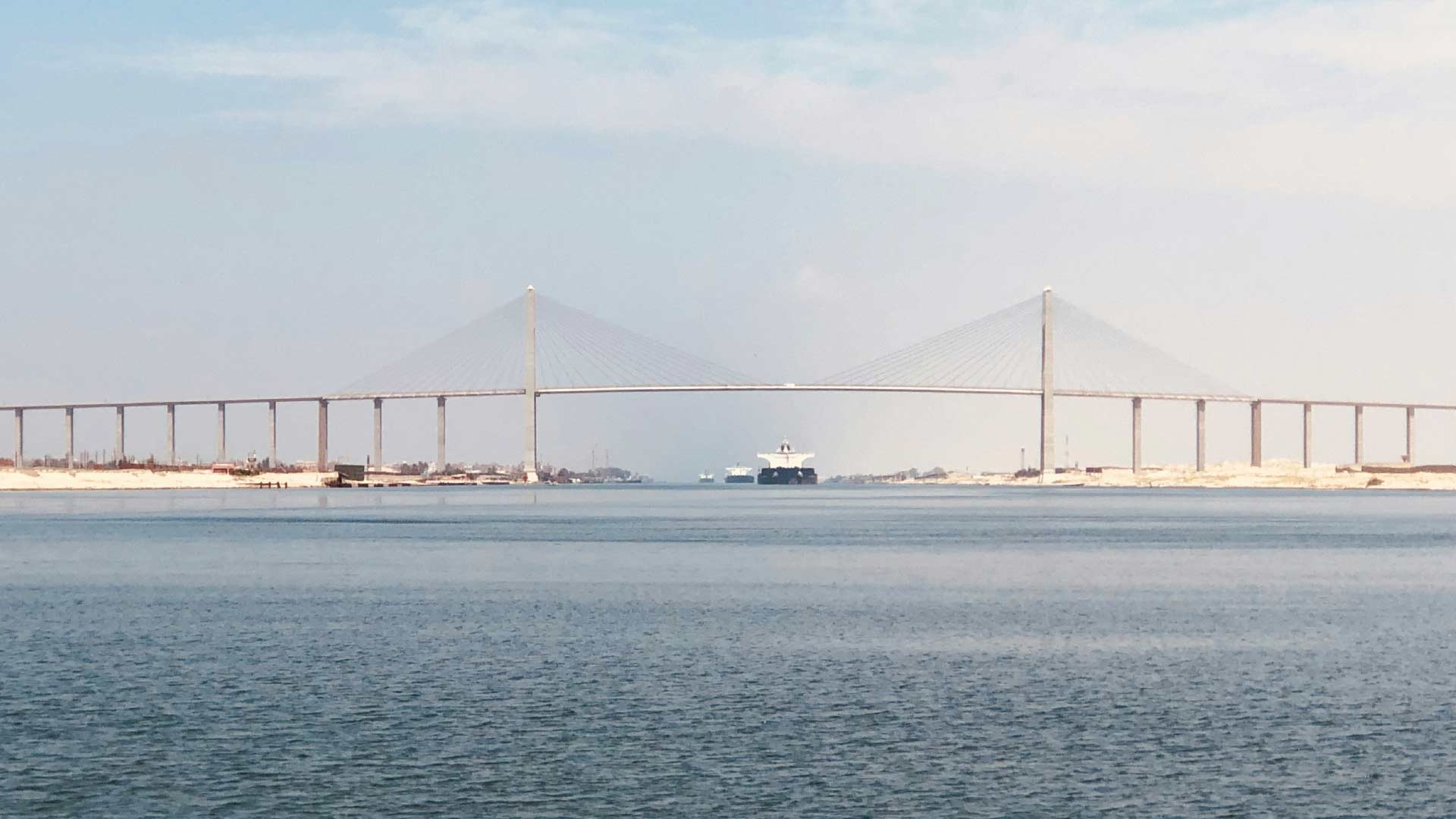
Photo by samuel hanna on Unsplash
The paradox of European and international fisheries governance is therefore deeply instructive. Compliance costs designed for industrial-scale operators systematically disadvantage precisely those communities whose practices are most consistent with genuine ecological sustainability. Meanwhile, the structural threats to marine ecosystems—illegal, unreported and unregulated (IUU) fishing conducted by large industrial fleets with neither attachment to place nor interest in the long-term condition of marine habitats; the thermal disruption of reproductive cycles caused by climate change; and the contamination of coastal ecosystems by plastics and hydrocarbons—continue largely unabated. Addressing these challenges requires diplomatic resolve and robust enforcement capacities that international institutions have too often proved reluctant to deploy with the same determination they devote to regulating domestic artisanal fisheries.
The conservative alternative is structural rather than merely regulatory. Fishing quotas and access rights should be linked to artisanal coastal communities that employ selective techniques transmitted across generations, rather than allocated through systems that reward the scale of capital irrespective of ecological practice. Such an approach preserves fish stocks because it aligns the incentives of those with the deepest ecological knowledge with the objectives of conservation policy. It preserves the socio-economic fabric and cultural identity of coastal communities because it recognizes them as the first line of maritime governance rather than as passive objects of administrative management. And it achieves more durable conservation outcomes than prohibition imposed from above because both ecological knowledge and compliance are embedded within the community itself rather than enforced from without.
The institutional mechanism that gives practical expression to this principle is the system of Territorial Use Rights in Fisheries (TURFs), developed most notably in Chile, Japan, and New Zealand, and increasingly adopted through pilot programmes across the Mediterranean. Under a TURF regime, clearly defined coastal areas are entrusted to specific fishing communities as an exclusive and intergenerational patrimony: not a licence to extract resources, but a custodial right over a living ecosystem. This is co-management in the conservative sense of the term: the recognition that a community’s pre-existing relationship with a particular maritime territory constitutes the very foundation of both its rights and its responsibilities of governance.
Energy, Ports, and Maritime Infrastructure - Where Strategy Meets Ecology
The world’s seas are the arteries of the global energy system. Approximately sixty per cent of the world’s oil production is transported by sea, while liquefied natural gas (LNG)—whose role in the global energy mix has expanded significantly in the wake of the Russian disruption of 2022—is transported exclusively by maritime routes. The strategic chokepoints through which this energy flows—the Strait of Hormuz, the Strait of Malacca, the Suez Canal, Bab el-Mandeb, and the Turkish Straits—are simultaneously marine ecosystems, commercial corridors, and geopolitical pressure points. Their governance is inseparable from the ecological governance of the seas in which they are situated. The Suez Canal, for instance, is more than a commercial artery: since its opening, it has served as the principal gateway through which more than a thousand tropical species have entered the Mediterranean, transforming the ecological structure of an enclosed sea shaped over millennia. Energy governance and ecological governance are not parallel policy domains. They are, in reality, one and the same challenge.
The Mediterranean embodies this logic with particular clarity. Although it accounts for barely 1 % (one per cent) of the world’s oceanic surface, it carries approximately twenty per cent of global maritime traffic and 65% (sixty-five per cent) of the energy flows destined for Europe (EIA, 2024). The war in Ukraine accelerated a structural realignment that had already begun. Europe’s principal energy axis, once extending from East to West through continental pipeline networks, has been fundamentally reconfigured. Energy now flows predominantly from south to north, across the Mediterranean; and in 2023 fossil fuels still supplied approximately 69 % (sixty-nine per cent) of the European Union’s primary energy demand, while overall import dependency stood at 58.4 % (fifty-eight dot four per cent) (Eurostat, 2024).
The renewable energy dimension of maritime strategy is no less consequential. The offshore wind capacity currently under development in the North Sea, the Baltic, the Mediterranean, and the waters of East Asia represents one of the largest industrial transformations ever undertaken within the marine environment. The United Kingdom, Germany, and Denmark have jointly developed more than 30 GW (thirty gigawatts) of offshore wind capacity (IRENA, 2023), with future expansion requiring the installation of thousands of additional turbines across marine ecosystems whose long-term ecological responses to large-scale industrial intervention remain only partially understood. Equally significant is the largely unrealised solar potential of the Southern Mediterranean arc, stretching from Morocco to Egypt, one of the regions receiving the highest levels of solar irradiation on the planet. Its underdevelopment reflects not a lack of technological feasibility but the absence of the cooperative governance frameworks capable of translating that potential into reality.
The port dimension of maritime energy and commercial policy deserves particular attention because it reveals, with exceptional clarity, the convergence of strategic and ecological concerns. Over the past fifteen years, China has systematically acquired controlling interests or significant stakes in port infrastructure across the Mediterranean and beyond: Piraeus in Greece, Valencia in Spain, Haifa in Israel, Vado Ligure and Genoa in Italy—with Taranto and Trieste identified as further strategic objectives—as well as Hambantota in Sri Lanka, Gwadar in Pakistan, and numerous facilities throughout Sub-Saharan Africa (OECD, 2018). For China, these acquisitions are not merely exercises in commercial opportunism. They constitute a deliberate projection of influence over the logistical architecture of global trade and energy supply.
Port infrastructures operating under inadequate environmental oversight impose their costs directly upon the surrounding marine ecosystems. Ecological and strategic vulnerability are therefore not separate conditions. They are different manifestations of the same underlying reality.
The submarine infrastructure of the world’s seas—gas pipelines, electricity interconnectors, and fibre-optic communication cables—add a further ecological dimension that maritime governance has too often underestimated. The sabotage of the Nord Stream pipelines in September 2022 was not merely a strategic event: the uncontrolled release of methane into a semi-enclosed sea generated cascading consequences for marine biodiversity and for the trophic systems of adjacent waters. In the Mediterranean, whose seabed hosts the Greenstream pipeline, the Trans Adriatic Pipeline, and the TransMed system, the logic of hybrid warfare assumes an immediately ecological character. A deliberate attack on submarine infrastructure would simultaneously disrupt energy security and degrade a marine ecosystem already subjected to exceptional environmental stress. The protection of critical maritime infrastructure is therefore both a strategic imperative and an ecological one—a truth that an authentically eco-conservative maritime policy must place at the very centre of its analysis.
The convergence of continued dependence upon fossil fuels, the ecological pressures generated by the expansion of renewable energy infrastructure, strategic competition for control of port systems, and the growing threat of hybrid attacks against submarine networks defines what may be called the maritime energy paradox: the seas that possess the greatest potential to strengthen long-term energy security are precisely those most vulnerable to the ecological consequences of fragmented governance. This paradox is not technological. It is political. It is the direct consequence of decades of governance that artificially separated energy security from ecological responsibility, treating the sea as infrastructure while overlooking the elementary truth that every infrastructure is embedded within a living ecological system.
For the conservative tradition, such a separation between the economic order and the natural one has no foundation in reality. It exists only within the ideology of unlimited growth. Overcoming this paradox therefore requires governing the sea for what it truly is: simultaneously an energy corridor, an ecological system, and a civilizational inheritance.
Governing the Sea - A Conservative Framework for Shared Maritime Spaces
The governance of the world’s oceans confronts an immediate structural challenge that distinguishes it from most other domains of environmental policy: the seas are shared among sovereign States, each exercising exclusive jurisdiction over its territorial waters and Exclusive Economic Zone, each pursuing distinct interests, possessing different capabilities, and embedded within different geopolitical relationships. No single authority can govern the oceans. Any effective framework for maritime governance must therefore work with, rather than against, this plurality of sovereign jurisdictions.
The existing multilateral architecture—including the United Nations Convention on the Law of the Sea (UNCLOS), the Convention on Biological Diversity, the Regional Seas Conventions, and the FAO Code of Conduct for Responsible Fisheries—has produced valuable legal frameworks and fostered important forms of operational cooperation. Yet it has not generated the integrated capacity for governance that the scale of the contemporary maritime challenge demands. The reasons are structural. These agreements were designed primarily to manage conflicts of interest among sovereign states rather than to cultivate the cooperative stewardship of common goods that the ecological crisis now requires. They operate through consensus reduced to the lowest common denominator rather than through the binding commitments upon which effective environmental governance ultimately depends.
The eco-conservative response to this deficit is not the creation of yet another supranational institution—a project that would require transfers of sovereignty that States are neither willing nor, arguably, obliged to concede, while lacking the local knowledge indispensable to effective implementation. It is instead the construction of a dense network of structured bilateral and multilateral relationships, grounded in mutual interest and operating within a framework of shared principles, while leaving operational authority to the states and communities closest to the specific conditions to be governed. This is subsidiarity understood not as a rhetorical concession to national sensitivities but as a genuine constitutional principle: the recognition that the knowledge necessary for the effective governance of marine systems is dispersed among the communities that inhabit their coastlines rather than concentrated within a central regulatory authority.
This is what the conservative tradition understands by inheritance: Not an artifact preserved behind glass, but a living legacy that sustains identity, community, and the possibility of continuity across generations.
The institutional architecture may be expressed in straightforward terms. Binding ecological and strategic principles are established at the highest level of shared authority—whether European, regional, or international. Operational implementation is entrusted to the Member States and to the communities closest to the ecological realities in question. Enforcement against those who violate the shared principles—illegal fishing fleets, port operators that disregard environmental standards, or States that instrumentalize migratory flows for geopolitical leverage—becomes a collective responsibility, exercised through the diplomatic, economic, and, where necessary, military instruments available to cooperating states.
The principles are non-negotiable. The methods are local. Enforcement is shared.
The Mediterranean offers the clearest test case for such an approach. Italy should shape its relationships with Libya, Algeria, and Tunisia as the principal energy and migration corridor of the Southern Mediterranean. Greece should develop its partnerships with Egypt and the States of the Eastern Mediterranean as the strategic eastern pillar of the basin. Spain should govern its relationship with Morocco and the Western Mediterranean as the Atlantic–Mediterranean crossroads. The European framework should define the ecological, strategic, and diplomatic principles within which these bilateral relationships operate: the non-negotiable limits of sustainable use, the strategic red lines, and the minimum standards of environmental governance, while leaving operational decisions to the Member States and to the communities most intimately acquainted with local conditions. Such a model also requires, alongside its bilateral dimension, a shared enforcement backstop: an integrated maritime security capability equipped with common surveillance assets, sustained investment in strengthening the institutional capacities of partner States along the Southern shore of the Mediterranean, and the explicit incorporation of maritime ecological security into the strategic mandates of European defence. The sabotage of a submarine gas pipeline and the systematic depletion of a shared fish stock are, in different ways, attacks upon the common inheritance. Both therefore require a proportionate and collective response.The principles are non-negotiable. The methods are local. Enforcement is shared.
This is not the model embodied by the European Green Deal, which sought to impose uniform standards largely irrespective of local conditions and differentiated capacities for governance. It is instead the application of the conservative tradition to international maritime governance: subsidiarity understood as a genuine constitutional principle rather than as a rhetorical formula. Italy’s Mattei Plan represents the most significant attempt in recent years to give practical expression to this vision. It seeks to construct bilateral partnerships founded upon mutual interest, operating within a framework of shared ecological and strategic principles, with the long-term ambition of transforming Europe from a mere consumer of Mediterranean resources into a genuine steward of the Mediterranean commons.
The Sea Requires Governance, not Administration
The world’s oceans present the same fundamental challenge across every basin, every enclosed sea, and every coastal space: the challenge of governing common goods that no single authority controls, and that simultaneously constitute ecological systems, economic resources, strategic corridors, and civilizational inheritances. They cannot be reduced to any one of these dimensions without distorting—and ultimately undermining—all of them.
The progressive environmentalism that has dominated international maritime policy over the past three decades has failed to meet this challenge because it has approached the sea primarily as an administrative-ecological problem: a space to be regulated, a set of targets to be achieved, a compliance regime to be enforced. It has produced systems that are each internally coherent yet collectively insufficient. It has systematically disadvantaged the communities most closely aligned with genuine ecological stewardship, while failing to address the structural threats—industrial overfishing, Chinese acquisition of ports, hybrid warfare against infrastructure, and climate-driven ecosystem disruption—that require political, not merely regulatory, responses.
From this diagnosis follow, within the conceptual horizon of eco-conservatism, six interdependent axes of intervention.
The first and foundational axis is the ecological stewardship of the sea itself: linking fishing rights to artisanal coastal communities, enforcing sustainable management across all operators regardless of flag, and protecting the biological infrastructure—spawning grounds, Posidonia seagrass meadows, coral systems—upon which the productivity of marine ecosystems ultimately depends.
The second axis is energy sovereignty: securing fossil fuel supply through frameworks of bilateral partnership while simultaneously developing genuinely cooperative renewable infrastructure along the world’s most productive solar and wind corridors, and ensuring that manufacturing capacity and governance chains remain within the reach of democratic oversight.
The third axis is the governance of ports and infrastructure: building regional capacity to enforce environmental and safety standards in maritime infrastructure irrespective of operator ownership, and developing the surveillance and defence capabilities required to protect submarine systems from hybrid threats.
The fourth axis is the preservation of coastal communities: designing fisheries, tourism, and coastal development policies that treat the ecological and cultural specificity of maritime communities not as a constraint to be managed, but as a resource to be sustained and an inheritance to be safeguarded.
The fifth axis is cooperative governance: constructing networks of bilateral and regional relationships grounded in mutual interest, which remain the only viable mechanism for governing shared maritime spaces among sovereign States.
The sixth axis is climate adaptation: investing in the resilience of marine ecosystems to thermal and environmental stress, recognising that a weakened sea translates directly into strategic and economic vulnerability at a scale that no amount of energy or defence investment can subsequently offset.
These six axes are not aspirational statements. They are the minimum conditions for a maritime policy adequate to the scale of the challenge. Underlying them all is a single proposition: that the health of a civilisation is measured not by what it produces, but by what it preserves and transmits. Applied to the sea, this is not a romantic principle. It is a political one.
The world’s oceans do not ask to be saved. They ask to be governed—with the same intergenerational responsibility with which coastal communities have lived alongside them for centuries. This is the task of eco-conservatism applied to the maritime realm: not the external administration of nature, but the recognition that the human order and the natural order are, and have always been, one and the same reality.
The sea is neither a sanctuary nor a highway. It is a living space—the most ancient and enduring mirror of human civilisation.