

Europe has mastered the art of producing visions, strategies, and directives. We have nearly convinced ourselves that mountains of legislation make us more influential, more prosperous, more powerful. But you cannot smelt steel with a regulation, and you cannot defend a border with a sustainability report.
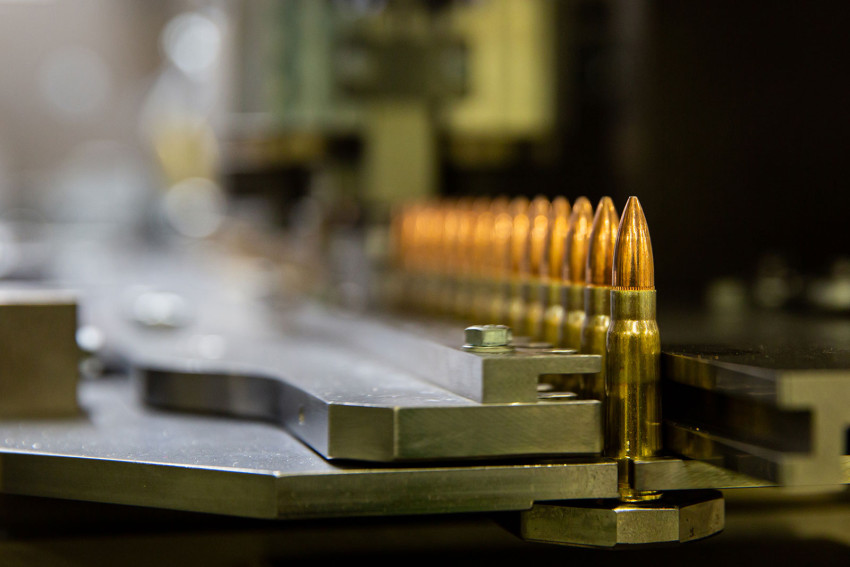
For years, we have cast heavy industry - the energy-intensive backbone of our manufacturing base - as the chief ecological villain, the designated culprit for every future problem. While Brussels still debates new ways to restrict and regulate production, reality outside EU borders looks quite different. Our geopolitical adversaries switched to war-economy mode long ago. We, meanwhile, demand that a steelworks qualify for an "ecological" label - and simultaneously produce weapons. The consequences of that contradiction are measurable: a chronic ammunition deficit across the EU, new dependencies on third countries, and factories we may simply no longer have.
The defining question has always been about the future. But it is no longer a story about the Green Deal or anything equivalently utopian. Today's future question is far more precise: are we still capable of producing what is needed to live safely on this continent? The honest answer is no. And we have no one to blame but ourselves.
Between 2019 and 2024, the EU adopted more than 13,000 new regulations. The United States, over the same period, adopted approximately 5,500. The EU economy grew by 0.8 per cent annually over those years. The US grew by 2.2 per cent.
We have become a superpower of bureaucracy and a middling power of industry. For a European Union located 150 kilometres from an active war, those two numbers explain a great deal - why Europe has become so exposed over recent decades, why EU competitiveness now requires urgent, targeted stimulus programmes to survive, and what a credible path forward might look like.
Climate and environmental policy, and through it industrial policy, has been transformed over the past decade into an ideological contest with no permitted losers. In the climate debate, we allowed the central question to shift: from "how do we preserve EU industrial capacity while reducing emissions?" to "do we need to produce anything at all?" Meanwhile, our competitors - and more importantly, our adversaries - are burning coal, building tanks, and reading our directives with considerable attention.
Smelting steel - critical to modern weapons production - requires sustained temperatures between 1,400 and 1,700 degrees Celsius. This process cannot, at scale, be replaced by electricity or green hydrogen. That is not a political position or an ideological stance. It is metallurgy.
The situation with nitrocellulose - the primary raw material for artillery ammunition - illustrates the problem precisely. Europe currently produces between 4,500 and 10,000 tonnes of nitrocellulose per year. Real demand, accounting for support to Ukraine and Europe's own defence requirements, approaches 20,000 tonnes. That shortfall was not created overnight. It was built up gradually, year by year, as energy-intensive industry was recast as an ecological enemy and destroyer of the future - while the fact that we were discussing resources critical to national security was quietly set aside.
The EU defence industry's turnover reached approximately €148 billion in 2024 - a 60 per cent increase since 2021. But that growth is happening in spite of the regulatory environment we have constructed, not because of it.
The EU's green investment taxonomy does not include a single defence-related industrial activity. Banks are not legally prohibited from lending to defence manufacturers. But every such euro lowers a bank's sustainability score. That is sufficient. That is precisely how capital quietly flows elsewhere - and why defence and dual-use manufacturers have been raising the alarm about access to finance for years.
The European Commission recently published a clarification emphasising that financing defence industry is permissible for banks. Welcome news. But in regulatory language, that translates to: "We do not prohibit it." At the same time, every incentive structure sends the same unified signal: flee energy-intensive sectors - especially defence industry - as you would flee a fire. This is how we arrived at today's situation: demanding that manufacturers produce on a war-economy footing while treating them, in regulatory terms, like the tobacco industry - as something inherently undesirable.
Last year, the EU reduced greenhouse gas emissions by a further 2.5 per cent. Since 2013, total emissions have fallen by more than 20 per cent. That is a real achievement. Meanwhile, global emissions in 2024 reached a new record: 41.6 billion tonnes. Since 2013, global emissions have risen by approximately 7 per cent.
We regulate and discipline ourselves. The rest of the world continues producing as normal, unconstrained by self-imposed limits. European companies bear all additional costs generated by the regulatory environment, competing in global markets against Chinese or Indian counterparts who carry none of those costs. The cruellest part: the planet is not spared the emissions. They simply relocate - from EU territory to third countries, along with the factories and the jobs. That production returns to us only as finished goods we purchase, or worse, as yet another geopolitical dependency.
The revised timetable for the Emissions Trading System (ETS) is now explicit: free allowances for critical industrial sectors - steel, aluminium, cement, chemicals - end in 2034.
The logic of ETS is straightforward. A factory pays annually for every tonne of fuel burned and CO₂ emitted. Until now, a portion of those costs was covered by so-called free allowances - a temporary cushion designed to ensure that energy-intensive industry did not immediately relocate from the EU to countries without comparable requirements. That cushion is being systematically eliminated on a predetermined schedule.
An illustrative example: a steelworks paying, say, €10 million per year in emissions costs covered half that through free allowances. In coming years, that offset will progressively shrink until the system is phased out entirely in 2034. Every tonne of CO₂ emitted will then be a direct, unsubsidised cost. At current ETS carbon prices - around €60 to €70 per tonne - that means an additional bill of tens of millions of euros per year for a medium-sized facility.
Steel, aluminium, cement, fertilisers, chemicals - these are the sectors where costs are highest, because there is no physical alternative to burning fuel at high temperatures. And they are precisely the sectors without which Europe cannot produce armoured vehicles, ammunition, or rocket propellant.
This July, the European Commission will publish a comprehensive ETS review proposal. This is not a technocratic exercise. It is a genuine political test - one that will reveal whether we are capable of designing our environmental and climate regulation in a way that does not simultaneously demolish Europe's entire industrial base.
Sectors critical to defence must receive special status in this review. The mechanism is a single amendment: remove these sectors from the part of the system that penalises them for energy intensity. We cannot penalise manufacturers for producing and then naively expect a defence industrial renaissance. Such an amendment would not alter agreed climate targets. But it would unlock private investment in precisely the areas where it is currently being systematically driven away.
Our adversaries read European legislation far more carefully than many of our own politicians. They know precisely when our industrial capacity will hit its ceiling and at what point it will begin to contract - because of laws we passed ourselves. This "strategic vulnerability window" is not vaguely sensed. It is well documented, predictable, and readable in black and white in our own directives. Moscow and Beijing are simply waiting, patiently, for that window to open fully.
No defence budget top-up - however generous - will deliver anything sustainable in the long term if, in parallel, we continue to legislate out of existence the factories that must physically produce that defence equipment. A real security architecture - the phrase we have treated as slogan and aspiration for years - does not emerge from a single procurement decision. It emerges from legislation grounded in a clear-eyed understanding of reality and national necessity. Legislation that protects the industrial base regardless of which political winds are blowing and who holds office at any given moment.
Europe cannot survive on the foundations of its own moral self-regard. Freedom without the military and industrial capacity to defend it is an illusion. And in 2026, that capacity does not begin at security conferences or summits. It begins in the factories and plants we still have a chance to save - from the self-inflicted machinery of a bureaucracy that is dismantling them.
